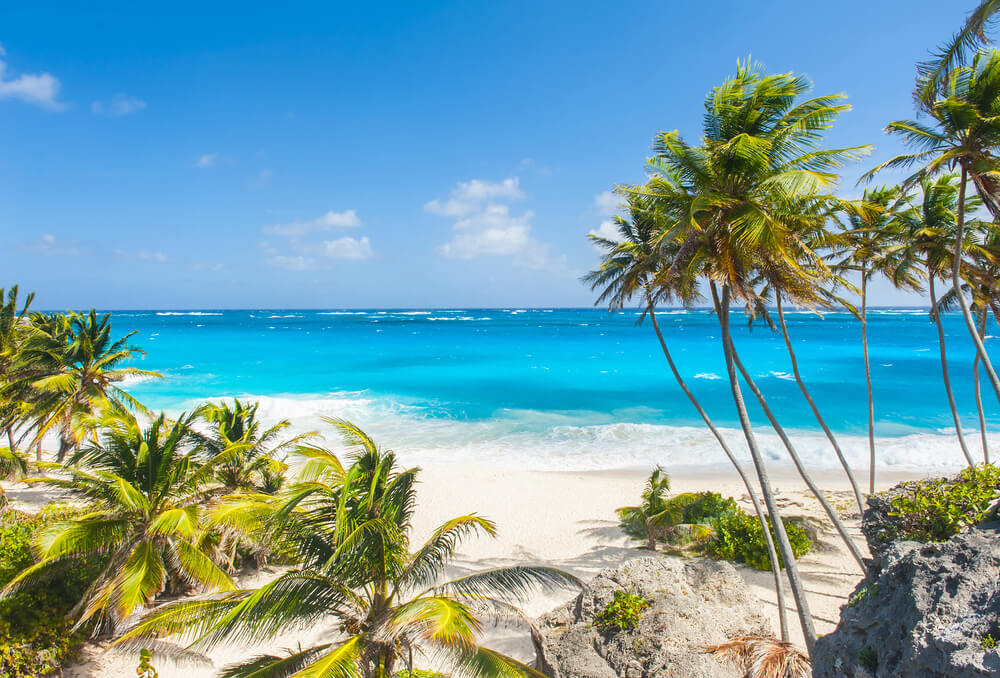
For many Americans, the Bahamas is one of the dreamiest vacation destinations. They cannot get enough of its stunning beaches, a wide array of water activities (including underwater cave exploration), amazing weather, gorgeous resorts, and amazing cultural heritage. The island-hopping opportunities, diverse wildlife, and delicious foods are the cherry on top that makes this destination even more alluring.
But before you can travel to this beautiful country and live out your vacation dreams, you must understand the entry and exit requirements. This guide gets into all the Bahamas entry requirements so you can enjoy a smooth travel experience and get the most out of your travel itinerary. Let’s get into it!
Visa Requirements
The Bahamas entry requirements extend to visas for some people, depending on your travel purpose and duration, as follows:
1) Tourist Visa: People traveling to the Bahamas for 90 or fewer days do not need tourist visas. Instead, they can enter and leave the island by presenting a valid travel document, as we will later cover. To be safe, it’s best to prove your travel purpose by presenting the following supporting documents, as this may be a requirement at customs:
A return or onward travel ticket,
Evidence of enough funds to support your stay, and
Proof of accommodation.
2) Family Reunion Visa: This entry permit applies to people related to citizens or residents of the Bahamas. To get this visa type, you must prove your relationship with the family member living on the island by presenting supporting documentation to the nearest Bahamas embassy. For example, if you are married to a Bahamas citizen or resident, you must provide the marriage certificate.
3) Work visa: People who wish to secure employment in the Bahamas must present work offers from companies based in the Bahamas. Additional documents will come into play, as we will explain later in this guide.
4) Business or investment visa: The Bahamas is open to foreigners who wish to start businesses on the island. It also offers an investor residence visa that allows you to reside in the Bahamas permanently if you spend at least 90 days per calendar year in the country.
Do you wish to travel to the Bahamas and need a visa? Travel Visa Pro handles and expedites Bahamas visa applications. Thanks to our seamless application system, you can apply for Bahamas visa online and await advice from our visa experts.
Passport Validity
Anyone traveling in and out of the Bahamas must present a valid identification document as follows:
A WHTI-compliant document: This option applies to people on closed-loop cruises – these start and stop at US ports and thus allow passengers to visit the Bahamas without a passport. In such a case, you can use documents like trusted traveler cards and passport cards.
A passport: Anyone on an international flight or standard cruise must have a valid passport book. Not only is this a requirement, but it is also advisable as it helps you embark on island-hopping adventures without restrictions. Below are the Bahamas entry requirements for passport holders:
Validity: Your passport book must be valid during entry and exit. Thus, you cannot use a passport that has expired or might expire during your stay – immigration officials will not accept it and will send you back on arrival. If you have validity concerns, renewing your passport before leaving the US is best.
Blank pages: Your passport must have at least two blank visa pages. If you have an onward ticket (i.e., you will not return to the US immediately after the Bahamas), you must have enough pages to facilitate entry into your next destination. Otherwise, the immigration officials will refuse to stamp your passport book. Since the US passport office no longer offers additional pages, you can only get more by renewing your current passport book.
Physical condition: Your passport book must not have signs of physical damage or alteration, e.g., permanent ink marks. If it does, it is unacceptable for travel, and you should replace it with a new one.
Do you need a valid passport that meets all these requirements to enter Bahamas? Travel Visa Pro is here to help. We handle and expedite all passport applications, enabling you to get a new and compliant passport in just a few days!
Travelers to the Bahamas will be happy to know that there are no vaccination requirements to enter Bahamas. Even so, it’s always advisable to get the following vaccination recommendations:
COVID-19: Everyone eligible for this vaccination should get it before traveling to the Bahamas. After all, international flights and cruise trips expose travelers to contracting this virus.
Hepatitis A: Anyone aged one year and below should get vaccinated against this disease even if they have received their routine doses. The same applies to unvaccinated travelers and those over 40 years.
Hepatitis B: All unvaccinated travelers should get vaccinated against this disease, regardless of age.
Measles: Due to a recent increase in measles cases, all unvaccinated travelers should get the MMR vaccine, especially if they have traveled to regions where this disease is on the rise.
Rabies: While domesticated dogs in the Bahamas are free of rabies, travelers venturing into the wild, e.g., veterinarians, should consider getting a rabies vaccine.
Typhoid: Rural areas are especially likely to have contaminated food and water. Thus, getting vaccinated against this disease is advisable if you plan to visit such places.
Yellow fever: Anyone who has traveled to a yellow fever endemic region should get vaccinated against this disease.
Before getting vaccinated, talk to your doctor about your health status to get recommendations on the most suitable approaches. Also, while you can get vaccinated against the above diseases, note you are still at risk of contracting the following diseases:
Leptospirosis,
Dengue,
Zika,
Hantavirus, and
Tuberculosis
You can protect yourself by consuming safe water and food, staying away from crowded places, practicing overall hygiene, wearing enough repellent outdoors, and avoiding wild animals.
COVID-19 Entry Protocols
When COVID-19 hit, the requirements to enter Bahamas changed to reflect this public health crisis. Are these still in place? Let’s consider the current state:
Vaccination: All visitors are welcome regardless of their vaccination status. You don’t need to show proof of vaccination when entering the country.
Testing: Travelers do not need to undergo pre-testing or any tests on arrival. Moreover, anyone who tests positive after arrival is not required to go into quarantine.
Social distancing: While recommended, this is not a requirement. You can thus visit public spaces, including the beach and festivals, without breaking the law.
Wearing masks: You are not obligated to wear a mask in public.
While Bahamas COVID entry requirements are no longer in place, it’s always advisable to protect yourself. Practising social distancing, washing your hands often, and wearing masks in public spaces is a good idea. If you feel unwell, get checked and do not travel if you show signs of COVID-19 or have been around someone who has tested positive for the virus. These small measures safeguard you and other travelers.
Travel Insurance
Since the Bahamas entry requirements no longer require travelers to have COVID-19 insurance, should travelers consider getting travel insurance? Let’s consider some of the motivations behind taking this cover:
It covers losses: Travel carries risks such as baggage losses, document theft, and pickpocketing. Travel insurance covers these losses, enabling you to replace what you have lost without using your money.
It helps you get medical treatment: Suppose you fall ill or get injured. Travel insurance enables you to seek treatment at good healthcare facilities at no extra cost. It can also evacuate you to the US for specialized treatment in emergencies.
It covers cancellations: Flight, trip, and accommodation cancellations are some of the biggest and most costly travel risks. A good cover helps you reschedule your trip without losing money so you can enjoy your itinerary as you intended.
To get good travel insurance coverage that checks all these and more boxes, talk to our team about your needs, and we will get you the most suitable plan.
Entry for Business and Work
Anyone traveling to the Bahamas for business or work opportunities will have to get a Bahamas visa for U.S citizens before arriving on the island. The Bahamas visa requirements for such travel reasons necessitate the documents below:
A valid passport: It should meet all the Bahamas entry requirements regarding validity, blank pages, and physical condition.
Two recent passport photos.
A complete application form.
Proof of enough funds to cover your stay: Investors must show a minimum amount per investment purpose and duration.
Proof of accommodation, e.g., a rental agreement.
A work contract: This document applies to people applying for work visas.
FBI background check.
Health insurance.
Additional documents may be necessary per your work or investment conditions. Talk to the TVP team today regarding your plans to work or invest in the Bahamas, and we will walk you through all the Bahamas entry requirements.
Special Entry Considerations
When traveling to the Bahamas, it’s best to note the special considerations that may apply to the following categories of travelers:
Minors: Children must travel with valid identification documents, e.g., passport books for air travelers. Moreover, the adults accompanying them must prove their relationship with the minors, e.g., with birth certificates or adoption decrees. If you are not the child’s legal guardian or parent, you must present notarized consent from the legal guardian or parent to travel with the child.
Pregnant women: The Bahamas carries the risk of the Zika virus. While it does not have adverse effects on most people, it can cause congenital disabilities in children born to women who have contracted it during their pregnancy. Since this virus is also sexually transmitted, couples trying to conceive should avoid traveling to the Bahamas or wait at least three months after traveling to the island to start trying for a baby.
Older people should also get routine vaccinations before traveling to avoid contracting vaccine-preventable diseases while on vacation.
Documentation and Checklist
Are you ready to have the vacation of your dreams? Let’s consider what you will need to embark on this trip:
A valid ID, g., a passport book or WHTI-compliant document.
A visa: Bahamas visa requirements apply to non-tourists or tourists staying more than 90 days.
Travel insurance: This cover helps you cover losses and access quality healthcare.
Notarized consent for minors whose legal guardians or parents are not with them.
And that’s the long and short of Bahamas entry requirements!
Understanding the Bahamas entry requirements enables you to plan a stress-free trip where you can sit back, relax, and get through your itinerary without much hassle. If you need help getting the listed documentation to get past customs, the TVP team is always here and ready to help!
Many tourists to Brazil make a stop at São Paulo. And how could they not? This cosmopolitan city has everything you need to immerse yourself in Brazil’s magic. So, when you are not gazing at its towering skyscrapers, you can enjoy indulgent cuisines in its restaurants, visit its beautiful green spaces, learn more about football, get in touch with the Brazilian culture, travel to the nearby beaches, bask in the warm weather, and enjoy the vibrant nightlife. This innovative city is truly the melting pot with everything for all its visitors.
But, of course, getting through all the things to do in São Paulo can be hectic. After all, what should you include, and what can you leave out without compromising your experience? We’ve made your decision-making much easier by listing the top 25 things to fit into your itinerary to make it perfect.
1-5: Explore Historic Landmarks
Photo: shutterstock.com
São Paulo has a rich history that explains how it came to be the cosmopolitan hub it is today. The story starts with Jesuit priests who settled in Bahia back in the 1500s. In their attempt to convert the natives, they wanted to found schools. But this did not work as planned, and they thus had to spread their roots to other regions, which led them to present-day São Paulo. This land was near the coast, boasted two rivers, and lay on a plateau. Having found the perfect spot, the priests founded Colégio de São Paulo de Piratininga in 1554, which had a church and a school. Their mission had not changed, and they used this establishment to draw more people to Catholicism.
Following the success of this mission, São Paulo’s growth was gradual. It started with people’s interest in its metals and stones, which attracted laborers from all over, including India. This change resulted in more transport networks that aided the establishment of more schools and churches. Then came a boost in coffee farming due to the introduction of enslaved Africans. Once slavery was no longer legal (post-1888), more laborers came to till the land, resulting in more plantations and factories, whose production got a boost from the local railway system. Not long after this, the city became a car manufacturing hub after World War II, which further increased its popularity.
The city continues to thrive and has become the go-to hub for anyone looking for investment opportunities. To learn more about how this small college expanded geographically and became the most populous city in Brazil, be sure to stop at the following attractions:
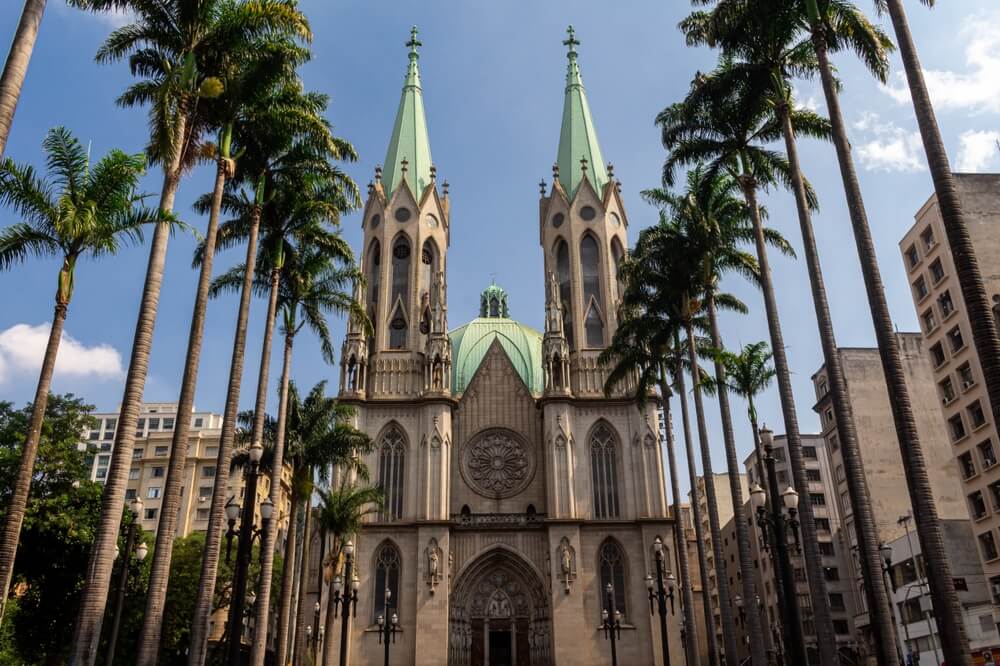
1) Sé Cathedral: This neo-Gothic church, also known as the Cathedral of Our Lady of the Assumption, is one of the biggest of its kind in the world. From the outside, you can take in its grandeur and gaze at its unique architecture that stands as a testament to the sort of work that went into it. For a well-rounded experience, opt to tour the inside, too, where you will find a 12,000-pipe organ and get insights into how the church came to exist. Even better, you can attend the daily mass!
2) Farol Santander: This building, which was formerly known as Edifício Altino Arantes, dates back to 1947. It started as the headquarters of the State Bank of São Paulo. Its reinforced concrete structure has remained solid for many decades. Interestingly, it was the tallest building of its kind outside the US when it went up. And the architects put their all into it, from the decor to the exterior. Touring it enables you to enjoy expansive city views and gives you an idea of what the 1940s were like for residents.
3) Mosteiro de Sao Bento: If you want to learn more about the religion in this city, the Monastery of Sao Bento is the place to go. It dates back to 1598 and features a Gothic-style architecture. Here, you can expect an in-depth historical overview of religion in the past few centuries. You also get to interact with the monks who follow Sao Bento’s teachings, which include baking treats at the bakery.
4) Pátio do Colégio: To unearth São Paulo’s roots, you have to tour this historic church that dates back to 1555. It served as a church, school, and home for the founding priests. Centuries on, it stands in the same spot and now includes a museum, library, and a cute cafe, all of which give you tidbits of the past few centuries. You can also visit the halls in the church that showcase city models from earlier days.
5) Martinelli Building: While Farol Santander might have the history of being the tallest building in the city in the 1940s, this one takes the crown as it was the first skyscraper in São Paulo. Built in 1928, this building stands 105 meters tall. Before its construction, most buildings would only go to ten stories. But this went up to 25 floors and included a viewing deck. Visit it to see São Paulo from a different perspective and learn how Martinelli defied all odds to make history.
These places rank high among the top things to do in São Paulo and thus get a lot of tourist traffic. Getting tickets in advance is hence advisable. Moreover, you should check the dress codes to ensure you are respectful, e.g., when visiting the churches.
6-10: Indulge in Culinary Delights
Photo: shutterstock.com
São Paulo offers diverse culinary experiences to tourists, making it one of the top destinations for anyone who wants to enjoy authentic Brazilian foods. These have influences from indigenous, African, and European communities. Take the example of Portuguese influences. When the Portuguese first settled in the land, they incorporated ingredients like coffee, pigs, and cattle into their foods. Then came the slaves, who introduced different cooking styles and added a touch of rice. But this was not all. Syrians and Lebanese also threw their hats into the ring, adding Middle Eastern flavors to the mix, creating what is the perfect blend of aromas and tastes. Of course, there have been many other influences over the past few centuries, which is why all tourists should consider the following culinary experiences:
6) Try local foods: To get a true taste of São Paulo’s top foods, try the dishes below:
Pão na Chapa: While this dish might seem like your ordinary bread and butter, it is much more than this. It features thick toasted bread slices with a thick butter coating and is one of the best ways to start your day. To get the best taste, get one fresh from a bakery.
Feijoada: You cannot truly say that you have been to São Paulo if you have not enjoyed a stew comprising black beans, pork, and beef. It usually comes with rice, but you can always try other accompaniments that can match its delicious yet hearty flavor.
Virado À Paulista: This dish has its roots in Portuguese influences. How else can you explain a platter with beans, eggs, plantain, sausages, pork, and vegetables? It’s so delicious that people eat it hot or cold. Since the platters are often big, you can share this meal with a friend.
7) Indulge in local snacks: In between tasty meals is a great time to try local snacks. Here are some great options:
Coxinha: This tasty deep-fried snack comprises shredded chicken and cream cheese coated in breadcrumbs. Interestingly, this snack was first used to prevent wastage of the less desirable chicken parts but has now become a mainstay in street and snack foods.
Bacalhau: This stuffed pastry features all kinds of fillings, from mashed potatoes to eggs to salted cod. Since it is mainly available as street food, you can play around with the ingredients to see what you like the most. Some even have meat fillings.
Bauru: If you love sandwiches, you will love the twist in this option. It features a crusty bun filled with tomatoes, melted cheese, and roasted beef. If you like, you can always alter the ingredients, just like the creator of this dish (Casemiro Pinto Neto) did.
8) Enjoy local desserts: Can you indulge your sweet tooth and still learn a lot about São Paulo? Of course! Consider these options:
Açaí na Tigela: This popular dessert features mashed açaí berries mixed with tons of healthy toppings. It tastes as good as it looks.
Acarajé: This dish is native to Bahia, but you can still enjoy its authentic taste in São Paulo. Picture mashed cowpeas that have been fried in red palm oil and then stuffed with delicious fillings like chicken.
Esfiha: If you enjoy baked pastries, you will love that these come filled with meat, veggies, cheese, and other tasty fillings. Most bakeries also add some toppings to add to their overall taste.
9) Eat at local restaurants: While most restaurants offer delicious foods, some have more outstanding menus. Here are the best places to eat if you want to enjoy the best cuisines:
Pastel da Maria for the pastries,
Casa Mathilde for sweet treats,
Bolinha for traditional meals,
Fogo de Chão for all kinds of meat dishes,
Tabuleiro Do Acarajé for hearty meals, and
O.M. for gourmet meals.
10) Book a culinary tour: How about experiencing a bit of everything at once? Most travel companies organize food tours that rank as some of the best things to do in São Paulo. These organized tours can either focus on indulgent meals or include cooking classes. It’s a great way to understand how different periods have influenced the culinary culture in the city, which makes you appreciate the meals even more.
Be open-minded when exploring meals to get the true taste of São Paulo.
11-15: Experience Cultural Attractions
Photo: shutterstock.com
Thanks to São Paulo’s rich history that encompasses different cultures, it has a vibrant cultural scene. Here, you can learn more about these cultures, understand their links, contribute to their preservation, and foster cultural awareness. Below are some of the best things to do in São Paulo for anyone who’d like to take on a cultural journey:
11) Liberdade District: This part of the city is home to the largest Japanese community outside Japan. Touring it enables you to learn more about how the Japanese came to settle in São Paulo back in 1912. Back then, they were in search of a region where the rent was affordable. It has now grown into a hub that now boasts other Asian communities, including Chinese and Korean families. As such, it has many shops selling cheap and unique souvenirs, comics, and electronics. You can also find stores that stock Asian products, authentic sushi places, street markets, and beautiful eateries along its streets.
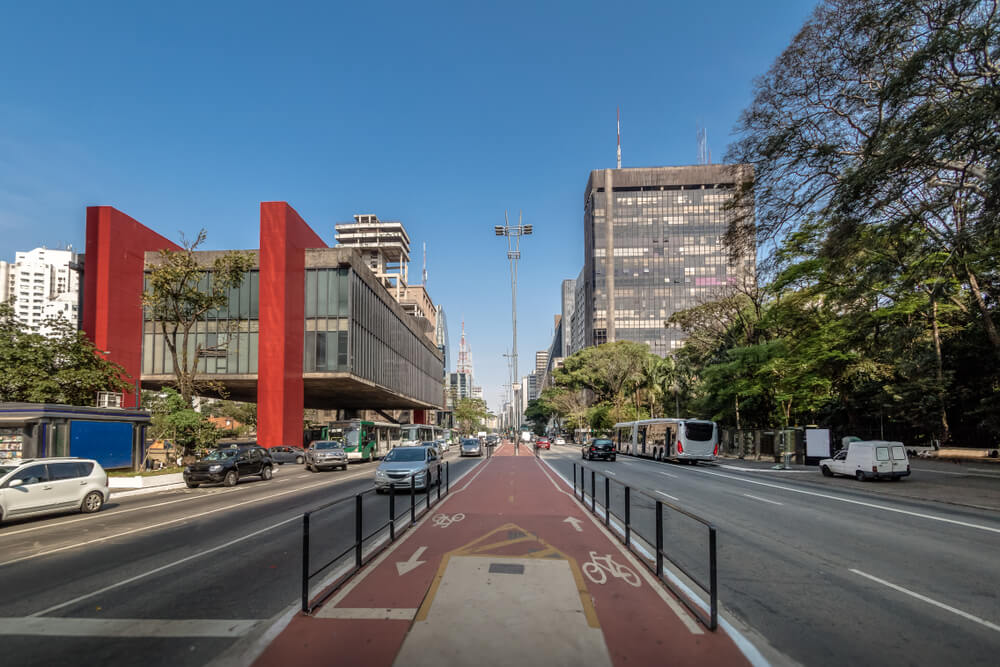
12) São Paulo Museum of Art (MASP): Museu de Arte de Sao Paulo is the place to be for anyone who enjoys art. It is known for its beautiful interior that features hundreds of art pieces. Even someone who barely understands art can appreciate the beauty of these conversation-starting pieces, which mostly feature European, African, Brazilian, and Asian works. You can also find Picasso and Van Gogh paintings here. The large, airy, and well-lit galleries create the perfect environment to bask in all this talent.
13) Pinacoteca do Estado: This highly-rated museum is another great stop for art lovers. It dates back to 1905 and is the oldest of its kind in the city. There are thousands of Brazilian works here, including sculptures and paintings. But it’s not just the artwork that will capture your attention – the renovated building is alluring. With cascading staircases and exposed brickwork, the backgrounds are all perfect for memorable pictures.
14) Teatro Municipal De Sao Paulo: Do you enjoy performing arts? You will love this attraction and the story behind it. It all started when the wealthy people living in the city decided to build an opera house that would enable them to enjoy the arts. Thus, in 1911, this building came to be, featuring a mix of Renaissance and Baroque architecture. It has since featured many artists, including Carla Fracci, and continues to be home to orchestra, choir, and ballet shows. You can get a ticket to one of these or tour the opera house just to see its beautiful interior.
15) Museu do Futebol: The love for football in Brazil is known worldwide. And where better to learn more about the sport than in this center, which is right in the Art Deco Pacaembu Stadium? Here, you get to go through football galleries that highlight the history and culture of the sport, including the World Cup wins. You’ll leave knowing enough about the stars, e.g., Ronaldo and Pele, and will have a deeper appreciation for this sport. Even better, you can engage in one of the most thrilling things to do in São Paulo by watching a live football match.
If you’re curious about how identity has shaped this city, stopping by all these attractions will offer you the insights you need.
16-20: Wander Through Green Spaces
Photo: shutterstock.com
São Paulo is a huge and vibrant city. When you’re not rubbing shoulders with tourists in the museums, you are gazing at skyscrapers, shopping in the malls, enjoying street food in crowded streets, or taking walking city tours to learn more about the buildings and people. And while all this is a great way to spend your time, the hustle and bustle can feel overwhelming. Most people find that one of the best things to do in São Paulo is to take a break by exploring the green spaces. Not only does it do wonders for your mental well-being, but it also supports physical activity. Here are some of the places you can consider in this regard:
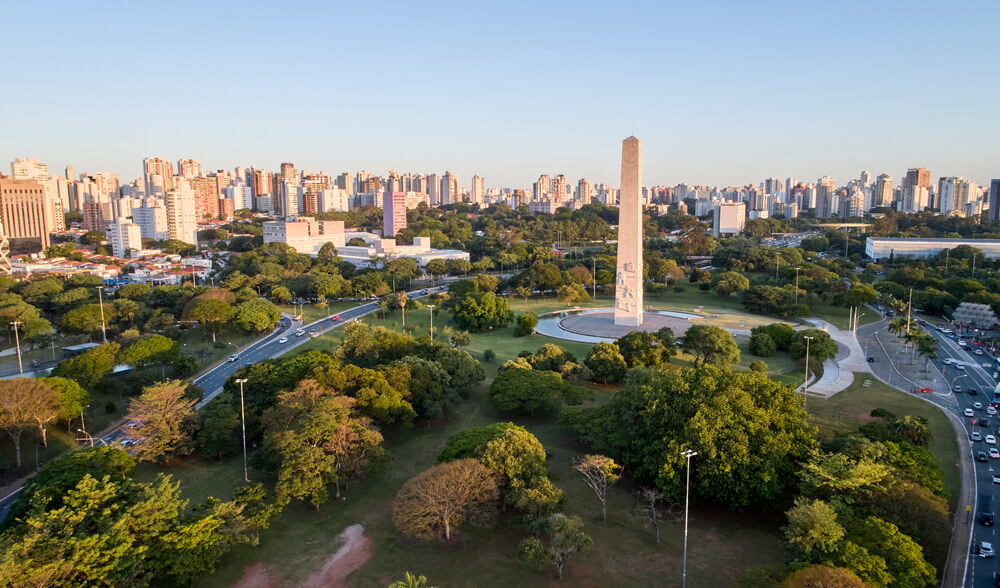
16) Ibirapuera Park: A tour of the city would not be complete without walking through this park, which also features as a major city attraction. Once you step into the shade of the canopy trees, you will understand why this park is so sought-after. The grounds are clean, the roads are modern, the trees are huge and boast extensive leaf cover, and the undergrowth is lush. It feels like walking through a forest, but only that, in this case, this oasis exists right in the heart of the city. So, what can you do here?
Walking – Many people head to this park just to get some steps in and enjoy the fresh smell of the vegetation,
Play sports – you can bring a ball, rope, or other sporty items to hold a match or enjoy a friendly game with your loved ones,
Do yoga – you will find many people practicing their yoga postures or meditation on different parts of the park,
Take photos – we would be lying if we said that this park is not the perfect backdrop for your city photo shoots,
Have a picnic – nothing beats enjoying a good meal in the middle of the park surrounded by positive energy from all the other travelers making the most out of this green space, and
Cycling – since the roads are modern, you can enjoy a smooth yet relaxing tour of the park on two wheels.
This park is also home to monuments and museums and can be a great addition to your cultural tours.
17) Jardim Botanico de Sao Paulo: The setting of this beautiful park makes it an excellent stop for introspective tours. It has lush vegetation ranging from shrubs to trees to flowering plants. So, at each spot, you have flora to captivate your attention. The paths feature natural curves that wind around the park, allowing you to walk around in circles as you take in the beauty around you. Below the elevated paths are ponds, which you can gaze at during your stops. And if you feel like resting, there are many seats around the park where you can people-watch or take in the flora in what was once a state park. But flora is not the only thing on display. You are bound to see some monkeys playing in the trees. If you want to interact with more animals, you can end your walk with a trip to the zoo next door.
18) Butantan Institute: This scientific center is home to three museums and has a vast collection of snakes, reptiles, and arachnids. It dates back to 1901, and you will have fun learning how it became the biggest immunobiological producer in Latin America. But when you’re not getting tidbits about microbiology, you can lean into the venom extraction process and how the institute has formulated vaccines. Of course, for most people, the best part of the tour is seeing the snakes, arachnids, and reptiles up close. You can learn their names, whether they are dangerous, where they come from, and how you should approach them in the wild. Once you are done with this educational part, you can unwind by walking through the beautiful grounds of this science center.
19) Independence Park: Do you know how Brazil gained independence? This park would be a great place to learn how Prince Pedro set the pace for this country’s freedom. It is home to many historical pieces, including sculptures depicting different times. If you’d like, you can book a tour of the Ipiranga Museum, located right inside the park. But if you’re hoping for an outdoor experience, you can skip the museum and instead wander around the park, the city’s largest green space.
20) Parque da Água Branca: This park features large trees, water pools, and well-maintained paths that create a haven for anyone who wants a break from city life. Walking under the shade of the trees and encountering poultry searching for food, it almost feels like you are on a farm. To add to this feeling, the park has a paddock where you can enjoy horse riding or visit the animals in the stables. Sometimes, the park hosts concerts headlined by local artists – these events are fun as they often attract many locals, allowing you to experience the true São Paulo entertainment scene.
These parks help you balance the vibrance of São Paulo with some much-needed downtime. So, if you need a break, grab your outdoor shoes, a book, a mat, or whatever you need to engage in one of the most relaxing things to do in São Paulo.
21-25: Shop Till You Drop
Photo: shutterstock.com
São Paulo is home to shopping districts and markets perfect for anyone who wants to buy souvenirs, eat authentic Brazilian dishes, buy the latest fashion, stock up on fragrances, or even just window shop. As a result, many visitors consider shopping one of the top things to do in São Paulo. Here are the stops you can make:
21) Galeria do Rock: If you love merch, this 6-floor shopping mall with 400+ shops is the place to be. Not only can you buy sneakers, but you can also buy shirts, CDs, and all other kinds of music merch. Moreover, this mall is a hub for tattoo artists – if you have ever wanted one, getting inked in this establishment should be easy.
22) Mercado Municipal: Culinary experiences top the amazing things you can enjoy in São Paulo. And anyone who has been to this market building can attest to its affordable yet delicious meals. Dating back to 1933, this establishment is home to beautiful cafes, restaurants, vegetable stalls, fruit vendors, and artisanal food products. You will be in for a memorable experience no matter what you try!
23) Rua Oscar Freire: This shopping street in Pinheiros embodies São Paulo’s vibrant energy. It is lined with cute cafes and restaurants that offer you the true taste of the city. Additionally, it has many stores whose prices range from cheap to high, allowing everyone a wonderful shopping experience. To enjoy this street, start at one end and walk along it to see the cute places, stopping at shops that stock what you want.
24) Rua 25 de Março is a great place to shop for souvenirs. You will get everything from accessories to bags to electronics and beauty products. Since it is a busy part of the city, you need to prepare for crowds. But that’s worth the reasonable prices, wide variety, lively atmosphere and ambient music you will reap as the benefit.
25) Shopping Cidade São Paulo: While getting goods at reasonable prices is often a great way to source souvenirs, you may want to get some upscale items too. And where better to do this than in this modern mall which houses everything in one place? You can enjoy shopping in the many boutiques before grabbing food in the cafes or restaurants and ending your day with a movie at the cinema.
Thanks to the variety of shopping experiences, there is something for everyone!
Travel Documents
Before enjoying the top things to do in São Paulo, you must get through immigration. Your document requirements will come down to your travel duration and purpose, as explained below:
1. A passport: All US citizens must have a valid passport book to enter and exit Brazil. It should meet the conditions below:
It should be valid at entry and exit: You cannot use a passport that has expired or is close to expiring. If your passport does not meet this criterion, check whether you can renew it via mail. If you can’t get a renewal, e.g., you were a minor when you got your passport, you must apply for a new one.
It should be in good condition: Passports experience wear and tear over the years. While this is acceptable, you cannot use a damaged or altered passport at customs, e.g., one with water damage. You should replace such a passport.
It must have at least one blank visa page: You cannot use the endorsement pages. Moreover, if your travel itinerary includes other foreign destinations, you must have enough blank pages for all the stops. If you don’t meet this condition, you should apply for passport renewal to get more pages.
2. A visa: Your visa requirement depends on the following factors:
When you travel: Tourists who travel to Brazil after 10th April 2024 will need a visa.
The reason for travel: Tourists traveling for studying or work, must have relevant visas that permit their stay in the country.
Travel Visa Pro handles passport and visa applications for Brazil-bound travelers. Not only do we expedite these services to help you get your documents in days, but we also provide support services, including consultations and document reviews.
There is a lot to do in São Paulo, from city tours to destination weddings to picnics in the green spaces. It helps to consider whether you could benefit from having the documents below:
Travel insurance: While São Paulo is generally safe for travelers, anything can go wrong, from injuries to theft. Travel insurance helps you meet these and other unforeseen costs without forking out money from your travel budget. For example, if your flight gets canceled, you can book another one without spending your money.
Apostille: Anyone conducting official business in Brazil requires an apostille to prove the authenticity of their documents. For example, people tying the knot should present apostilled birth certificates. Consider getting one if your travel purpose necessitates official transactions.
Translations: Portuguese is the official language in Brazil. Thus, English documents will not hold much water in official transactions unless they have apostilles and translations.
If you require any of the following documents, do not hesitate to contact the TVP team. We can get you sorted out in just a few days!
São Paulo has so much in store for visitors that choosing what to fit into your travel itinerary can be challenging. Luckily, our list of the top 25 things to do in São Paulo can help you narrow down your options per each category, enabling you to create lasting memories of this beautiful city.
The Caribbean has so many fantastic islands that travelers are often torn about which choice they should make. But choosing St Martin comes easily to many US citizens as it encompasses everything they desire on a tropical vacation. Take the example of the food. No matter where you stay on this two-nation island, you will enjoy tasty, fresh cuisines that highlight the island’s influences, including Afro-Caribbean fusions. Culinary experiences are just one part of the attraction. You also get to enjoy warm weather, explore tens of beautiful beaches, interact with friendly locals, go sailing, attend festivals, immerse yourself in nature, and more.
Of course, with such an extensive list of amazing things to do, coming up with an exhaustive itinerary can be challenging. After all, what should you consider, and what can you save until your next island trip? We have made decision-making easier for you by listing the 35 best things to do in St. Martin so you can pick what appeals to you the most. Let’s get started:
1-5: Explore Stunning Beaches
Photo: shutterstock.com
The best part about traveling to St Martin is getting the best of both worlds. And this shows in the beach selections. You can take your time exploring the beaches to the south and north as you figure out which vibe best suits your vacation plans. And since the island has tens of beaches, there is something for everyone, including adventurous souls, romance-seeking partners, families, and friends. Let’s take a look at the best beaches and what makes them good choices:
1) Orient Bay Beach: This beach lies on the French side and gets the most traffic of all the beaches on the island. Luckily, it is big enough to handle the crowds. So, while the environment may be vibrant, it’s easy to find a quiet spot to enjoy your day without interruptions. But what makes this beach so alluring to travelers? It lies on the windward side, allowing you to be safe from the winds. As such, this is the best spot for people who want to swim, snorkel, sunbathe, enjoy local cuisines, read books, people-watch, or even grab a drink at the bar. Besides the calm waters, this beach is also easy to access.
2) Baie Rouge Beach: If the idea of a crowded beach does not appeal to you, try this option. It faces the north, has extensive coverage, and boasts minimal crowds. Even when people head here, the beach is so long that it’s easy to have a secluded experience, even in the peak seasons. Most people head here to enjoy the beautiful sandy beach with a reddish tint, making the scenery even more captivating. And since the waters here are calm, you can swim, go snorkeling, read a book, play in the water, or just sunbathe. You can grab a bite from the on-site beach bar if you get hungry.
3) Mullet Bay Beach: While some people avoid windy beaches, others seek them for their watersports advantages. And if you fall into the second category, you will love what this beach offers. It lies to the southwest of the island and is ideal for surfing due to its strong winds. You can also enjoy swimming, snorkeling, and people-watching, among other beach things to do in St. Martin. Of course, if you are after surfing, you must ensure you time your beach days with the season, as spring and winter are the ideal surf windows.
4) Kim Sha Beach: Do you want an unforgettable adrenaline rush? Head to this beach. You can engage in watersports like scuba diving or boat tours in the ocean. The waters are also calm enough for swimming and wading for people who prefer to stay close to the shore. And if the hunger pangs strike, there are many restuarants and bars serving fresh food and drinks. Besides the amazing beach day options, you can head to this beach on nights when it’s hosting live music and other events to get a feel of the St Martin nightlife.
5) Cupecoy Beach: To the Dutch side of the island, you will find this beautiful beach known for its striking appearance. Not only do you get the beauty of white sandy beaches, but you can also gaze at the towering sedimentary cliffs that create the ideal photo backdrops. So, what can you do on this beach? Since it features sandy coves, the water on this side of the beach is quite calm. You can thus swim, enjoy the scenery, go snorkeling, get a tan, or just relax as you grab a drink or bite from the beach restaurants. Like Orient Bay, accessing this beach should be easy.
Families can also look into Dawn Beach, Grand Case Beach, and Simpson Bay Beach, as these have kid-friendly waters and activities.
6-10: Indulge in Culinary Delights
Photo: shutterstock.com
The culinary fusion in St Martin is on another level, thanks to the dual-nation aspect as well as the mix of cultures, thanks to immigrants. As such, no matter what you enjoy, you will surely have an incredible culinary journey on this island, be it sauces, seafood, sweet treats, or fresh drinks. Let’s show you how you can make the most out of this culinary melting pot:
6) Try the local foods: Traditional meals on the island reflect its sunny and relaxed atmosphere. Once you have tasted them, you feel like you are right at home. So, what must you try?
Conch and dumplings: The Caribbean taste is evident in this hot and spicy dish. It features a large sea snail (conch) cooked with herbs and spices until it achieves a soft and succulent texture. Once you pair it with dumplings and gravy, you will see why so many people ask for seconds!
Callaloo: Many other Caribbean countries have this dish option. But they don’t make it like St Martin chefs. When you order this, you can expect a thick soup that is not only rich in flavor but also aroma. Islanders achieve this by mixing fresh greens and meats into the soup without forgetting callaloo, the main veggie.
Spare ribs: You likely think you have tasted all the barbecues worth noting. But we can assure you that St Martin spare ribs are a new realm. Chefs cook this on the grill long enough for the meat to be so tender that it just comes off the bone. But tenderness is just one part of the meal – it is also juicy and filled with the perfect balance of sweet, spicy, and savory. Licking your fingers is acceptable.
7) Take a cooking class: Tasting what St Martin has to offer is one way to experience your holiday. Another amazing option is to learn how to make the meals from scratch. Many tour companies organize cooking adventures where you get first-hand lessons from the locals. For each meal, you get to taste the local flavors and try to recreate the same in a fun setting where you also learn more about the culture. Some cooking classes also include food tours, where you move from one restaurant to another and try different menu options.
8) Enjoy local desserts: Treating yourself on vacation is almost mandatory. And if food is your love language, here are some options to consider:
Dutch cheese: When else can you enjoy the fusion of French and Dutch delights in one country? Head to the Dutch side for some authentic and tasty cheeses. Not only can you get free samples to whet your appetite, but you also get to buy the kind that matches all the local meals we have included in this guide – everything tastes better with cheese.
French pastries: After preparing your charcuterie board with Dutch cheese, consuming fresh French pastries is natural. How can you say no to warm croissants and quiches? The French side of the island has enough bakeries for you to find what works best for your taste buds and go for it.
9) Snack on island delights: In between the fun things to do in St. Martin, you will need something to sustain your energy. And what better than an island snack? Feast your eyes on the following options:
Johnny cakes: If you love pancakes, wait till you taste the twist in these cakes. Unlike standard pancakes, which use wheat flour, these have cornmeal. Chefs whip them up by combining them with the usual pancake ingredients before frying them in corn oil and serving them with syrup or butter toppings. They are just delicious!
Codfish fritters: There are many ways to enjoy salt fish, but the fritters take the cake. Islanders sautee the fish with choice herbs and spices before mixing it with baking ingredients like eggs and flour. Once they have deep-fried this mixture, you will have a new appreciation for fish!
10) Eat out at restaurants: The best way to get the true taste of St Martin is to vary your dining spots from beachside shacks to fine dining restaurants. Here are the top-rated options:
Emilio’s: This fine-dining restaurant has everything you need for the perfect brunch, lunch, or dinner. Look forward to tasty dishes, including ribs and octopus-based specials.
Bistrot Caraibes: How would you like to select the lobster you will have for dinner? At this restaurant, you can! Pair this with its delicious desserts, and you will have the perfect experience.
Tortuga Maho: This beachfront restaurant has a casual vibe that is ideal for long beach days. You can relax here as you enjoy its fast foods, which range from burritos to frites to burgers.
The Palms Restaurant: If you are up for authentic Caribbean flavors that melt in your mouth, head here. The curries, ribs, and seafood options are just amazing.
With such diversity in St Martin, running out of food options is not a challenge you will face. Make the most of this culinary diversity by approaching meals with an open mind.
11-15: Visit Historic Sites and Landmarks
Photo: shutterstock.com
How do two countries end up occupying one island? What influenced Creole culture? These questions are often on many people’s minds as they traverse this beautiful land. Well, the best way to understand the rich history and culture of this island is to visit its top historic sites and landmarks. Here are the best places to stop as you uncover the ins and outs of this gem:
11) Fort Louis: Marigot Port was booming in the 18th century and had warehouses full of rum, coffee, sugarcane, and salt. As a result, it faced a threat from British and Dutch pirates. The then St Martin governor, Jeans Sebastien Durat, built this fort to protect this territory and ensure the land’s products were safe. The fort remains on the land, and you can explore what’s left to get a true picture of what that century was like.
12) Salt Factory Ruins: In 1862, an engineer had the bright idea to set up a salt factory that would harvest salt in the rainy season. Walking around what’s left of this project, you can see the main structures and wall fragments that continue encasing this project. As you dig into the past centuries, you can also learn the role that salt played in trades.
13) The Ebenezer Plantation: Farming in St Martin was and remains easy due to the favorable weather. As such, many plantations thrived in the previous centuries, including this one that dates back to the 19th century. While it is no longer operational, this historic monument helps you take a walk down memory lane. You can also visit the Belvedere plantation.
14) Lalie Monument: Each nation has someone who stood up for the oppressed and saved many lives. In St Martin, Lalie has this honor. Florian Eulalie, known as Lalie, owned a neighborhood store with her husband. And when she was not stocking groceries, she would bake and distribute bread and tarts to the less fortunate. They also housed people in hurricanes, making life easier for people moving from Aruba to St Martin.
15) St Martin Museum: If you want to uncover all the island has witnessed over the centuries, the museum is the place to go. It lies in an 1800s house and features exhibits from past centuries. Since the layout is ideal for a self-guided tour, you can move from one section to another and understand how everything eventually fell into place.
By visiting these and other notable historical monuments, you will orient yourself to the island. You will also be much more familiar with how the French and Dutch colonists agreed to split the island.
16-20: Enjoy Water Activities
Photo: shutterstock.com
The diverse marine life, warm weather, crystal-clear waters, and stunning beaches make water activities top among the things to do on this beautiful island. Here are the best options and where you can enjoy them:
16) Snorkeling: No matter your swimming expertise, you are bound to find a snorkeling spot that suits your preferences. If you are on the Dutch side, opt for Mullet Bay, Dawn Beach, or Cupecoy Beach, as these have thriving aquatic life. And on the French side, head to Creole Rock, Baie Rouge, and Pinel Island.
17) Scuba diving: If you want to interact with marine life on a deeper level, you will enjoy the guided scuba diving experiences. They allow you to encounter animals like barracudas, sharks, turtles, stingrays, seahorses, and dolphins. You can do this in Charlie’s Shoal, Carib Ghost, HMS Proselyte, and Fish Bowl for the ultimate experience.
18) Sailing: How about exploring marine life without getting wet? Sailing is an amazing option that allows you to view the expansive waters while bathing in the sun, enjoying cool drinks, and learning more about the different locations.
19) Jet skiing: Tourists who are up for an adrenaline rush can always opt for jet skiing. It is a great way to explore the waters. You can find jet skiing tours all over the island, though the most popular spots are towards the east, north, and south, where the sea conditions are more favorable.
20) Parasailing: Kick things up a notch by experiencing the sea from a vantage point by signing up for a parasailing adventure. These rides are best for people who want to get a dopamine and adrenaline combination. The speed alone is enough to help you create lasting memories!
When enjoying any of these water activities, ensure you follow instructions to stay safe and get the most out of these opportunities.
21-25: Shop Till You Drop
Photo: shutterstock.com
Shopping is a great way to spend your time on the island. It introduces you to local gems, e.g., fabrics, and helps you learn more about the island’s fashion trends and culture. Here are the best places to go shopping:
21) Rue de Charles de Gaulle: This Marigot shopping center has everything from department stores to surf and jeweler shops. In the boutiques, you can find local clothing that aligns with the island’s dressing codes. You will also find fabulous items that you can wear off the island. In jeweler shops, you can find unique pieces that work well for collections or gifts. And, of course, the surf shops have everything you need for an ideal surfing experience.
22) Archterstaat: One of the best things about this shopping street is that it has minimal crowds as it is far from the beach and cruise stops. So, you can enjoy a quiet yet satisfactory shopping experience. Here, you will find boutiques that stock different products, from cosmetics to souvenirs to clothes. And since bargaining is acceptable, you can always get what you want at a fair price. Like most shopping streets, it has jeweler shops where you can find pieces that work for your collection.
23) Howell Center Mall: Often, people need to separate their shopping experiences by catering to different needs at one time. But not in this mall. It is home to different stores, including supermarkets, boutiques, and pharmacies. So, no matter what you need or want, you can get it here. Besides the stores, it has restaurants and bars where you can unwind as you people-watch, relax, or bond with your loved ones.
24) Le West Indies: If you enjoy shopping and want an immersive experience, this is a great place to consider. This shopping mall has three floors with different shops and restaurants. This variety not only gives you several product options but also helps you find things within your budget. The restaurants are a nice touch as you can relax between your shopping sprees. It also has many options for kids, which parents can consider for the ultimate shopping experience.
25) Marigot Market: A St Martin shopping experience is incomplete without a tour of this famous market, one of the top things to do in St. Martin. It is the perfect place to get handmade souvenirs, including clothes and art pieces. These are unique and affordable, allowing you to get personalized gifts without breaking the bank. Besides gifts, the market is home to tasty local foods and drinks – you can sample more authentic cuisines here. Fresh foods are also available for people who want to whip up a meal back home.
Regardless of your budget and preferences, you are sure to have a wonderful time shopping. You will especially enjoy the laidback experiences that match the beat of the island, enabling you to browse and buy at a slow pace.
26-30: Experience Nightlife and Entertainment
Photo: shutterstock.com
St Martin is so vibrant that the party never ends. Once the sun sets, a whole new set of activities becomes available. So, if you’re curious about how to make the most out of your night hours, here are some ideal things to do in St. Martin at night:
26) Take a sunset cruise: Watching as the sun sets ranks as one of the most satisfying feelings in the world – doing it on a cruise is even more satisfying. As the boat slowly makes its way across the waters, as if following the sun, you can enjoy the feel of the waves, the cool sea breeze, and the last of the sun’s rays. Most sunset cruises also include food and drinks, making it the perfect way to end the day.
27) Attend harmony nights: Street parties in St Martin are fun ways to enjoy the local music and engage with the locals. These fiestas take place in winter and are a great way to start and end the night. You can dance to the music, learn new moves, grab bites in the street food stalls, and enjoy the parade. Learning more about the island culture is easier this way, as you will see everything play out.
28) Head to the beach: People don’t leave the beach when the sun goes down. Instead, they often stop by the beach for all it offers after dusk. You can expect some live music, street vendors, and vibrant bars. Moreover, many people love watching cruise ships get in and out of the docks. Being part of this activity is a new way to experience the island’s nightlife and stay cool at night.
29) Go partying: Party lovers have many exciting things to do in St. Martin once the sun goes down. The first is to head to a beach bar where the music will be lively, but there won’t be much dancing – this works for people who want a laidback night. The second is to go clubbing, where the setting is ideal for a fun and loud night. And the third is to attend a pool party that mixes the vibes in beach bars and clubs, culminating in a balance. Finding what works for you should be easy once you consider this variation.
30) Play casino games: There are many gaming complexes on the island where you can try your luck in slots, poker, and other casino games. These spaces are excellent for people who wish to experience an adrenaline rush, interact with others, and hopefully score a win. Since casinos also have stocked bars and fantastic restaurants, you will hardly need to leave the establishment.
For an even better experience, vary your activities such that you cruise on one day and party on the other. It will allow you to have a much more memorable vacation.
31-35: Outdoor Adventures and Nature Excursions
Photo: shutterstock.com
The tropical climate in St Martin enables it to maintain lush landscapes all year long. It is thus the perfect spot for anyone who wants to experience nature. Here are the top thrilling adventures for nature lovers:
31) Hike the trails: A good way to take in the island’s sights is to hike. The trails vary, so you can find the one that best suits your fitness levels and preferences. For example, someone who wants to take in the beauty of the ocean can opt for coastal trails. On the other hand, someone who wants a challenge can go up the hills to get expansive views of the lands below.
32) Interact with nature: St Martin is home to beautiful lands and valleys. Luckily, even if you don’t want to walk trails, you can get active and enjoy the island views by horse riding, riding an ATV, or cycling through these beautiful spaces. Take the example of Seaside Nature Park, where you can interact with different animals, including ducks, horses, goats, and peacocks.
33) Visit the natural wonders: Years of evolution have resulted in beautiful geographic formations, including David’s Hole. This sinkhole, which measures 80 feet, lies between Pointe du Bluffe and Baie Rouge. You can gaze upon it, take pictures with it as your backdrop, or even swim around it to access it from the inside. As long as you are careful, you should have a lot of fun.
34) Go ziplining: The hills on the island create ideal ziplining spots. Most of these are on Loterie Farm. They are so high that you can enjoy the view of nearby islands as you rush from one side to the other. The adrenaline rush from being this high is enough to have you smiling for the next few days. You can also enjoy the trails on the farm. Another option for adrenaline junkies is the Flying Dutchman zipline in Rockland Estate, which ranks as the steepest zipline in the world.
35) Try golfing: What if you do not want to break a sweat but still want to enjoy the island’s beauty? In that case, golfing is a great option. You can do this at the Mullet Bay Golf Course, which allows you to enjoy ocean views as you move through its green space.
Water activities are also fun ways to spend time outdoors for anyone trying to stay cool under the heat.
Travel Documents
Did you know that St Martin comprises two nations on one island? To the north, you have French Saint Martin; to the south, you have Dutch Sint Maarten. Luckily, the nations coexist on this small island and have open borders, allowing travelers to move from one side to the other without customs checks. As such, you can create an itinerary of the things to do in St. Martin that features the best of both nations.
But before you can cross anything off your list, it’s important to consider your document requirements as explained below:
A. Immigration Travel Documents
These are the documents travelers must have when entering and exiting St Martin to prove their identity and justify their travel purpose. Consider them as follows:
1. An identification document: US citizens traveling to St Martin have the following ID options based on their mode of travel:
a) A WHTI-compliant document: Many closed-loop cruises operate between St Martin and the US. These kinds of cruises start and end their journeys at US ports. Thus, they do not require passengers to have valid passport books as they will not commence or end their trips in a foreign land. In such a case, adults can use the documents below to board the ships:
A valid passport card,
A valid trusted traveler card,
A valid merchant mariner card if you are undertaking maritime business,
A valid military ID if you are on military orders, or
A valid driver’s license accompanied by a birth/ naturalization/ citizenship certificate.
Minors can use valid passport cards or birth/ citizenship/ naturalization certificates. Note that while many cruise operators do not require passport books, they often advise passengers to carry them in case of emergencies. Moreover, a valid passport book can open up more travel opportunities in the Caribbean, as some regions will not accept WHTI documents.
b) A valid passport book: You must have a passport in the following cases:
Flying to St Martin: People on airplanes are bound to international air travel guidelines that require all passengers to identify themselves with valid passports. This requirement applies to people of all ages.
Cruising to St Martin: There are two kinds of cruises. Closed-loop cruises start and end their journeys in US ports and thus do not necessitate passport books unless the operator issues this requirement. Standard cruises start or stop at non-US ports. As such, you will enter a foreign land and must identify yourself using a valid passport.
In these cases, your passport must meet the conditions below to be acceptable for entering and exiting St Martin:
It must have at least six months of validity: You cannot travel with an expired passport or one whose validity falls short of this requirement. The best approach is to apply for a renewal if you qualify for one. If you cannot get a renewal, e.g., if you don’t have your most recent passport, you should apply for a new passport.
It must have at least one blank visa page: Transiting between the different nations on St Martin does not require customs checks. So, once you get your stamp on entry, you will not need additional pages. However, if you will visit other regions during your tour, you will need more pages. Renewing your passport is the only way to meet the page requirement.
It must be in good condition: Inspect your passport to ensure it has no physical damage or alterations. Immigration officers cannot accept a damaged passport and will send you away on arrival. The best way to avoid this is to apply for a replacement passport before leaving the US.
Even if your mode of travel does not necessitate a passport book, getting one will be in your best interests. Travel Visa Pro offers expedited passport services, enabling you to get a new passport in just days so you can enjoy your stay on the island and be ready for new adventures or emergencies.
2. A visa: The good news is that tourists do not require visas if they stay for 90 or fewer days. Instead, they should present the following documents:
Proof of accommodation,
Evidence of enough funds, and
A return or onward travel ticket.
Other travel purposes necessitate a visa, e.g., people traveling for work opportunities. Since visa requirements vary per the purpose, you should look into what you should provide for a smooth customs process. Travel Visa Pro not only advises travelers on the right visa types, but we also expedite the application process to save you time.
It’s important to ensure your travel documents align with your travel mode, purpose, and duration to avoid getting held back at customs.
Besides getting past immigration processes, travelers must also consider the activities they will engage in and how these could affect their documentation needs. Consider the following documents:
Travel Insurance: There are many fun things to do in St. Martin, from sailing to exploring nature to attending festivals. And amid all these, there is a chance that you could fall ill, get injured, or lose some valuable items. Travel insurance helps you cover such expenses without dipping into your vacation budget.
Apostille: Suppose you want to tie the knot overlooking the beautiful beaches in St Martin. Or you want to start a business on this tropical island. In these and more cases that involve government officials, you will need an apostille to certify the integrity of your documents.
Translations: While the Dutch side of St Martin uses Dutch and English as its official languages, the French side uses French. So, if you have official business on the French side, e.g., marriage, you must translate your documents for easier communication.
Travel Visa Pro offers the above services, enabling you to get all your paperwork ready before embarking on the vacation of your dreams. With this out of the way, we can now dive into the best things to do in St. Martin!
St Martin is a beautiful destination that has a lot in store for its visitors, from water activities to historical monuments to culinary journeys. Finding the best things to do in St. Martin comes down to figuring out your preferences and finding options that align with them. Also, keep an open mind, as the island has many delightful surprises waiting for anyone who dares to follow the road less traveled.
Conchas, burritos, enchiladas, and churros are some of the authentic Mexican flavors and aromas that attract visitors from all over the world. In fact, for many people, a trip to Mexico is not complete without trying these and more foods. But away from culinary experiences, Mexico has beautiful beaches, awe-inspiring natural landscapes, breathtaking colonial cities and towns, unique souvenirs, ancient Mayan ruins, and tens of UNESCO World Heritage sites. It thus makes sense that it would rank among the top tourist destinations.
But is it safe to travel to Mexico? Due to previous travel advisories against this destination, many tourists often need clarification on their safety. We look at the current safety status to help you understand if traveling to Mexico is a good idea and how to stay safe if you choose to go forward with your travel plans.
Current Safety Situation
Thousands of Americans board cruises to Mexico yearly, eager to enjoy its beautiful beaches, unique culture, and tantalizing foods. They come back with intriguing tales about the UNESCO World Heritage sites, the fantastic hospitality in the resorts, and the varied watersports. But is Mexico safe for tourists? Let’s consider its main crimes and their prevalence rates:
Homicide: The good news is that homicide rates have been reducing over the years. For example, the February 2019 average rate was 32.5, following 3,201 deaths. This number has since fallen, such that in January 2024, the rate was 22.0 due to 2,491 deaths. While this figure has dropped, it’s important to note that it is much higher than that in most countries.
Kidnapping: Mexico has a high kidnapping rate, which affects not only residents but also tourists. Like homicide, kidnapping cases have reduced over the years. For example, January 2019 had 185 such cases, indicating a 1.7 rate, yet December 2023 had only 71 cases, resulting in a 0.6 rate.
Extortion: Sometimes, tourists get accosted by criminals who force them to use their credit cards to withdraw money at ATMs. Extortion is also common among residents who are often forced to pay “protection money” to gangs. Unfortunately, there has not been much change over the years. For context, there were 719 cases in January 2019, which was a 6.6 rate; in January 2024, there were 904 such cases, which is an 8 rate.
Car robberies: These cases can be violent or non-violent. The violent cases have reduced from a whopping 4,737 recorded in February 2019, a 48.1 rate, to a 26.3 rate in December 2023 after 2,982 such cases. Non-violent car robberies have also reduced from 9,077 in January 2019, which was at 83.3, to 4,884 in January 2024, which was 43.1.
Additional crimes include pickpocketing, drugging, and mugging. So, how dangerous is Mexico? Per 2024 rankings, this country ranks 105th out of 146 in the safety index. There has been considerable improvement in its safety, but it still has a long way to go.
Safety in Different Regions
Photo: shutterstock.com
Many tourists travel to Mexico without incidents despite the statistics above. So, is Mexico safe? The country has different safety rankings per state. For example, Morelos recorded a 75.8 homicide rate against Nayarit’s 11.6 rate. In the same way, Colima had a 22.9 extortion rate compared to Durango’s 1.8. As such, the national average only gives a partial picture of all the states, and you must thus research the individual places you want to visit. We’ve explained more in the travel advisories below.
Travel Advisory Updates
Given the high crime rates in Mexico, countries often issue travel advisories to their travelers regarding the states they can visit. Per the US Department of State, here are the states you should and should not visit based on their safety rankings:
Extremely dangerous (do not travel): Colima, Guerrero, Michoacan, Sinaloa, Tamaulipas, and Zacatecas.
Very dangerous (reconsider travel): Baja California, Chihuahua, Durango, Guanajuato, Jalisco, Morelos, and Sonora.
Moderately dangerous (travel with increased caution): Aguascalientes, Baja California Sur, Chiapas, Coahuila, Hidalgo, Mexico City, Mexico, Nayarit, Nuevo Leon, Oaxaca, Puebla, Queretaro, Quintana Roo, San Luis Potosi, Tabasco, Veracruz, and Tlaxcala.
Slightly dangerous (travel with normal precautions): Campeche and Yucatan.
The US Department of State often updates its advisories based on current crime statistics to help you plan a safe trip.
Local Safety Precautions
Safety when traveling starts with you. Here are some things you can do to avoid being a crime victim:
Only travel to safe states and avoid the dangerous ones,
Do not use taxis off the street and instead use cab-hailing apps or hotel taxis,
Do not drive or walk alone at night,
Stick to tourist zones as they have more security measures,
Keep a low profile and avoid flashing cash or expensive accessories in public,
Share your location with your loved ones at all times,
Do not leave your items unguarded at the beach or public spaces,
Keep up with travel advisories, and
Always have extra cash in case you need to leave in an emergency.
Also, if touring public attractions, try not to stick out like a sore thumb, e.g., in your mannerisms.
Health and Medical Considerations
Mexico is currently dealing with outbreaks of the following diseases: Dengue, Rocky Mountain Spotted Fever, and Salmonella Newport, thus necessitating additional health precautions by travelers. Moreover, the CDC recommends that you get the following vaccinations before leaving the US:
COVID-19,
Hepatitis A,
Hepatitis B,
Malaria,
Measles,
Rabies, and
Typhoid.
Even after getting vaccinated, it’s advisable to take health measures such as practicing good hygiene, eating and drinking safe foods, wearing protective clothes outdoors, and staying away from wild animals.
Travel Documents
Photo: shutterstock.com
A key consideration when traveling to any country is to have your travel documents ready. It helps you enter and exit without much hassle, which is advantageous in emergencies. So, what should you have?
1. A valid identification document: Your ID depends on how you enter Mexico. Consider the options below:
a) WHTI-compliant documents: Even if you do not have a passport book, you can travel to Mexico using the following travel modes:
By car: People driving in and out of Mexico don’t need passport books.
Closed-loop cruises: These ships start and stop their journeys at US ports and often don’t require passport books.
In these cases, you can present the following documents at the border:
Passport cards,
Trusted traveler cards,
Military IDs for people on official duty, and
Merchant mariner IDs for travelers on maritime business.
Minors can use their citizenship, naturalization, or birth certificates.
b) Valid passports: Some transport modes necessitate passport books for US citizens. They are as follows:
Standard cruises: These start or stop at foreign ports and thus require passengers to have valid passport books.
Flights: International air travel guidelines require all passengers, including infants, to have valid passport books.
In these cases, your passport must meet the conditions below:
It must be valid at the time of entry and exit,
It must have at least one blank visa page, and
It must be in good condition.
Moreover, the passport should be valid, i.e., not invalidated by the US passport office. For example, a passport reported lost or stolen is invalid for travel.
2. A visa: Tourists can enter Mexico without a visa for up to 180 days. Entry is contingent on proving you have a place to stay, enough funds to cover your travel, and a return or onward ticket. People traveling for other reasons, e.g., work, must get the correct visa before leaving the US. Immigration officers can deny entry if you fail to justify your travel purpose sufficiently.
Travel Visa Pro handles expedited visas and passports for travelers to Mexico, enabling you to get all the necessary documents within days. We offer consultation, document review, and concierge services if you need additional assistance.
Besides passports and visas, it’s important to consider other documents that may be essential for your travel, as follows:
Travel insurance: Even when following safety measures, you can still face risks such as baggage loss and illnesses. Getting a cover helps you meet these and other unforeseen costs, reducing your travel expenses and enhancing your overall experience.
Apostille: Many people travel to Mexico to get married. If you wish to do this or engage in any official business, it’s a good idea to get an apostille that will verify the integrity of your documents.
Translation: Official business, like marriage, necessitates translated documents, as Mexico uses Spanish as its official language.
TVP is here to sort out all your travel documentation, regardless of your US location. Simply fill out an order form on our website, follow the instructions, and we will have your documents ready in days!
Crisis Preparedness
Preparing for unexpected situations such as civil unrest and hurricanes is important even when traveling to safe parts of Mexico. How can you do this?
Research your destination carefully- understand the risks that come with traveling to that area,
Develop a contingency plan – come up with ways to handle each of the risks that come with your travel plans, e.g., how to evacuate in a tropical storm,
Follow the rules when engaging in watersports, e.g., stay out of the water if a storm alert has been issued,
Share your location with loved ones – this can help them track you if anything goes wrong,
Follow travel advisories and updates about Mexico from the US Department of State – you can also enroll in the STEP program for real-time updates,
Ensure you have gotten all your routine vaccinations – if you’re traveling to rural areas in Mexico, talk to your doctor about additional health measures,
Have additional cash or cards to cater to emergencies – do not travel without financial wiggle room, and
Carry additional IDs to use if you lose your passport and need to get out of the country – your driver’s license is a good choice.
Also, get travel insurance, which helps you cover unexpected costs in such situations.
Tourist-Friendly Areas
The diversity in Mexico also shows in its tourist destinations. As such, you have many options and don’t need to limit yourself much, even if you must avoid some states. Below are the safest places to visit in this country:
Cancun: This dreamy coastal city ranks high among the best places to visit in Mexico. It prides itself on luxurious resorts, beautiful cities, amazing water adventures, and vibrant restaurants and bars.
Tulum: Also in Quintana Roo is this beautiful region south of the Yucatan Peninsula. Not only do you get perfect beach days on white sandy beaches, but the views of the ruins are also incredible.
Cozumel: The waters in this part of Mexico are ideal for diving. But even when you are not exploring marine life, there is a lot to do in this destination, from shopping to culinary tours to long beach days.
Riviera Maya: The long white sandy stretches against beautiful resorts create beautiful picture backdrops. But aside from the beauty, the coral reefs are also undisturbed, making them perfect for underwater exploration under the warm sun.
Playa del Carmen: This famous destination is the best spot for anyone looking for a lively atmosphere. It has everything from beautiful beaches to fantastic dining and shopping experiences to thriving bars and amazing day trips.
Mexico City and Oaxaca are also fantastic tourist destinations where you can let loose without worrying too much about safety considerations.
Solo Travel Considerations
Many people have discovered the wonders of solo travel, from increased confidence to better travel itineraries to improved social interactions. But is Mexico safe to visit alone? The good news is that this country offers many opportunities for solo travel and is an amazing place to set your sights on, provided you take the measures below:
Choose safe accommodation with good ratings, secure premises, and in a good area. Additionally, always lock your hotel room after you enter.
Keep watch of your drinks and food when eating out, and do not leave them unattended. Even watch as the bartender pours out your drink.
Dress in a way that does not capture attention – keep your clothes and accessories simple and avoid using your phone too much in public.
Use ATMs in malls or other safe areas and only withdraw a small amount at a time. Also, do not walk around with all your cards.
Do not use public transportation after dark; instead, opt for trusted taxi-hailing services, e.g., the one offered by your hotel.
Do not walk alone at night or in remote areas, especially those outside tourist regions.
Share your location with your loved ones so they can always know how to track you.
All other safety recommendations that apply to other travelers will also apply to you.
Emergency Contacts and Resources
It’s important to know who you should talk to in an emergency. However, there is no unified system for emergency numbers in Mexico, and you must instead check with the state you will visit. But generally, you can use the following contacts:
Police: 066,
Fire: 068,
Red Cross: 065,
Federal Highway Police: 074,
Tourist Security: 078.
How about consulates? Like other emergency contacts, consulate phone numbers differ per state. As such, you should look up the state you will visit and get the line you can call in an emergency. For example, the Tijuana line is (664) 977-2000.
So, is it safe to travel to Mexico? Safety statistics vary per state, with some states boasting high crime rates while others are mostly safe. It is thus important to understand the crime rates in the city you want to visit and follow the US travel advisories. Moreover, even in a safe city, it’s always advisable to follow standard safety measures and have a contingency plan to return to the US in emergencies.
Colombia offers travelers diverse attractions, ranging from the multiethnic cultures to the varied cuisines and experiences. Everybody gets to experience this beautiful country in a unique way, which makes it the perfect destination. After all, when you’re not exploring its hundreds of beaches, you can take coffee tours, attend vibrant festivals, go clubbing, marvel at street art, hike the mountains, get lost in the jungles, enjoy the contrasting desert, visit sanctuaries, and much more. It truly is a haven!
But like most destinations, safety concerns often arise, as Colombia often made the news in previous decades due to security issues. While the situation has changed in favor of tourism, is it safe to travel to Colombia? In this guide, we explore the safety status in this country, enabling you to understand what to expect when you travel to this diverse tourist destination.
Current Safety Situation
The beautiful cities, rich history, unique music, and tantalizing cuisines often attract tourists from all corners of the world. But is Colombia safe? Let’s consider its safety statistics:
Homicide: Per a recent report, Colombia recorded 13,442 homicides in 2022 alone, averaging 36 deaths a day and 26.1/100,000. Often, these deaths affect gang members who often fight for control over cities and large towns. While the homicide rate has been reducing over the last decade, it is still much higher than that in most other countries. If you compare it to the US, which has a 6/100,000 homicide rate, you can see that this rate is quite on the concerning side.
Robberies: Besides homicides, robbery cases are usually quite high, including pickpocketing and armed robbery. Take the case of Chapinero in 2022. The region experienced 12,023 robberies in a population of 173,000, resulting in a 6,950/100,000 rate. Other places like La Candelaria recorded much higher crime rates.
Personal injury: People often get hurt, even when they are not part of criminal gangs. In La Candelaria, there were 232 such cases, resulting in a 1,289/100,000 statistic, which is quite high.
Extortion: While these cases are not often widely reported, they are still on the higher side. Some regions, like Teusaquillo, record much lower figures than more crime-stricken areas like Barrios Unidos. Extortion can result from abduction, forced payments, etc.
Residence thefts: In 2022 alone, Teusaquillo recorded 383 robberies, resulting in a 228/100,000 rate, the average for most cities. Such small cities feature small residential buildings with minimal security, creating loopholes for thieves. Areas like Usaquén record lower robbery rates as many wealthy residents have armed their residences with guards and security software.
Most of these crimes are seen in the bigger cities and towns, as rural areas usually have fewer criminals.
Safety in Different Regions
While Colombia is generally considered unsafe, various factors influence the safety rankings as follows:
The region: Cites often attract more visitors and thus have more crime rates. The crime networks in these regions are usually extensive and encompass even beggars and street pockets. For example, Santiago de Cali is one of the most violent cities in the country.
The part of the city: One city can have safe and dangerous parts. Take the example of Medellin. The city is generally safe for tourists, yet the central region often records higher crime rates.
The tourist traffic: The more tourists that visit a region, the higher the chances of security issues. Bogota is a good example. It has one of the highest crime rates in the country and often welcomes many tourists.
Based on these factors, some places will have higher crime rates than others, while others will be safe despite the overall national safety rankings.
Travel Advisory Updates
How dangerous is Colombia right now? In 2024, many governments have cautioned their citizens about traveling to Colombia, citing security reasons. The US Department of State has Colombia at a Level 3: Reconsider Travel status due to the following reasons:
High crime rates: Colombia has high rates of personal injury, robbery, drugging, and extortion. While most of these crimes affect residents, tourists can also get caught up, e.g., during mugging.
Terrorism: Recent terrorist threats have made Colombia unsuitable for travel as tourists can get injured or worse if an attack were to happen. Based on current assessments, these threats could result in attacks in populated areas like malls and restaurants.
Civil unrest: Colombia’s economic and political climates often push many people to take to the streets. While many of the demonstrations are peaceful, some can turn violent, resulting in injuries and fatalities. Moreover, criminals often take advantage of these situations to steal or injure people.
If tourists still wish to head to Colombia, the US Department of State advises them not to travel to the following regions:
Arauca, Cauca (excluding Popayán), and Norte de Santander: The terrorism threats and violent crime rates in these regions are higher than in other places, necessitating avoidance.
The Colombia-Venezuela border: Not only does this region have high crime rates, but tourists also face the risk of getting detained if they try to cross into Venezuela. To make matters worse, the border is not well marked, and you could accidentally wander into the next country, resulting in terrorism or other criminal charges.
Currently, it’s best to stall your travel plans and wait for favorable updates from the US Department of State. However, if you wish to continue with your itinerary, stay in safe regions and follow current security updates to avoid getting caught up in terrorist attacks or civil unrest.
Local Safety Precautions
Despite the high crime rates, traveling to Colombia can be a wonderful experience for travelers. Here are the safety precautions you can implement to avert danger:
Use ATMs in malls or other safe places to avoid becoming a target for criminals,
Avoid carrying a lot of cash or displaying money when out in public,
Use taxis from trusted companies or get one from the hotel – criminals often operate as taxi drivers,
Be vigilant at the airport to ensure nobody follows you – inform the police if you are being tailed,
Choose safe accommodation – it should have good ratings and be in a good neighborhood,
Do not accept food or drinks from strangers or leave your food or drinks unattended in bars or restaurants,
Stay away from large crowds and demonstrations,
Do not attract attention and instead keep a low profile,
Always be aware of your surroundings,
Do not walk alone at night,
Share your location with your loved ones,
Avoid using public transportation as it is prone to robbery attacks,
Keep all your documents in a safe in the hotel,
Be wary of strangers trying to befriend you in public spaces,
Only use guides recommended by the hotel,
If getting robbed, do not try to fight the criminal – most of them are armed, and
Avoid dangerous cities.
It’s also important to monitor safety updates and have a complete list of emergency contacts.
Health and Medical Considerations
With the recent dengue outbreak in the Americas, you might wonder, is Colombia safe to visit? For the most part, yes! The risk of dengue is relatively low. However, it helps to take measures to protect yourself from mosquito bites to avoid contracting this disease. Moreover, it’s advisable to get vaccinations or prescription medicines against the following illnesses:
COVID-19,
Hepatitis A,
Hepatitis B,
Malaria,
Measles,
Rabies,
Typhoid, and
Yellow fever.
You should also note that traveling to Colombia carries the risk of contracting the following non-vaccine-preventable illnesses: Leptospirosis, Chagas disease, Zika, Leishmaniasis, Tuberculosis, and Hantavirus. You can avoid getting these diseases by using insect repellents, covering up when outdoors, staying away from animals, avoiding large crowds, eating and drinking safe foods, and practicing good hygiene.
Travel Insurance
While exercising general health precautions is a great way to avoid getting sick, some illnesses and injuries are not preventable. Travel insurance helps you meet your medical expenses and can even pay for medical evacuation, where necessary. Moreover, it covers other unexpected costs, e.g., baggage loss and flight cancellations, enabling you to travel with peace of mind. Talk to TVP about getting the right cover for your travel plans.
Travel Documents
Photo: shutterstock.com
Part of staying safe in Colombia is having the required documents to enter and exit the country. But what do you need?
A passport: All US citizens must present passport books that meet the conditions below:
They must be valid for the duration of your stay,
They must have at least one blank visa page – people enrolled in Migración Automática don’t need to tick this box, and
They must be in good condition and should not show signs of physical damage or alteration.
2. A visa: Tourists traveling for 90 or fewer days do not need a visa. However, they should show proof of accommodation, evidence of enough funds, and an onward or return ticket upon request by immigration officers. People traveling for other reasons must have relevant supporting visas, e.g., a work visa.
3. A yellow fever vaccination certificate: Anyone who wants to visit specific national parks in Colombia or has traveled to yellow-fever-endemic countries might need a valid vaccination certificate. You should research these requirements to avoid delays during clearance.
Other documents may also be necessary, e.g., apostilles for people getting married in Colombia.
Despite Colombia’s high crime rates, tourists still have several safe options on where they can stay. Consider the cities below:
Palomino: This coastal city has a low population, making it easy to weed out criminals. You can have fun at the beach, eat at its many restaurants, go to bars, and enjoy the warm weather without encountering thugs.
Minca: With only hundreds of people, this location is not a hotspot for thieves. Thus, all travelers, including families, can enjoy its peaceful setting. It’s also an excellent spot for anyone who wants outdoor adventures.
Bucamaranga: This city has high employment rates, which lowers its overall crime rate. On top of this, it has beautiful views, amazing parks, and a lot of activities for tourists to enjoy, making it a good travel option.
Medellin: Many tourists head here as part of their Pablo Escobar tours. And while the film may have you thinking it has a high crime rate, its cases are much lower than those in cities like Bogota. Plus, there is a lot to do here.
Valledupar: This lovely city lies between mountains and rivers and is thus an excellent choice for anyone who wants to unwind and soak in nature. It has a low crime rating and population, creating the perfect tourist environment.
While these options might have low crime rates, exercising general safety precautions is still important.
Solo Travel Considerations
Traveling alone is a great way to have control over your travel itinerary and do the things you love. But is Colombia safe for tourists who choose to go to it alone? Of course! It comes down to the following safety measures:
Join tours with trusted companies to avoid touring remote places alone,
Avoid walking alone at night,
Do not bring attention to yourself,
Use trusted taxi companies instead of hailing taxis on the street,
Do not let people know you are alone,
Choose secure accommodation, e.g., in hotels with good ratings,
Be aware of your surroundings,
Do not be predictable, e.g., your arrival times and best hangout spots, and
Rely on a trusted guide when visiting far-flung areas.
You should also follow the safety measures that apply to everyone else, e.g., only touring safe parts of the country.
Emergency Contacts and Resources
When traveling to any country, knowing who you can call to report an emergency is essential. Here are the numbers to note down:
Metropolitan police: 112,
Information: 113,
Fire: 119,
National emergency line: 123,
Medical emergencies: 125,
Traffic police: 127,
Red Cross: 132,
Toxicology center: 136,
Civil Defense: 144,
DAS: 153,
Director of Judicial Police: 157,
Kidnapping and Extortion Squad: 165, and
Tourist police: (1) 3374413.
Additionally, you can reach the US embassy via (1) 275-2000. If facing an emergency after hours, you can contact the embassy via (1) 275-4021.
Is it safe to travel to Colombia? Most governments, including the US, will caution you against traveling to this country due to its high rates of violent crimes. However, you can still enjoy a wonderful travel experience by understanding the safety statistics, sticking to the safe cities, employing standard safety measures, and having emergency numbers in tow. Getting travel insurance is also a good idea as it can cover you against unforeseen costs, e.g., medical emergencies and baggage theft.
Magical tropical beaches with white sand, contrasting turquoise waters, and lush vegetation await all visitors to Barbados, the birthplace of Rihanna, Niko Terho, and many other celebrities. But this Caribbean country is not known only for its fantastic talent pool – it is also the birthplace of rum, making it the perfect destination for rum tours. Add its caves, UNESCO World Heritage sites, rich history, thriving nightlife, exotic marine species, and great food, and you have created the perfect travel itinerary. But as any good traveler will tell you, understanding the best time to visit Barbados is the sure way to get the most out of your trip. So, when should you book your flight?
Climate Overview
Barbados has two main seasons: the hot season and the cool season. Between these seasons, some months fall in between, such that the hot season lasts 5.5 months, the cool season lasts 2.5 months, and the in-between season lasts 4 months. The hot season starts in May and lasts till the end of October. As the name suggests, this is when Barbados experiences its peak temperatures, which often average 30°C. This season peaks in August, after which the temperatures start dipping as the cool season nears. The cool season is much shorter than the hot one and often begins in December and lasts till the start of March. While the term “cool” may have you thinking of drastically low temperatures, that is not the case. The temperatures average 24°C to 29°C, with February having the lowest ranges. As such, this is the best time to visit Barbados if you want pleasant weather and wish to avoid the higher temperature ranges.
Temperature and Weather Conditions
Photo: shutterstock.com
Since most island attractions involve outdoor activities, weather plays a vital role in the best time to visit Barbados. Consider the following variations throughout the year:
Cloud cover: Clear skies are part of the main attractions on this island. December, January, February, and March are especially known for their mostly clear skies. But due to weather changes between April and November, overcast skies are usually common, with October having the most cloudy days, averaging 68% of the month.
Rainfall: As the temperatures change, so does the precipitation. The wet season starts in May and continues till the end of November, during which there is a 17% chance of precipitation daily. October has the most wet days, with about 10 rainy days per month accompanying the overcast skies. The dry season starts in December and continues until April, with February having the fewest rainy days.
Sunshine: The daily sunshine hours vary between 11 and 13. December has the shortest days, averaging 11 hours, while June has the longest sunshine hours, often averaging 12.5. Sunrise and sunset hours also vary. For example, May’s sunrises usually start at 5:30 am, while January’s can be as late as 6:25 am. Along the same line, the sunsets in November begin as early as 5:30 pm, while those in June can start as late as 6:30 pm.
Humidity: The high temperatures in Barbados often result in high humidity. But the ranges are not constant as they vary slightly over the seasons. From April till the end of November, the humidity ranges are often between 99% and 100%, with temperatures above 24°C. From December to March, the humidity levels reduce to about 97%, resulting in a more pleasant outdoor experience.
Water temperature: People who enjoy water activities will be happy to know that the average surface water temperature ranges from 26°C to 28°C. Even in the cool season, the water is still enjoyable and ideal for watersports or marine exploration.
You can decide the best month to visit Barbados by considering all the factors above. For one person, it can be February when the temperatures are at their lowest, and for another, it could be October when precipitation is at its peak.
Dry Season (December to April)
Many people travel to Barbados during this window as this is when the skies are clear, the temperatures are slightly lower, the humidity has dipped, and the rainfall is minimal. It is thus easy to be outdoors and enjoy all that the island has to offer, including the following:
Laying by the beach,
Taking catamaran trips,
Going snorkeling,
Attending local events,
Touring tropical flower gardens,
Catching polo matches, and
Going fishing.
Due to the influx of travelers at this time, attending parties and festivals is also a great idea as there will be a lot of energy to match. So, if you are after making new friends and going on long sailing trips, this might be the best time to visit Barbados.
Wet Season (May to November)
From May, precipitation increases on the island, hitting its peak in October. Additionally, this period experiences an increase in temperature, humidity, and cloud cover. On the bright side, the increased rainfall gives way to beautiful green landscapes and paves the way for the following tourist activities:
Attending Barbados festivals,
Indulging in local cuisines,
Snorkeling and swimming,
Lying by the beach,
Visiting nature reserves,
Touring top spots like Bridgetown, and
Taking rum tours.
The chances of stormy conditions are low, and you can get through your itinerary easily. Since hotel and flight rates are also lower this season, it might be the best time to visit Barbados to save money.
Crowd Levels
Since Barbados is a popular tourist destination, it’s crucial to analyze the numbers and understand the best time to make your trip, as follows:
The low season: July to October record the lowest traffic due to the high chance of precipitation. As such, anyone traveling at this time can look forward to secluded experiences and lower rates on flights and accommodation. Moreover, since the average rainy days are about 10 per month, you can still have a fantastic tropical experience.
The in-betweens: November, May, and June record slightly lower numbers than the peak season. Anyone traveling during this time can enjoy less traffic in tourist attractions, more reasonable rates, and a thriving environment, e.g., the nightlife. The temperatures are still high, and the precipitation is not as much as in the low season. So, you can still get out and have a great time.
The high season: Barbados hits its peak tourist figures between December and April as most people seek this island to escape cold weather in the US and Europe. During this period, hotels are often sold out, as are flights, necessitating good planning on your part. Tourist attractions also get a lot of traffic, and you should thus be ready to share things a lot. On the upside, the weather is perfect, with clear skies and the overall environment is ideal for a fun-filled vacation.
So, when is the best time to go to Barbados? You’d have to analyze the crowd levels against the weather conditions to find what suits you best.
Special Events and Festivals
Photo: shutterstock.com
Barbados is known for its unique cultural celebrations that give visitors insights into its rich history. During these events, you can go on rum tours, sample different cuisines, learn the cultural dances, and engage with the locals to understand more about this tropical destination. Here are some of the most sought-after events:
January: The Round Barbados Sailing Week,
February: The Holetown Festival,
March: The Sandy Lane Gold Cup,
April: The Oistins Fish Festival,
May: The Barbados Celtic Festival,
June: The Crop Over Festival,
August: The Grand Kadooment Day,
October: The Barbados Food, Wine & Rum Festival,
November: Independence Day in Barbados, and
December: Christmas and New Year’s Eve.
These events usually attract large crowds and are a great way to soak in Barbados culture. Once you determine the event that best suits your interests, you can figure out the best time to visit Barbados for a wonderful vacation.
Travel Documents
Besides figuring out the best time of year to go to Barbados, travelers must also be aware of their documentation requirements as follows:
1. Valid identification: US travelers must present acceptable IDs when entering and leaving Barbados. Your options are as follows per your travel choice:
a) WHTI-compliant documents: People on closed-loop cruises will board ships that start and end their journeys at US ports. They are thus not required to have valid passports and can instead use the following documents to secure entry and exit from Barbados:
US passport cards,
Trusted traveler cards, e.g., FAST,
Merchant mariner documents for those in the maritime business,
US military IDs for people on official orders, and
Proof of US citizenship, e.g., a birth certificate accompanied by a government photo ID.
Minors can use their citizenship/ naturalization/ citizenship documents. While some cruise operators will allow you on board without a passport book, many require one for emergencies.
b) Passports: The widely accepted ID in Barbados is the passport. It is mandatory for visitors on planes, private sea vessels, and standard cruises (those that start or stop at non-US ports). If using a passport, it should meet the criteria below:
It must be valid during entry and exit: People with expired passports or those who do not meet this condition should renew their most recent passports. If you do not qualify to renew your passport by mail, you will need to apply for a new one, e.g., if your passport is older than 15 years.
It should have at least one blank visa page: If you have run out of pages, the only option is to apply for passport renewal, as US passport offices no longer issue additional pages.
It must be in good condition: You cannot use a damaged or altered passport book and must instead apply for a new passport.
It should not have been reported lost or stolen: Once you report a lost or stolen passport, the US passport office invalidates it. Even if you later find it, you cannot use it as it will get flagged during customs checks and can land you in trouble.
Even where a passport is not mandatory, having it is essential as it allows you to enjoy more travel opportunities (e.g., island hopping) and helps you return to the US fast in emergencies.
2. Visa: Barbados allows tourists to enter visa-free for up to six months. However, you might need proof of accommodation, evidence of enough funds, and a return or onward ticket. Other travel reasons, e.g., studying and business, necessitate a visa. Since the requirements vary per visa type, it’s important to know what you should present to get your visa processed before traveling to Barbados.
Travel Visa Pro offers expedited passport and visa services for travelers to Barbados, allowing you to prepare your documents in time for your trip. To simplify the process further, we have document review and concierge services.
There is a lot to do in Barbados, from getting married by the sea to enjoying long sunset sails. Here are some documents that can simplify these experiences:
Travel insurance: Getting a cover protects you from unexpected expenses like baggage loss and document theft. The insurance meets these costs on your behalf.
Apostille: Barbados is a fantastic wedding destination and a great business hub. An apostille helps you certify the integrity of your US documents so you can conduct official business on the island, e.g., tying the knot.
At Travel Visa Pro, we help you get these documents ready for your upcoming trip in just a few days.
When is the best time to go to Barbados? Many people prefer visiting this island from December to April when the weather is pleasant, the humidity is low, the skies are clear, and the temperatures have dipped. However, the best time to visit Barbados depends on your preferences. For example, someone on a budget may enjoy traveling during the wet season as this features low tourist traffic and reasonable flight and accommodation rates. It’s thus best to consider weather conditions, planned activities, event calendars, and personal preferences when determining what will work for you.
If you thought you knew every possible way to enjoy rice, wait till you get to Vietnam. This country has a rich history of rice-based foods, ranging from cakes to vermicelli to rolls. And since the fillings vary, every rice dish tastes spectacularly different from the next one. It’s no wonder many people travel to this country just for the culinary experience. But when you are not busy enjoying the harmonious flavors of Vietnamese foods, there is much more to do. You can hike the natural landscapes, attend the local festivals, shop in the traditional markets, enjoy long beach days, get massages, learn more about Vietnamese culture, and so much more. And while all this seems like a lot of fun, your ability to enjoy any of these activities depends on the time you visit this country. We look at the best time to visit Vietnam per your preferences:
Climate Overview
Vietnam boasts beautiful landscapes, friendly locals, thrilling water adventures, and unique souvenirs. But when is the best time to visit this country to indulge in these attractions? Vietnam’s climate is not the same as it depends on the zone. As such, the northern areas have subtropical weather patterns, while the central and southern regions have tropical climates. Additionally, the winds affect the weather such that the exposed parts of the country (north and south) receive the most rainfall. In contrast, the central areas receive fewer downpours, as hills and mountains provide barriers. Given these variations, consider the following highlights:
Temperatures: In the cold months, the temperatures can fall to as low as 10°C in the north while the south usually averages 20°C. As the weather gets warmer in the hotter months, the north can experience hikes above 20°C while the south can get as hot as 35°C.
Rainfall: Vietnam receives a lot of rain, ranging from 1500 mm to 2500 mm annually. Most rain falls in the north and south from May to October and along the coast. The north also receives light and frequent downpours from October to December. Most of the country gets sufficient rainfall, but some areas, like Phan Thiet, have arid regions that receive about 1000 mm of rainfall.
Sunshine: Northern regions receive less sunshine than the central and southern regions. In fact, northern Vietnam gets about 1500 sunshine hours annually while the south gets up to 2900 hours.
Luckily, the weather patterns are similar across the country, though the rainfall and temperature ranges may vary. For example, many people enjoy traveling to the north, central and south in March, despite these regions having different weather patterns.
Photo: shutterstock.com
Temperature and Weather Conditions
Given the variations in climatic zones, planning the best time to visit Vietnam requires understanding what you should expect in the places you will visit. To make this easier, we have divided the weather conditions into four categories per zone.
The North
Hanoi, Halong Bay, Cuc Phuong, Mai Chau and Ninh Binh are some of the most popular tourist destinations in the north. But what kind of weather should you expect in this region? It boasts winter, summer, rainy, and spring seasons that boast the following characteristics:
Temperature: The winter months, which last from November to April, are quite harsh, with most regions boasting temperatures below 20°C. For example, Hanoi averages 17°C in the cold months while Tonkin can get as low as 15°C. Summer starts in May and lasts till October, with a rainy season between July and September. Take the example of Sapa – the summer temperatures between June and August can range between 18°C and 24°C.
Rainfall: The winter season is quite dry. However, due to the moist air from the Gulf of Tonkin, you can expect light and frequent downpours coupled with cloudy skies. The months between November and February are quite cold and often feature snow.
Sunshine: During winter, you are unlikely to see much sunshine as the sun barely shines. For example, Hanoi usually has misty skies, and the weather often changes with the winds.
The best month to visit Vietnam per these ranges would thus depend on what you want to do. Travelers who want to visit the rice fields often do so in the rainy season when farmers are hard at work.
Central Vietnam
Mountains and hills shield this part of the country, and thus, it does not receive much rainfall during the monsoon winds. Like the north, it has winter, summer, spring, and rainy seasons. So, anyone traveling to regions like Hoi An, Danang, Hue, Dalat, Quy Nhon and Nha Trang can expect the following weather conditions:
Temperature: Temperatures average 35°C to 40°C in the summer and 19°C to 25°C in the winter. As such, its winter season is quite favorable for outdoor activities, while the summer can be unbearably hot.
Rainfall: The rainy season starts in September and continues until December. The winter months experience peak rainfall in October and November and often have typhoons accompanying the heavy rains due to the retreating monsoon.
Sunshine: The central parts of the country get more sunshine hours than the north in winter and in summer. In winter, you can expect about 3 to 4 hours of sun; in the summer, you can expect up to 12 hours of daylight.
Interestingly, there are variations even within this climatic zone. For example, Da Nang averages 20°C in December, while Nha Trang averages 22.6°C in the same month.
The South
Unlike the central and northern parts of the country, the south is hot throughout the year. As such, anyone planning to travel to regions like Ho Chi Minh City, The Mekong Delta, Phu Quoc & Con Dao, Phan Thiet & Mui Ne, Ho Tram and Long Hai is in for two main seasons: wet and dry. The wet season starts in May and continues to November, while the dry season begins in November and lasts till May. Winter thus falls in the dry season, though it is typically hot. Here is what you can expect:
Temperatures: This part of the country is hot throughout the year, come rain or shine. But like the north and central parts, the rainy season is in summer. On average, the region boasts temperatures between 25°C and 35°C. The end of the dry season often records highs between 35°C and 40°C in most places.
Rainfall: Most rain falls between June and August, resulting in a humid environment due to the high temperatures. Since most downpours are in the afternoon, organizing outdoor activities is possible.
Sunshine: Other than frequent downpours in the wet season, this region experiences long daylight hours.
So, when is the best time to go to Vietnam if you’re visiting the south? It all depends on what you want to do and how the weather may affect it. For example, traveling when the temperatures peak can limit your outdoor experiences.
Winter (November to February)
Tourists who want to experience fewer crowds, enjoy cold-weather activities, and soak in Vietnamese hospitality often choose winter as the best time to visit Vietnam. It lasts between November and February when the temperatures range between 15°C and 20°C.
As we have covered in the earlier section, the central and southern regions tend to have higher temperatures. Thus, their winters are not too cold like in the north. Anyone who wants to experience a snowy winter can head north, where the temperature can be as low as 10°C, especially in Sapa. Generally, winters are cool and dry, and present opportunities for the following activities:
Activities depend on the Vietnamese region. People in the south can enjoy beautiful gardens while those in the north can go on mountain hikes to view the clouds.
Spring (March to May)
This season is a balance between winter and summer months and thus boasts dry, sunny days coupled with misty mornings with high humidity. As a result, the weather feels cool in March and gradually warms up as May nears. With comfortable temperatures and blooming flowers, now is the ideal time to:
Attend festivals like Tet (Lunar New Year),
Hike the mountains,
Take pictures with blossoming flowers,
Go on city tours,
Visit temples and shrines, and
Enjoy Vietnamese cuisine.
Since spring signifies the start of a new year, you can also attend many Vietnamese rituals. If you want to learn more about the culture, this could be the best time to visit Vietnam.
Summer (June to August)
Visiting Vietnam in the summer allows you to enjoy long daylight hours while bathed in the sun as you participate in vibrant festivals. By this time, the landscapes are lush with greenery, creating the perfect backdrops for the ideal vacation. On the downside, thunderstorms often hit the country at this time, and travelers must thus beware of any safety alerts, e.g., flooding and avalanches.
Here are some things you can do in the summer:
Spend days at the beach,
Enjoy watersports and activities like snorkeling,
Go island hopping,
Indulge in cultural tours, and
Tour the rice fields.
Many travelers consider this season the best time to visit Vietnam. But the temperatures might be unbearably hot if you’re traveling to the south.
Autumn (September to October)
Temperatures start cooling in autumn, creating a pleasant balance between the heat in the summer and the cold winters. This season is thus the best time of year to go to Vietnam if you want to enjoy outdoor activities, including:
Water activities like scuba diving,
Hiking the mountains,
Enjoying local festivals,
Taking city tours,
Cycling on the remote roads, and
Visiting the rice fields.
The temperatures are warmer in the south during this time, though they are not as hot as in the summer.
Crowd Levels
Vietnam experiences high traffic from March to May and October to December, while the other seasons have lower traffic. Of course, different places receive varying numbers of tourists per season due to the variable climatic zones. For example, the south has much higher crowds in spring and autumn than in summer due to its high summer temperatures. Given this pattern, anyone who wants a secluded experience would be better off traveling in the summer. Along the same line, the north has higher crowds in summer as the weather is quite pleasant. Anyone who wants to travel to this region and wants vibrancy would thus choose this peak window. As such, when choosing the best time to visit Vietnam per your crowd preferences, you must consider the zone you want to visit.
Travel Documents
Knowing the best time to visit Vietnam is just one part of planning. You must also ensure you have the correct documents to support your entry and stay in the country. So, what should you get?
1. A passport: All US citizens traveling to Vietnam must have a passport that meets the conditions below:
It must have at least six months of validity from your departure date from Vietnam: As such, you cannot use an expired passport or one close to expiry. If your passport falls short of this validity, check if you are eligible for renewal and apply for a new passport.
It must be in good condition: It’s normal for passports to have wear and tear after years of use. But it’s unacceptable for them to have visible signs of damage or alteration, e.g., permanent ink marks. If your passport has such damage, you must get a replacement passport.
It must have at least one blank visa page, not including the endorsement pages: If you will travel to other countries after Vietnam before returning to the US, you will need more pages. Since the US passport office no longer issues additional pages, you can only get more by renewing your current passport.
It must not be in the lost or stolen passport records: When you report a passport as lost or stolen, the US passport office invalidates it, making it unsuitable for official use. Using such a passport for travel results in flagging and can land you in legal trouble. Get a new passport instead.
Vietnamese immigration officers only allow you through if your passport meets all these conditions.
2. A visa: Vietnam does not offer visa-free status to US citizens. As such, you must get the correct visa or pre-approval for a visa on arrival before leaving the US. Otherwise, you will get turned back on arrival. Since visa requirements differ based on the visa type, it’s best to research the permit that best suits your stay before starting the application process.
Travel Visa Pro offers expedited passport and visa services for US citizens traveling to Vietnam. Moreover, we offer consultation, document review, and concierge services to reduce the bulk of work on your end and enhance the application process.
Besides the immigration documents above, you may want to consider getting the following travel documentation:
Travel insurance: This cover helps you meet unexpected costs, e.g., injuries and flight cancellations, so you don’t need to spend more on your trip than planned.
Legalization: This documentation is integral for any official international transactions, e.g., marriage, as it verifies the integrity of your US-issued documents.
Translations: Since Vietnam uses Vietnamese as an official language, all the documents you legalize must accompany certified translations.
Travel Visa Pro provides all the services above under one roof, enabling you to sort out your documentation needs in just a few days.
When is the best time to go to Vietnam? This country has such diverse climate zones and patterns that no standard answer fits all travelers. To understand what will work for you, you should consider what weather patterns you enjoy, the events you would like to attend, your crowd preferences, and what’s important in your travel itinerary.
New Zealand boasts unspoiled scenery extending from its beautiful subtropical forests to glaciers, lakes, beaches, and snow-covered mountains. Natural beauty awaits you wherever you go, ushering you into calm bliss. And when you are not exploring the volcanoes or swimming in the hot springs, you can learn more about the Māori culture, sip wine in intimate wineries, go on long drives on remote roads, and enjoy the delicious foods in the country. All of this sounds like the dream vacation that many people envision. But as nature dictates, the best time to visit New Zealand depends on what you want to do. We look at the different seasons and how they can affect your itinerary:
Climate Overview
When is the best time to go to New Zealand? Before traveling to the land where Hobbiton was filmed, it’s important to consider its weather patterns, as explained below:
1. General Weather Patterns
This country has different climate zones, so what applies to the north will differ from what you find in the south, east, and west. To the north, you can expect a warm subtropical climate with hot summers and mild winters. The rainfall is much heavier than that in the south but less than in the western side of the southern island.
As you head to the south, the temperatures drop, resulting in mildly hot summers followed by cold winters with minimal snowfall and a lot of frost. This region does not experience much rainfall and is known for its heavy winds (much of New Zealand experiences windy conditions, but those in the south can be harsh.)
The mountains have the coldest temperatures and are thus best for adventure-seekers who do not mind being in the thick of things. These mountain chains are also essential to the country’s weather as they block most winds from the west. But since most of these winds still prevail, the west side of the southern part of the island experiences the most rain while the eastern side is quite dry. As such, temperatures, rainfall, winds, and snow depend on where you are on the island, as we will explain in the next section.
2. Weather Pattern Differences by Region
New Zealand has several climatic regions, which results in variations in the best time of year to go to New Zealand. The zones are Northern New Zealand, Central North Island, South-West North Island, Eastern North Island, Northern South Island, Western South Island, Eastern South Island, Inland South Island, Mount Cook, Southern New Zealand, Chatham Islands, and Scott Base. The variation between weather patterns is often seen when comparing the north and southern zones, as explained below.
a. Northern New Zealand
This zone comprises Kaitaia, Whangarei, Auckland, and Tauranga and has a sub-tropical climate pattern. As such, you can expect mild winters followed by warm and humid summers. The seasons are generally as follows:
Winter: The temperatures range from 12°C to 17°C, which creates an ideal environment for outdoor lovers to still get some sun. This season also experiences more rain than other seasons.
Summer: The temperatures range from 22°C to 26°C and will rarely go above 30°C. As such, you can still be outside without feeling the effect of the hot sun. Note that summer seasons may have tropical-origin storms that can cause heavy winds and rainfall.
Autumns and springs: These seasons have temperatures ranging between 17°C to 22°C. They may also be subject to tropical-origin storms from the east.
The low elevation and proximity to the sea in this region create a warm and humid balance punctuated with heavy winds.
b. Central North Island
Most people who have been to New Zealand can attest to its windy conditions. This region offers a balance as it gets sheltered to the south and east, resulting in the following seasons:
Summers: You can expect warm and dry summers without much wind, with temperatures ranging from 21°C to 26°C. Seldom do they go over 30°C.
Winters: The conditions in winter can get frosty, with temperatures falling between 10°C to 14°C. However, most days are clear and calm.
Springs and autumns: These seasons feature temperatures from 15°C to 20°C and frequent breezes.
So, if you have any stops in Hamilton, Taupo, and Rotorua, you should enjoy this north-south balance.
c. Southern New Zealand
People traveling to Dunedin, Invercargill, and other southern parts should brace themselves for the weather in these parts. Expect the following:
Winters: While most regions in New Zealand have mild winters, the south has frosty winters with minimal snowfall. Daytime maximum temperatures average 8°C to 12°C. Interestingly, the winters have less rainfall than the north and central regions.
Summer: The weather in the summer is quite good, with temperatures ranging from 16°C to 23°C. However, due to low coastal clouds, the sunlight exposure is less than in the north.
Autumns and springs: These seasons are the in-betweens and often feature cool coastal breezes with temperatures ranging between 12°C to 18°C.
This zone would be an excellent region if you are up for cold winter sports.
Temperature and Weather Conditions
Photo: shutterstock.com
While weather conditions differ per climate zone, the variations are not usually extreme. As such, it’s easy to figure out the best time to visit New Zealand by considering the mean weather conditions, as follows:
Seasons: All zones have different seasons, during which the rainfall, temperature, snowfall, sunshine hours, and winds vary. Summers are known for their high temperatures and long daylight hours; winters are known for their low temperatures and short daylight hours, while springs and autumns are intermediaries of the two.
Rainfall: The different zones receive annual rainfall ranging from 600 mm to 1600 mm. Northern and central regions record more downpours than the southern parts. Moreover, while southern regions have colder winters, they receive much less rainfall during this period than their northern counterparts.
Temperatures: Northern areas have higher annual temperatures, which range between 15°C and 20°C while southern regions have lower ranges that fall between 10°C and 15°C. Generally, June to August record the lowest temperatures, while January to March have the highest. Altitude greatly influences temperature, such that the higher you go, the cooler it becomes.
Sunshine: Being outdoors is important to most New Zealand travelers. But does the sun favor this? On average, most regions get at least 2,000 sunshine hours a year. Southern regions average about 1,600 hours due to the low coastal clouds.
Snow: Should you bring your snow gear? It depends on where you’re going. Coastal areas in the north and west of the south rarely get snow. But eastern and southern parts may get minimal snowfall in the winter. However, if you are heading to the mountains, you should expect a lot of snow.
Frost is also common in New Zealand but usually occurs at night.
Summer (December to February)
Most people love summer travel as it allows them to enjoy longer daylight hours and warm weather that make it easy to get through even the most extensive travel plans. But what kind of weather should you expect? Is this the best time to visit New Zealand? Here are the statistics:
Temperature: Most places range between 18°C and 24°C. Inland regions and the north tend to have much higher ranges than the rest of the country.
Sunshine: If you are traveling to this island for the sun, you will not be disappointed. Areas like Nelson and Marlborough boast as many as 2,300 annual sunlight hours, with long summer days.
Rain: While you might expect few to no showers, New Zealand’s weather favors rainfall even during the summer. Luckily, the showers are not too heavy. Like with temperature, some areas have more rainfall than others, e.g., the west gets more showers than the north.
The wind is constant even in the summer, especially in the coastal areas.
So, what can you do in this weather? Pretty much everything! Consider the activities below:
Water activities like snorkeling, whale watching, and diving,
Beach days,
Hiking the forests and mountains,
City tours,
Wine tasting, and
Boating and rafting.
Summer is the best time to visit New Zealand for anyone who wants to enjoy their itinerary when bathed in warm sun rays and humidity.
Autumn (March to May)
While summers in New Zealand are not extremely hot, some people prefer visiting in Autumn when the weather is much cooler. So, what can you expect during this season?
Temperature: The dip in temperatures is gradual instead of drastic. As such, March is often warm, with averages of 15°C to 24°C. They keep dipping as the months go by, resulting in an average of 17°C to 21°C for the three months. You can expect the southern areas to have lower ranges.
Rainfall: During this time, rainfall increases in most parts of the country, especially the west. But most days are dry, with most regions boasting about ten days of showers each month.
Sunshine: Most days are warm, especially in March, followed by cool evenings. So, while you may not get the average sunshine hours in the summer, you can still enjoy time outdoors.
Autumn balances winter and summer, culminating in weather that’s perfect for the following:
Beach days – March is especially conducive,
Hiking and cycling,
Scenic drives,
Fishing,
Attending festivals, and
Visiting national parks.
Autumn colors are one of a kind. If you want to be outdoors or take amazing pictures, consider this the best time to visit New Zealand.
Winter (June to August)
Weather conditions in winter often dissuade people from traveling. But should you avoid the snow in New Zealand? Winter here is quite varied, as it depends on the region. While people in the south dress in wool, those in the north barely need to cover up much. Here’s what you can expect in this season:
Temperature: Most regions average 8˚C to 17˚C, with southern regions experiencing lower ranges. For example, while Auckland might experience ranges of 8˚C to 16˚C, Queenstown will be at 0˚C to 8˚C.
Rainfall: The northern and central parts of New Zealand get more rainfall in the winter than summer. But while the southern parts are cold, they experience the least rainfall in the winter.
Sunshine: On average, most regions expect 9 to 10 hours of sunshine. They are fewer in the south and more in the north.
Like with all seasons, you should expect heavy winds. As such, winter usually comes with the challenges of shorter days, closed attractions, the need to wear heavy clothing, and reduced outdoor activities. Even so, there is a lot to do on this island when it snows, including the following:
Stargazing in the south,
Snow adventures, e.g., riding snowmobiles, skiing, taking the gondola up the mountains,
Watching the whale migration,
Going paragliding or ziplining across snow-covered areas,
Taking hikes, and
Bathing in hot pools.
If you like, you can head to the north, where the temperatures are much more pleasant.
Spring (September to November)
Autumn and spring have much in common, and you can expect similar experiences. Here’s what’s in store for spring travelers:
Temperature: Most places average 16˚C to 21˚C, with the northern and inland areas having higher ranges than the south and west.
Rainfall: A lot of rain falls in September, especially in the northern parts. The downpours reduce with each month.
Sunshine: You can expect at least ten hours of sun in all the regions.
With the weather becoming warmer and the flowers blooming, here are some of the things you can enjoy:
Water activities like kayaking, rafting, and fishing,
Hiking,
Exploring waterfalls,
Interacting with wildlife,
Going on national park visits, and
Enjoying local cuisines.
The weather in this season is quite balanced, making it the best time to visit New Zealand for someone who wants the best of both worlds (summer and winter).
Crowd Levels
New Zealand receives most of its visitors in summer and experiences its lowest traffic in winter, with spring and autumn boasting intermediary figures. As such, anyone who wants a secluded experience and lower travel rates can get this in the winter. But someone who wants a thriving environment with excellent weather can consider the summer or the shoulder seasons (spring and autumn).
Special Events and Festivals
Photo: shutterstock.com
As you choose the best month to visit New Zealand, it’s important to consider festivals that you can attend. These help you learn more about the country and its people and can enhance your travel experience.
Consider the following events:
Summer: The Auckland Folk Festival, the Festival of Lights, the Seafood Festival, and Waitangi Day.
Autumn: The New Zealand International Arts Festival, the Day of the Soldier, and the Rotorua Marathon.
Winter: The birthday of Queen Elizabeth II and Fashion Week.
Spring: The Auckland International Marathon, the Taranaki Festival of New Plymouth, and the Day of the Gold Seekers.
Each region has special events, which add to the variety and give you a glimpse of New Zealand culture.
Travel Documents
Once you have determined the best time to visit New Zealand, you will need to get the following documentation:
A passport: You must have a valid passport in good condition and with at least one blank visa page. The validity of the passport should exceed three months past your departure date from New Zealand.
A visa: All travelers from the US must have relevant visas. Tourists should get the NZeTA, while other travelers should get visas that align with their travel reasons, e.g., studying.
Travel Visa Pro processes expedited visas and passports for New Zealand-bound travelers and can get you the proper documents in just days.
When is the best time to go to New Zealand? The answer is not standard, as it depends on your preferences regarding weather conditions per region and season, crowd levels, and events you want to attend. To find what works for you, consider all these factors.
Traveling to Canada is a wholesome experience encompassing good food, incredible views, breathtaking outdoor experiences, thriving cities, and beautiful culture. What’s more, you even stand the chance to watch the Northern Lights if you visit at the right time! These are some of the exciting reasons you should pack a bag, book a flight, and head north. But before you do so, it’s important to understand all the Canada entry requirements so you can check all the boxes required for a smooth stay. We look at what conditions you need to meet and how you can go about it in this detailed guide:
Visa Requirements
Per Canada entry requirements, tourists staying for 180 or fewer days do not need visas. Instead, they can enter by presenting a valid ID, proof of sufficient funds, evidence of accommodation, and an onward or return travel ticket.
Non-tourists or people staying more than 180 days must get a Canada visa for U.S citizens in any of the categories below:
Skilled worker,
Skilled trades,
Business
Experience class,
Family class,
Student,
Temporary work permit, and
Provincial nominee programs.
Each of these visa types has varying requirements, e.g., people applying for student visas must have offer letters from Canadian schools. Travel Visa Pro handles Canadian visas and can guide you on meeting all the Canada visa requirements per your category. Moreover, we ease the application process, enabling you to apply for Canada visa online and get it within an expedited timeline, which ranges from a few days to weeks.
Passport Validity
Do you need a passport to travel to Canada? The answer depends on your travel mode, as follows:
Flight passengers: Anyone entering or leaving Canada by air must have a valid passport to comply with the international air travel guidelines. These apply to people of all ages.
Car passengers: You can cross the Canadian border by car if you present sufficient identification. Adults can use WHTI-compliant documents like trusted traveler cards, while minors can use their birth certificates or equivalent documents.
Cruise passengers: You can travel to Canada by cruise, with passport conditions varying as follows:
Closed-loop cruises: These start and stop at US ports. As a result, most operators will allow you on board with a WHTI-compliant document, e.g., a trusted traveler card, a passport card, etc. Minors can get on such cruises with citizenship/ naturalization/ birth certificates.
Standard cruises: These ships start or stop their journeys at foreign ports. As such, all passengers must have valid passports that meet the entry requirements in all the regions they will visit.
Even when passports are not necessary, having one is important. Not only can you use it for emergency evacuation, but it is also the more widely accepted document, especially for foreign official business, e.g., marriage. Additionally, they broaden your travel experiences as you can move from one country to another, unlike your options when you have a WHTI-compliant document.
If your travel mode requires a passport, ensure it meets the following conditions:
It must be valid: Customs officials will check the validity of your passport during entry and exit. Expired passports are unacceptable.
It must have at least one blank visa page: You might need more pages if you will visit other countries before returning to the US.
It must be in good condition: Your passport can have normal wear and tear but should not show signs of physical damage or alteration.
Meeting all these criteria is integral to your trip. Luckily, Travel Visa Pro can help you get a compliant passport in just a few days, thanks to our expedited passport services.
Countries impose several health requirements on foreigners to ensure their citizens are safe. But what health requirements to enter Canada should you meet? We look at it in two ways:
1. Visa Health Requirements
People applying for visas are subject to more health checks than those on short-term visits. Your visa type will determine the health assessments and vaccinations you will need.
2. Vaccination Requirements
At the moment, there are no mandatory vaccinations. However, the CDC recommends the following vaccinations for anyone traveling to Canada:
Routine vaccinations: It’s important to keep up with all your standard vaccinations before traveling.
COVID-19: Being up-to-date with your vaccinations is important.
Hepatitis A: Most travelers should get this vaccination, especially those who will travel to remote areas or enjoy street food during their visits.
Hepatitis B: Travelers aged 60 and below should consider this vaccination. Those over 60 can also get it if their doctor okays it.
Measles: People traveling with children should ensure their infants have a dose of the MMR vaccine, even if they have already completed the routine vaccination requirements.
Rabies: While Canada is free of dog rabies, you can still get infected if you interact with wild animals.
Your doctor is best suited to assess your health status and recommend the best vaccination measures based on your history. Besides vaccination, it’s important to take care of yourself by watching what you eat, staying away from wild animals, and staying safe when outdoors.
COVID-19 Entry Protocols
Most countries have withdrawn their COVID-19 entry requirements in the last two years. Has this happened in Canada? Will you need to undergo specific COVID-19 entry protocols? Consider the following Canada COVID entry requirements:
Proof of vaccination: This documentation is no longer necessary.
Pre-boarding testing: Travelers no longer need to undergo COVID-19 tests before traveling to Canada.
Arrival tests: You will not get tested once you get to Canada.
Quarantine: Isolating yourself is no longer mandatory.
Wearing masks: You will not need to wear a mask, even on the plane.
As such, there are no active COVID-19 requirements to enter Canada. Even so, you should not travel to Canada if you show any signs of COVID-19 or have been around someone who has contracted the virus. Moreover, you should consider the following measures:
Wash your hands often,
Practice safe social distancing,
Wear your mask on the plane or crowded trains, and
Ensure you are up-to-date with your COVID-19 vaccination.
Some places may also have specific requirements which you can follow to limit the spread of this virus.
Travel Insurance
Many travelers get travel insurance when planning a trip to Canada. Should you consider doing the same thing? Below are the top reasons to get insured:
It secures your vacation investment: Think about the money you use to book flights. If the airline you’re using cancels the flight and does not refund you, that’s a huge loss. Travel insurance helps you recoup this amount and get another flight to ensure you do not miss out on your travel plans.
It safeguards your health: Injuries and illnesses are not always preventable, and they often account for a lot of spending. Travel insurance helps you get proper medical care no matter where you are without passing on these unforeseen expenses to you.
It evacuates you: While Canada has great medical care, you may need to fly back to the US if something goes wrong. A good cover helps you meet these unexpected costs, ensuring you save money and get the medical care you deserve.
Travel insurance also covers the following costs:
Replacing lost passports,
Baggage losses and delays,
Personal liability,
Accidental death or disability, and
Flight delays.
While getting a cover is not part of the requirements to enter Canada, it’s advisable to get one as it can help you travel with peace of mind. Travel Visa Pro can help you get the right plan for your travel purpose and duration.
Entry for Business and Work
Canada is awash with many business and work opportunities. If you’d like to access them, below are the visa options and their associated requirements:
Skilled worker visas: Anyone who wants this option should prove they have sufficient work experience, can speak English or French, and meet the education requirements. You must also have secured employment in the country and show you have sufficient means to support your lifestyle.
Skilled trades visas: These opportunities are available to people who have sufficient work experience, have a job offer, and meet the minimum English or French language requirements. Applicants get ranked based on points systems.
Business visas: These are available to people who want to start businesses in Canada. You should prove you have sufficient means to support yourself and meet the minimum investment amount. There are 18 visa types in this category, including the Start-Up Visa and the Québec Business Programs, with each having its own set of rules.
Experience class visas: You can use these visas for temporary work permits if you can prove you meet the minimum language requirements, have at least 12 months of skilled work experience, and have a work offer.
The TVP team is here to help if you need help understanding or meeting these Canada visa requirements.
Special Entry Considerations
While the entry requirements for Canada are mostly the same, the following travelers are subject to additional Canada entry requirements:
Minors: If traveling with a minor, you should prove your relationship with the minor through an official document, e.g., a birth certificate. You will also need an official letter of authorization from the minor’s parent or legal guardian if you do not have full custody of the child.
Pregnant women: If you’re traveling on a visa, you must inform immigration about your status, as this may affect your entry requirements. But if you are traveling as a tourist, this should not be an issue, though some airlines may enforce some limitations.
Older people: You can travel to Canada regardless of your age.
To understand what special Canada entry requirements may apply to you, talk to our team.
Documentation and Checklist
Preparing your documents before leaving for the airport is essential to a smooth travel experience. Here are the main Canada entry requirements:
A valid identification document: You need a passport to get on an airplane or standard cruise or can use a WHTI-compliant document for closed-loop cruises and road travel.
A visa: You will need one if you will stay in Canada for more than 180 days or are traveling for non-tourist reasons.
Supporting documentation: Visa applicants will need documents that support their travel purpose, e.g., an employment contract for a work visa. These vary per the visa purpose. On the other hand, tourists should show proof of accommodation, evidence of enough funds to support their stay, and a return or onward travel ticket.
Use this checklist of Canada entry requirements to ensure you leave no stone unturned before showing up at customs.
Understanding all the Canada entry requirements helps you cover your document, health, and insurance needs, thus making your trip easier. It also gives you peace of mind as you will know that you will have a smooth customs process.
Japan’s cleanliness often surprises many travellers. But hygiene is not the only thing that makes this country a top tourist destination. It also boasts beautiful natural landscapes, amazing World Heritage Sites, unique temples, breathtaking castles, lively festivals, natural hot springs, and delicious foods! These and more attractions have visitors flocking to this country in millions. But before becoming one of the many awestruck travelers, you must meet all the Japan entry requirements. We break down what they entail and how you can meet them:
Visa Requirements
Tourists traveling to Japan for 90 or fewer days do not need a visa. Instead, they can enter Japan if they have a valid passport and supporting documentation as follows:
Evidence of enough funds,
Proof of accommodation, and
An onward or return travel ticket.
Non-tourists or people staying for more than 90 days must get a Japan visa for U.S citizens from any of the categories below:
Business,
Work,
Student,
Marriage,
Retirement,
Highly skilled professional, and
Working holiday.
The Japan visa requirements vary per the category. For example, someone applying for a work visa needs an employment contract, while a student visa applicant needs a school offer letter. TVP understands all the Japan visa requirements, and we can guide you on the right approach for your travel purpose. Moreover, our intuitive website allows you to apply for Japan visa online so our agents can complete the process on your behalf.
Passport Validity
Some countries allow US citizens to enter without passports. Is this the case with Japan? Not at all. Per Japan entry requirements, all US citizens should have a passport, regardless of age. Moreover, your passport must meet all the conditions below:
It should be valid during entry and exit: Immigration officials will only stamp valid passports and reject expired passports. Moreover, if they think your passport might expire during your stay, they can deny you entry. It is thus best to travel with a passport with at least six months of validity.
It should be in good condition: While a passport may have enough validity for entry and exit, it may be unacceptable due to its physical state. Customs officials will only stamp passports with normal wear and tear. Those with alterations or physical damage are unacceptable.
It must have at least one blank visa page: Your passport will get stamped on entry and exit, and must have a blank page for this, not including the endorsement pages. If you have an onward ticket, your passport must have enough pages for the next destination; else, immigration officers will not agree to stamp it as you could end up stuck in Japan.
It must not have been declared lost or stolen: When you report a passport lost or stolen, the passport office invalidates it, deeming it unacceptable for travel or official reasons. If you try using such a passport to get into Japan, it will get flagged, and you will be sent back to the US.
Japanese immigration officials are strict about these passport entry requirements and will not hesitate to turn you away if you do not check all the boxes. Luckily, you can get a new passport in days using TVP’s expedited passport processing. We also offer document and passport photo reviews as part of our service to help you enjoy a smooth application process.
Before traveling to Japan, you should review all the Japan entry requirements on health and vaccination. To help you with this, we have divided these into two categories for your convenience:
a. Visa Health Requirements
Depending on your visa type, you may need several health checks before getting an entry permit. For example, if you want to work in Japan, your health records should prove you can take on the job.
b. Vaccination Requirements
Travelers do not need to get any mandatory vaccinations. However, the CDC recommends the following jabs for anyone traveling to Japan:
COVID-19,
Hepatitis A,
Hepatitis B,
Japanese Encephalitis,
Measles (for infants),
Rabies, and
Tick-borne Encephalitis.
You can work with your doctor to assess your risk of getting these diseases. For example, Japanese Encephalitis vaccination may not be necessary if you’re traveling to an urban area for a short time. Moreover, your doctor can assess your previous vaccination interactions to determine the best course of action.
Recommended Health Measures
While you can get vaccines for most diseases, some highly communicable diseases do not have such options. Examples include Avian Flu, Hantavirus, and Leptospirosis. You can protect yourself by taking the measures below:
Be careful about what and where you eat,
Wear enough insect repellent when outside,
Stay away from wild animals,
Practice hygiene when outdoors, and
Use social distancing protocols where possible.
You should also get a good travel insurance cover to help you get good medical care when needed.
COVID-19 Entry Protocols
In the last five years, COVID-19 measures have often affected travel plans, as travelers have had to undergo several checks before entering foreign countries. Do these measures still exist in Japan? Consider the following protocols:
COVID-19 testing: Travelers are not required to undergo pre-boarding or arrival COVID-19 tests.
Vaccination certificates: You do not need proof of vaccination to get into Japan.
Quarantine: Travelers do not need to go into quarantine.
While no Japan COVID entry requirements exist, protecting yourself and others is essential. You can implement the following measures when traveling:
Do not travel if you have COVID-19 symptoms or have been around people with COVID-19,
Undergo COVID-19 testing if you show symptoms,
Get treatment if you have COVID-19, and
Stay away from people with suspected or confirmed COVID-19.
You can also stay safe by maintaining social distancing, practicing hygiene, wearing a mask in public places, and getting COVID-19 vaccination.
Travel Insurance
Having travel insurance is always recommended. But is it one of the Japan entry requirements? You can get into Japan even if you do not have travel insurance. However, having a good cover comes in handy in the following circumstances:
Medical expenses: Getting vaccinated and following health safety measures protect you from many diseases. But you still stand the chance of getting injured or sick. Travel insurance enables you to seek treatment from good healthcare facilities, thus saving you money and enabling you to have a wonderful trip.
Trip delays and cancellations: An airline can delay or cancel your flight at the last minute, resulting in losses, e.g., nonrefundable accommodation bookings. Having a cover allows you to get another flight and recoup the money you could have lost and is thus a great way to travel with peace of mind.
Thefts and losses: With so many moving parts, travelers risk losing their baggage, travel documents, and other valuables. A travel insurance cover allows you to replace these items so you can enjoy your trip without incurring more expenses.
Evacuations: Japan offers excellent medical care. But sometimes, your best bet lies in returning to the US. Travel insurance coverage can meet these expenses, allowing you to return to the US without incurring additional transport costs.
When you know you can meet these unexpected costs without spending more money, you also enjoy your trip much more. Travel Visa Pro offers variable plans suited for different travel needs and can help you get the right fit for your stay.
Entry for Business and Work
Japan offers multiple business and work opportunities to foreigners, making it an excellent option for US citizens who want to work overseas. Below are the visa types you can get in this category:
Business visa: This short-term permit is available to people attending business activities, e.g., meetings and conferences, for a short period. You must show proof of accommodation, evidence of enough funds, a return or onward travel ticket, and an invitation to the business event, e.g., a conference.
Work visa: This long-term permit is available to people who want to take on paid work in Japan. It features several categories, including professor, artist, instructor, journalist, and researcher. To get such a visa, you must prove you have the skills to take on the job and provide a work offer from a Japanese company, evidence of enough funds to support your stay, and a certificate of eligibility.
Highly skilled professional visa: This option applies to people who fall in the highly skilled category, e.g., doctors. It uses a point system to assess applicants based on their eligibility. You must present documentation that supports your work experience, proof of enough funds, and a certificate of eligibility.
Working holiday visa: Young travelers can work in Japan for up to a year by getting this visa. You must be within the 18-30 age range, have enough funds to support your stay, be in good health, and have sufficient professional or academic history.
Getting any of these visas is easy if you meet all the Japan entry requirements. Our team is always here to break down the requirements in each category to help you check all the boxes.
Special Entry Considerations
Japan entry requirements are standard for all travelers. However, the following groups are subject to specific conditions, as explained:
Minors: Anyone traveling with a minor to Japan must prove their relationship with the child through official documentation. If you are not the minor’s legal parent or guardian, you should include a notarized letter of consent from their parent or guardian.
Pregnant women: Airlines have different guidelines for pregnant women, with most limiting travel for people past the 28th gestation week. Some may also require doctors’ letters before you can board the flight.
Older adults: Japan is open to older visitors and offers retirement programs that suit people aged 65 and above.
If you have questions regarding the conditions you need to meet, our team can always walk you through the requirements to enter Japan per your circumstances.
Documentation and Checklist
A checklist helps you understand what documents you should carry to get through customs. The requirements to enter Japan are as follows:
1. A passport: All travelers must have valid passports in good condition and with at least one blank page.
2. A visa: Non-tourists must have relevant visas, e.g., work visas. Tourists do not need visas for stays up to 90 days. However, they should have the following documents:
Proof of accommodation,
Evidence of sufficient funds, and
An onward or return travel ticket.
3. Supporting documentation: You may also need other documents, e.g., notarized consent when traveling with minors.
While the Japan entry requirements do not necessitate travel insurance, getting good coverage is important.
Meeting all the requirements to enter Japan comes down to assessing the document, health, and travel insurance conditions set out by the Japanese government. If you have a valid passport, the relevant visa (for non-tourists), and supporting documentation for your stay, you will surely have a smooth trip!