
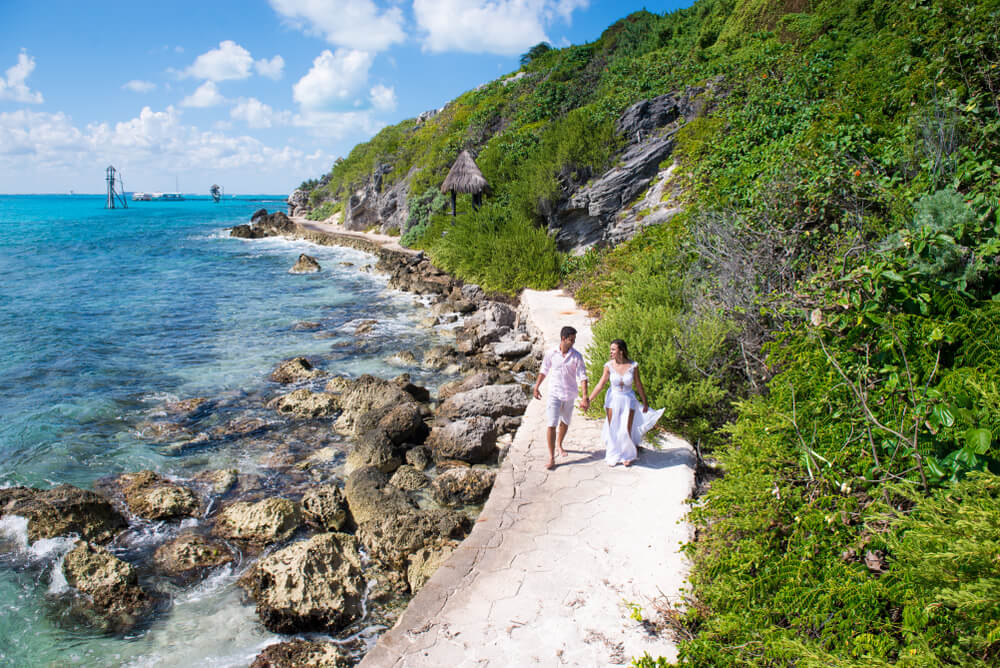
Getting married in the Philippines is a lifetime experience. With over 7,000 islands to choose from, saying “I do” as you gaze at the beautiful sandy beaches with turquoise water backdrops is no longer a fantasy. But achieving this picturesque dream requires you to get all your paperwork in order. We show you how to get married in the Philippines in this detailed guide:
How to Get Married in Philippines As a U.S. Citizen?
Planning a wedding requires you to complete several successive steps. And getting married in Philippines is similar. The stages below take you through all the requirements before you can tie the knot.
- Choose a wedding type: You can have a civil or church wedding in the Philippines. Since they call for different requirements, you must select an option to ensure you meet all the criteria before getting a marriage license.
- Select a wedding venue: The Philippines is a popular wedding destination. As such, venues sell out fast. Choosing and reserving a venue in the early stages gives you more options and allows you to choose the venue that best suits your needs.
- Compile the required documents: Your document requirements depend on whether you are marrying a U.S. citizen or a Philippines resident or citizen. If your partner is a Philippine, they must produce a valid ID, PSA documents, a Barangay certificate, a tax certificate, a recent passport photo, and all other applicable documents (e.g., parental consent). Suppose you and your partner are U.S. citizens. In that case, you must present a certificate of legal capacity to marry, a birth certificate, a PSA certificate of no marriage, a recent passport photo, a valid passport, and all other applicable documents (e.g., church confirmation records and divorce decrees). We will detail more about the document requirements in subsequent sections.
- Process apostilles: Documents issued in the U.S. are only acceptable in the Philippines if they have apostilles. You will need to get apostilles for birth certificates and any other official documents whose originals you should present to the civil registry in the Philippines. Since English is one of the official languages in the Philippines, translations will not be necessary.
- Get a marriage license: Once you have confirmed the documents, you can apply for a marriage license at the local civil registry. You must pay the applicable fee, after which the license will be valid for 120 days. Note that the license is only available after you complete your pre-marital classes.
- Undergo marriage counselling: Regardless of whether you do a civil or church wedding, you must undertake a pre-marriage counselling class. People having civil ceremonies must attend classes for about a day, while those doing church weddings have relatively longer sessions, depending on the church leading the ceremony. To get started on the classes, you must fill in the pre-marriage counselling form, which you get from the Local Social Welfare Office. You then pay the fees to the Local Civil Registrant Treasury Office and attend a class at the Local Social Welfare Office. Once you have satisfied the requirements, you will get a certificate of attendance, allowing you to proceed with the wedding.
- Find an officiant: People holding civil ceremonies can have judges or mayors officiating their weddings – the choice of an officiant comes down to the Local Civil Registrar. If you are having a church wedding, you will have a priest or pastor officiating the ceremony.
- Have the wedding: Once you have an officiant, witnesses, a venue, and have completed all the steps above, you can hold the wedding. Your witnesses should be present for the marriage to be legal – it is thus important to have backup witnesses to ensure everything sails through smoothly. After you have signed the marriage certificate, you will officially be married!
- Register the wedding: Once you get the copy of the marriage certificate, you should register the wedding at the Local Civil Registrar’s office by presenting the marriage license, a copy of the pre-nuptial agreement (if available) and the marriage certificate. Your officiant should do this within 15 days of the wedding.
Is a marriage in Philippines recognized in the United States? The U.S. recognizes all marriages if they are legal in the country where they have been performed. Thus, your marriage will hold up even in the U.S. To ensure this legality, you should collect your marriage certificate and register the marriage at the U.S. Embassy or Consulate. You can then change your name to reflect your married status or use the certificate for other official processes.
What are the Different Types of Marriage in Philippines?
People getting married in Philippines have two options: church or civil weddings. Below are the wedding requirements for each choice:
1. Civil Weddings
These apply to U.S. citizens who want to get married under the law. Their marriage requirements are thus standard as the constitution governs these contracts. U.S. citizens who wish to enter civil marriages must prove they are single and provide the necessary documents.
Per these weddings, the following ceremonies cannot take place:
- Relatives: According to Article 38 of the Family Code, people related to each other cannot enter marriage in Philippines, e.g., cousins.
- Same-Sex Couples: The Family Code does not recognize same-sex couples, and they thus cannot marry under the law.
- Underage Applicants: Anyone yet to attain 18 years cannot marry per the Family Code. Those aged 18 to 21 can marry if they have parental consent, while those aged 22 to 25 can only marry after receiving parental advice.
- Proxy Marriages: The laws applicable to these marriages are two-fold. On the one hand, you cannot get married to someone if you are not physically present but yet are in the Philippines. On the other hand, you can marry someone if you cannot travel to the Philippines for the ceremony.
- Manipulated Marriages: The Family Code does not allow marriages between people if one of the parties has been influenced to marry for power or money. Such motivations render the marriage contract void.
- Multiple Marriages: Legal divorce is often not an option. Married couples must remain together till death. If one spouse wishes to divorce the other, the process is often lengthy and costly.
- Common-law marriage in Philippines also applies to couples that have lived together for five years and whose relationships do not feature any of the legal impediments stated above. Even so, the couples must undergo a legal review to determine their suitability for marriage.
If you get married in Philippines is it legal in the U.S.? Unless your marriage falls under the above categories, your marriage will be legal in the U.S. and the Philippines.
2. Church Weddings
U.S. citizens who want to marry under the church should follow the church’s requirements. Since these ceremonies are legal in the Philippines, you do not need to hold an additional civil ceremony to register the marriage contract. Below are the additional requirements for Catholic church weddings:
- You must finish a pre-nuptial seminar,
- You should complete a canonical interview, and
- Your priest should administer a pre-nuptial investigation and clear you for marriage.
If one of the partners is not Catholic, the non-Catholic partner must get clearance from the Archdiocesan Chancery Office.
Marriage Requirements in Philippines for U.S. Citizens
Getting married in Philippines for foreigners requires you to abide by the following requirements:
- Age: Only applicants aged 18 can marry. Those aged 18 to 21 can get married if they have written parental consent, while those aged 22 to 25 must get parental advice before tying the knot.
- Affidavits (for applicants aged 18 to 25): Anyone aged 18 to 21 must present an affidavit of parental consent to marry. Both parents (or one parent if the other is absent) should sign the affidavit before witnesses for the affidavit to hold any water. Applicants aged 22 to 25 should submit an affidavit of parental advice to prove they have parental approval to marry.
- Witnesses: Weddings cannot take place without two legal-age witnesses who must be present during the nuptials.
- Pre-Marital Counseling: All couples getting married in the Philippines must get pre-marital counseling from a certified provider. Depending on the wedding type, the counseling can be under the church or the Social Welfare and Development Department.
Per the Philippines marriage laws, U.S. citizens must apostille their original documents to authenticate them for use in the Philippines. With the apostille, the documents hold water on foreign soil.
What Documents Do I Need to Get Married in Philippines?
U.S. citizens marrying in the Philippines are subject to the same Philippines requirements in Mexico. As such, you should ensure you have the documents below:
- Birth certificate: If your partner is a Philippines citizen, they must have a copy of their PSA birth certificate. If both of you are U.S. citizens, you must present your original birth certificate. Note that the certificate must have an apostille which you can get from the state that issued the document.
- A death certificate: People whose spouses have died should present death certificates as proof of the end of the marriage.
- A certificate of legal capacity to enter a marriage: This CENOMAR equivalent proves that you are single and have no impediment to marrying. You should process this at the U.S. embassy. Alternatively, you can use a local notary public in the Philippines and sign a contract to marriage affidavit.
- An ID: U.S. citizens should present valid passports to marry in the Philippines, while Philippines citizens can use other acceptable IDs such as national IDs and driver’s licenses.
- Recent passport photos: You should present two passport-sized photos measuring an inch by an inch. Your face should be clear against a white background.
- A pre-marital counseling certificate: All parties must attend marriage counseling classes under the church or the Department of Social Welfare and Development before getting a marriage license.
- A divorce decree: Previously married partners must present their annulment documents, including the legal paperwork, which should have an apostille. In the Philippines, the party would require a judicial annulment decree if the marriage was under the Philippines’ marriage laws.
- A marriage license: You must complete a marriage license application which you can get at the local civil registrar where you will marry. This document is available to people who have completed their pre-marital counseling.
The additional documents below apply to Philippine citizens:
- A certificate of no marriage (CENOMAR): This document proves that the citizen has never been married, as multiple marriages are illegal in the Philippines.
- A community tax certificate: This document proves your residency and doubles as an identification document for official processes.
- A barangay certificate: This document shows that the Philippine citizen is a barangay resident.
While the documents above are sufficient for a civil marriage in Philippines, people getting married in the church should also compile the following documents:
- A certificate of freedom to marry,
- Baptism and confirmation certificates for the bride and groom,
- Permits to marry from your local church, and
- Published marriage banns.
A U.S. citizen getting married in Philippines under the church should confer with the church to understand the requirements before leaving the U.S.
How Old Do You Have to Be to Get Married in Philippines?
Knowing how to get married in Philippines as a U.S. citizen comes down to following the steps laid out earlier. But as you may have noticed, the Family Code in the Philippines requires parties to meet specific criteria before tying the knot. So, how old do you have to be to get married in Philippines?
The law bars people aged less than 18 years from marrying. Anyone aged 18 to 21 can marry if they have written parental consent signed before two legal-age witnesses. And those aged 22 to 25 can marry if they prove they have received parental advice by providing an affidavit to the same effect.
How Much Does It Cost to Get Married in Philippines?
Preparing for a wedding in the Philippines incurs several costs, including the following:
- Hiring a wedding planner,
- Booking a wedding venue,
- Processing a passport,
- Getting an apostille for your birth certificate and other applicable documents, e.g., a divorce decree, and
- Applying for the marriage licence.
Additionally, you will incur costs on air tickets, room reservations, decorating the venue, etc. So, how much does it cost to get married in Philippines? It depends on your wedding preferences. Moreover, the costs of most processes are not standard. For example, you can expedite your passport, which would cost more than standard passport processing. Thus, the culmination of your choices influences the overall price.
How to Choose a City and Wedding Venue in Philippines?
Wedding venues in the Philippines come in many options. As such, finding one that suits your preferences is easy by considering the factors below:
- The Location: Do you want an indoor setting? Would you rather tie the knot overlooking the sea? Is the location accessible to you and your guests? Understanding your location preference helps you narrow the options to the most suitable ones.
- The Style: Does the venue match your wedding theme? While a venue may be popular, it may not exude the vibe you want on your big day. Consider what you have in mind and gauge if the venue can help you bring the best out of your plans.
- The Availability: Your wedding date determines the options available at the time of booking. Since many couples book popular venues months or years before their weddings, you should consider how availability will affect your nuptials. You can as well adjust your dates if they are flexible.
- The Capacity: How many guests can the venue hold? You want to ensure that your guest list matches the space such that you don’t end up with a smaller venue or one that is too big for your guests. When choosing a venue, choose one with a contingency to cover extra guests.
- The Layout: Can you add an entertainment area? Does the space allow you to execute your reception as you want? The last thing you want is a venue that limits your creativity.
- The terms and conditions: All venues have rules you must follow, including reservation terms, validity, entertainment, catering, etc.
- The Budget: Once you have reviewed the options that best suit the factors above, you can consider the monetary costs. Which of the venues falls within your budget?
Finally, trust your gut feeling.
How to Find a Wedding Planner in Philippines?
What do you need to get married in Philippines? Who can officiate your wedding? These are all questions your wedding planner can answer. Moreover, a good wedding planner can handle the marriage certificate registration process to speed it up. And to find the best planner, gather reviews from your loved ones. Additionally, consider planners with expertise in foreign weddings before narrowing your options based on reputation, availability, style, budget, and communication. Your instincts also count!

