How Much Does It Cost to Travel to Maldives?

The Maldives boasts over 1,000 coral islands lined with white sandy beaches surrounded by beautiful turquoise waters full of unique marine species, including 20+ shark species. As if this is not dreamy enough, the islands boast warm weather throughout the year, creating the perfect spots for sunbathing, watersports, and all-round relaxation. As a result, this country is a top choice for everyone, from lovebirds to adrenaline junkies. But as you may have heard, many people equate a trip to the Maldives with luxury. Is this the case? How much does it cost to go to Maldives? Let’s find out:


How Much Does It Cost to Go to Maldives?

The Maldives has everything from unique underwater activities to delicious cuisines, biodiversity, beautiful sunset cruises, incredible photo backdrops, and a thriving culture. This combination makes it perfect for all travelers, be it those on romantic getaways or those seeking relaxation. But how much is a trip to Maldives? Your budget will come down to the factors below:

  • Flights: The flight prices depend on your departure airport (e.g., Texas vs New York), the number of stops, and the airline you use. On average, travelers spend $1,500 to $2,500 for round tickets.
  • Accommodation: Your choice of accommodation will affect your nightly budget as follows: hostels range from $10 to $20, hotels range from $40 to $400+, and short-term rentals range from $50 to $1,000+.
  • Travel documents: Travelers must have valid passports, visas (for non-tourist visits), and yellow fever vaccination certificates (for those who have traveled to yellow fever endemic regions). Additional documents include legalizations and travel insurance, all of which incur varied costs based on preferences.
  • Food: The Maldives offers a variety of food options, including street food ($3 to $10), fast food ($5 to $10), local restaurants ($10 to $20), mid-range restaurants ($20 to $50), and luxury restaurants ($50+).
  • Activities: Popular activities cost anything from $40 to $150 per person daily. Luckily, the Maldives has a wide selection of free and low-cost activities that help reduce your travel budget.
  • Local transport: You can use buses, taxis, ferries, speed boats, and rental cars in the Maldives per your preferences and budget. Daily costs range from $30 to $50 for most travelers but can be lower if you opt for public transport.
  • Miscellaneous expenses: You need to consider SIM cards, souvenirs, tips, and other miscellaneous costs in your final budget.

The actual expenses you incur may differ from those above based on factors such as season, travel duration, and individual preferences. Consider the illustrations below for more context.


How Much Does It Cost to Go to Maldives for 2 Weeks?

Since travel duration influences the final Maldives budget, how much does it cost to go to Maldives for 2 weeks? Consider costs per trip preferences as follows:

  • Budget: $1,800
  • Mid-range: $4,000
  • Luxury: $10,000

The costs above do not include flight costs.


1 Week Trip to Maldives Cost

Traveling to the Maldives for a week is a great way to unwind, even when you don’t have a big travel budget. Consider the 1 week trip to Maldives cost options below:

  • Budget: $900
  • Mid-range: $2,000
  • Luxury: $5,000

These estimates do not include flight costs. Moreover, they vary based on the season; e.g., someone traveling in July will pay less than a traveler making the same trip in December.


Flights and Transportation

While cruising to the Maldives is also an option, most travelers take flights as they are much cheaper and faster. Flight prices from the US vary per the factors below, as illustrated in a later section:

  • The flight time: If a flight features many stops, the seat cost is usually lower than that of a flight with few stops.
  • The airline: Given the variation in airline standards, some will be more costly than others. Seat classes also affect this pricing, e.g., business class vs. economy.
  • The departure airport: Your state will determine the overall flight cost due to the distance the plane covers. Cities nearer the Maldives benefit from lower costs.

Let’s put this into context by considering flight costs and times from three states, as shown below:

  • Los Angeles: The average price of a round ticket is $1,800 to $2,200, with flight times ranging from 31 to 38 hours.
  • New York: Round tickets cost anything from $1,700 to $1,900 and take anywhere from 22 to 28 hours on average.
  • Texas: Travelers pay about $2,200 to $2,500 for round tickets, with flight hours between 35 and 50.

As such, you can expect to pay between $1,500 and $2,500, depending on your departure airport, the number of stops during the journey, and your choice of airline.


How to save money on flights?

Reducing your flight ticket budget can help you carve out extra money to spend on accommodation, activities, and other factors that influence your trip to Maldives cost. Here are some measures you can use:

  • Travel in the low season: Airlines charge less for their seats in the low-traffic months.
  • Use your miles: Instead of paying all cash, you can redeem some of your miles.
  • Book cheaper airlines: You can save a lot of money this way.
  • Look for discounts: Many airlines offer promo codes to their clients, and you can use these to your advantage.

Also, be flexible with your travel dates, as this helps you find the ones with the lowest prices.


Accommodation
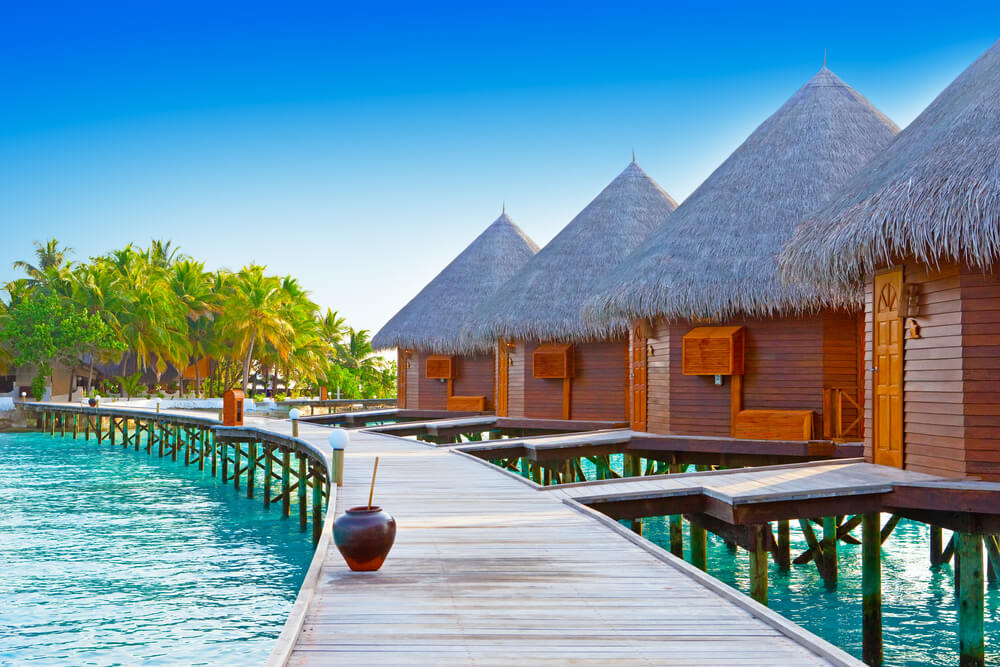
Australia travel documents

Photo: shutterstock.com

When traveling, getting a comfortable place to stay is important for your safety and mental well-being. Let’s look at the most recommended options for tourists and their associated costs:

1. Hostels: Rates range from $10 to $20 a night per person, but some hostels cost as low as $5 nightly.

2. Hotels: If you prefer staying in a hotel, here are your options and their nightly rates:

  • 2* hotels: $40 to $100 a night,
  • 3* hotels: $100 to $200 a night,
  • 4* hotels: $200 to $400 a night, and
  • 5* hotels: $400+ a night.

These costs vary based on hotel amenities and your chosen meal options.

3. Short-term rentals: Rates start at $50 per night and go up to $1,000 a night, depending on the number of rooms and the house’s finishes.

Note that accommodation costs are higher in the busier cities, e.g., Addu and Male.


Tips on finding budget-friendly places to stay

Since accommodation can account for as much as $1,000 a night or even more, here are some ways you can get budget-friendly options:

  • Stay away from major cities: Booking accommodation in places like Hulhumale comes at a high cost due to their high demand.
  • Travel in the low season: Accommodation costs drop during the low-traffic months, which helps you get the same amenities for less.
  • Consider hostels and rentals: Hotels often charge high prices due to their staff overheads, which you can avoid by choosing options with lower maintenance needs.

You can also try sharing a home with friends or family as the overall cost to visit Maldives will be lower.


Travel Documents

Have you considered the documents you will need in the Maldives? We have divided them into two categories to help you understand what’s crucial and optional as you calculate your cost to visit Maldives.

a. Essential Travel Documents

These are necessary at immigration checks, as customs officials will not let you enter the country without them. They are as follows:

  • A passport: You must present a passport whose validity extends six months from your planned departure date from the Maldives. The passport must also be in good condition and have at least one blank visa page. Anyone whose passport falls short of these criteria must apply for a new one. Costs vary based on the passport type, your age, and whether you need expedited services.
  • A visa: You will get a tourist visa on arrival if you can present evidence of sufficient funds, proof of accommodation, and a return travel ticket. Non-tourist visits necessitate visa applications before leaving the US – visa costs vary per the visa category, e.g., work versus study visas.
  • Yellow fever vaccination certificate: This document is only necessary for travelers who have traveled to yellow fever endemic regions.

Travel Visa Pro handles passport and visa applications at expedited rates, enabling you to complete your paperwork within days.

Get Your Passport Here


b. Additional Travel Documents

These are not necessary for immigration checks. However, it is advisable to have them as they serve important roles in your travel experience:

  • Travel insurance: This cover helps you meet unexpected expenses, e.g., baggage loss, without dipping into your travel budget. Usually, travel insurance amounts to 5% to 10% of your total trip to Maldives cost.
  • Legalization: Any official documents you will use for official business in the Maldives require consular legalization. A good example is birth certificates for couples getting married in this country. The cost of this service depends on the document type and your preferred processing timeline.

You can get these expedited services from Travel Visa Pro.


Food and Dining

Masroshi, reef fish salad, kavaabu, and garudiya are some of the meals that capture travelers’ taste buds and hearts. But does enjoying these meals rack up your trip to Maldives cost significantly? To answer this question, let’s look at the food prices per restaurant option:

  1. Street food: A meal costs anything from $3 to $10, enabling you to enjoy authentic tastes without huge costs,
  2. Fast food: You can grab a quick meal ranging from $5 to $10 at these convenient stops,
  • Local restaurants: Meals range from $10 to $20 per person,
  1. Mid-range restaurants: Food costs about $20 to $50 per plate, and
  2. Luxury restaurants: Expect to pay $50+ per meal.

The costs range based on the meals you enjoy, the location of the restaurant, add-ons (e.g., drinks), and the meal time (e.g., breakfast versus dinner). As such, your costs may fall on the lower or higher end of the ranges provided.


How to save money on food?

On average, travelers spend $50 to $100 daily on food. But your costs don’t have to reflect these averages, as you can lower your cost to visit Maldives as follows:

  • Eat at local restaurants: By skipping tourist settings, you can enjoy the same meals at affordable prices.
  • Buy snacks and drinks at local stores: This little hack saves you a lot of money as stores stock items at reasonable prices.
  • Enjoy street food: Not only is it authentic, but it also costs much less than what you pay for the same meals at sit-in restaurants.

Cooking is also a great idea if you are in a short-term rental.


Activities and Attractions
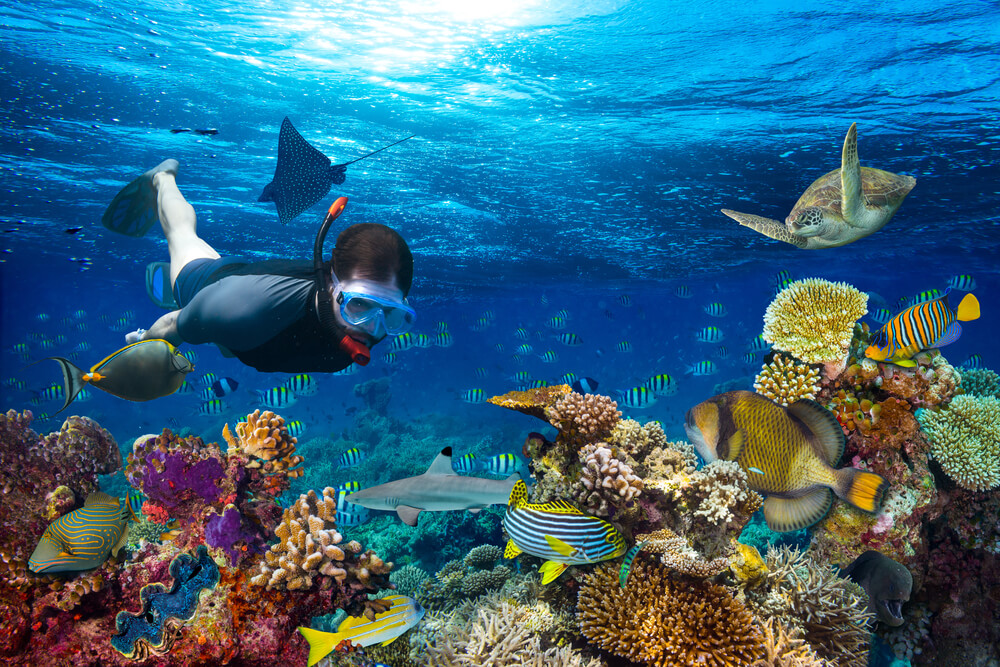
Australia travel documents

Photo: shutterstock.com

Is Maldives expensive for people seeking wanderlust? Prices range based on the attractions you want to see, the companies organizing them, and the length of the activities. Let’s consider the most popular options to give you an idea of your likely trip to Maldives cost:

  1. Watersports, e.g., jet skiing: From $40 per person,
  2. City walking tours: From $50 per person,
  3. Snorkeling: From $50 per person,
  4. Eco tours: From $60 per person,
  5. Submarine tours: From $70 per person,
  6. Shark and dolphin snorkeling tours: From $100 per person,
  7. Sunset cruises: From $100 per person, and
  8. Island-hopping adventures: From $150 per person.

The average traveler spends $50 a day on activities. The costs are much lower for groups as tour companies offer discounted rates to them.


Free or low-cost experiences for budget-conscious travelers

Would you like to have fun in the Maldives without spending an arm and a leg? Here are some fun things to try at no additional cost:

  • Spend a day at the beach, e.g., Bikini Beach and Gulhi Beach,
  • Visit a fish or local market,
  • Tour a mosque,
  • Go snorkeling in the ocean,
  • Take photos at Sinamale Bridge,
  • Head to the Tsunami Monument,
  • Tour Make on foot, and
  • Visit the Sultan Park.

You can amp these activities up by getting souvenirs, enjoying street food, and taking many photographs.


Local Transportation

With so many things to explore in the Maldives, having reliable transport is important. Below are the options you can use and their average costs per day:

  1. Buses: The rates depend on the distance covered, with most routes ranging from $1 to $3.
  2. Taxis: You can book a taxi to visit places the buses cannot access. Rates range from $3 to $10 and depend on the distance covered.
  3. Ferries: Depending on your destination, you can visit different islands by taking the ferry, which costs between $5 to $30 per person.
  4. Speed boats: These arrange private transfers and often charge anything from $30 to $100 per person.
  5. Rental cars: You can opt for rentals that start at $10 a day for standard vehicles.

Most travelers use a combination of these options, averaging $30 to $50 a day on transport.


How to Save Money on Local Transportation?

Local transport can easily account for a significant percentage of the average cost of a trip to Maldives. Here are ways to keep your spending within your budget:

  • Use public transport: Buses are a great way to reduce your travel costs as the daily spending can be under $10.
  • Carpool: This option is excellent for big groups, as taxis and rental cars cost less at full capacity.
  • Walk where possible: The Maldives has many walkable spaces that allow you to enjoy the sights and sounds even more.
  • Use tour packages: Most companies offer transport as an addition to their day trips, e.g., snorkeling packages.

It also helps to limit your movement by exploring one island at a time.


Miscellaneous Expenses

After factoring in transport, accommodation, and other big costs, you will also need to think about the following:

  • SIM Cards: These cost anything between $15 and $30, and most data plans cost under $50.
  • Souvenirs: These range from $5 to $500 apiece.
  • Tips: These are not necessary as they are included in invoices. But you can tip about 5%-10% of the service cost.

WIFI is often free in public spaces like restaurants.


Top Tips for Purchasing Budget-Friendly Souvenirs

Gifting yourself and your loved ones can be affordable if you use these tips:

  • Get advice from locals on the best prices,
  • Compare products and prices from different people, and
  • Shop at the local markets instead of tourist shops.

Don’t be in a hurry to buy things – take time to know what’s available to get good value for your money.


Cheapest Time to Go to Maldives

The low season in the Maldives is the rainy season between May and November. During this time, the tourist traffic drops, as do the accommodation, activity, transport, and food costs, making this the cheapest time to go to Maldives.

How much does it cost to go to Maldives? Answering this question is crucial to organizing a comfortable and fun trip where you will not lose sleep over expenses. Luckily, you can do this by reviewing all the cost factors and weighing them against your preferences to get the correct trip to Maldives cost.
How Much Does It Cost to Travel to Thailand?

Did you know that many people travel to Thailand just for the food? They want to experience authentic Thai meals rich in aromas and flavors as they bask in the sun. But when you are not indulging your taste buds and falling in love with Thai dishes, there is a lot more to do in this country. The beautiful weather makes for perfect days at the beach, the lush jungles are ideal for hiking and picnics, the shopping experiences suit all travelers, and the temples are prime for photoshoots. With all these and more attractions, it’s easy to see why many US citizens spend months on end in this country. But how much does it cost to go to Thailand?


How Much Does It Cost to Go to Thailand?

Is Thailand expensive? Anyone who has been to this country will tell you that touring it costs a fraction of what you would spend in most other tourist destinations. But while this may be the case, understanding the possible expenses makes it easier for you to meet all costs and still have a great time. Below are the costs you will need to cover during your stay:

  1. Flights: Travelers often spend anything from $1,000 to $1,500 on round tickets. The amount varies based on the number of stops, your departure airport, the airline you use, and your seat class.
  2. Accommodation: The nightly ranges per person are $10 to $50 for hostels, $20 to $300+ for hotels, and $20 to $100 for short-term rentals.
  3. Travel documents: Valid passports, visas, travel insurance, legalizations, and yellow fever certifications are some of the documentation costs that will arise. The actual figures depend on the associated fees, e.g., visa costs vary per visa type.
  4. Food: Dining options range from street food ($1 to $3) to fast food ($3 to $5), local restaurants ($4 to $10), mid-range restaurants ($10 to $20) and luxury restaurants ($30 to $50).
  5. Activities: Thailand attractions range from $20 to $100 per person, resulting in a $50 average daily spending. However, this country also boasts many free and low-cost activities for budget-conscious travelers.
  6. Local transport: Your picks include buses, trains, taxis, tuk-tuks, rental cars, and the subway. On average, travelers spend about $15 daily on transport, but those using public means often spend less than $10 daily.
  7. Miscellaneous expenses: You may also incur costs in tips, SIM cards, souvenirs, and other hidden fees. It’s best to have a contingency of about 5% of your budget to cater to these costs.

The above costs are estimates based on previous traveler reports. They thus may differ based on location, season, and individual preferences, as shown in the examples below.


How Much Does It Cost to Go to Thailand for 2 Weeks?

Thailand offers different options for all travelers. So, how much does it cost to go to Thailand for 2 weeks based on preferences?

  • Budget: $500
  • Average: $1,200
  • Luxury: $3,600

Note that the above amounts do not include flight prices.


1 Week Trip to Thailand Cost

How much is a trip to Thailand for a week? The total figure depends on your trip preferences, as follows:

  • Budget: $250
  • Average: $600
  • Luxury: $1,800

The above 1 week trip to Thailand cost includes accommodation, transport, and other costs but does not include flight costs. We will discuss flight prices in the next session for more context.


Flights and Transportation

Most travelers know that flights can account for a third to a half of their total trip costs. But should you expect to pay this much for your flight? The costs will depend on the following:

  • Your US departure airport, e.g., Texas vs New York.
  • The airline you use, and
  • The number of stops.

Additional costs include baggage, insurance, and seat class (first vs economy) add-ons. So, how much will you pay to travel to Thailand? We’ll use time and cost estimates from different destinations to give you an idea of the average cost of a trip to Thailand:

  • Texas: Flights range from $1,200 to $1,500 on average, with flight hours ranging from 23 to 30.
  • New York: Prices for round tickets cost between $1,300 and $1,600 on average, with flight times of 25 to 32 hours.
  • Los Angeles: Round tickets range from $900 to $1,300, with flight time ranging from 20 to 26 hours.

As such, you can budget around $1,000 to $1,500, depending on your home state and other factors, as discussed earlier.


How to save money on flights?

Spending over $1,500 on a round trip to Thailand is possible, especially in the high season. Here are strategies to reduce your flight costs without sacrificing comfort:

  • Book a flight early: Airlines hike their seat prices closer to the departure date – you can avoid this by getting your ticket months before your flight.
  • Use discount codes and points: Take advantage of your miles and cash them in for a lower flight price.
  • Compare different airlines: While you may want to stay loyal to just one airline, consider what others offer, as you may even get a 50% price reduction.

Also, travel during the low season as airlines charge less for seats due to reduced demand.


Accommodation

Australia hotel

Photo: shutterstock.com

While many countries usually charge a lot for accommodation, Thailand does not and yet offers hospitable experiences. Consider the following options:

1. Hostels: Rates range from $10 to $50 on average. Away from major cities, some even charge as little as $2 per night.

2. Hotels: The nightly prices range depending on the hotel class and meal options, as follows:

  • 2* hotels: $20 to $40,
  • 3* hotels: $50 to $100,
  • 4* hotels: $100 to $300, and
  • 5* hotels: $300+

3. Short-term rentals: Thailand has many rental options ranging from $20 to $100 a night. The cost depends on the size of the home, whether you share it with guests and the length of your stay.

Please note that the estimates above vary based on the location and amenities of your chosen accommodation. For example, a beachfront hotel will charge much more than a hotel in the second row from the beach.


Tips on finding budget-friendly places to stay

Accommodation in Thailand is relatively cheap, which contributes to the reasonable trip to Thailand cost. But it can be much cheaper if you implement the strategies below:

  • Travel in the low season: Accommodation prices fluctuate based on tourist numbers, and you pay less in the less busy seasons.
  • Consider location carefully: By choosing the less popular areas, you can cut your accommodation budget in half, e.g., staying away from the main city.
  • Be open to alternative accommodation: Booking a hostel or short-term rental can guarantee huge savings.

It’s also a good idea to book your accommodation early as you can get discounts from the hotel when they are yet to receive many bookings.


Travel Documents

Valid travel documents are essential for all travelers to Thailand, regardless of age. Below are the documents you need to process and their associated costs:

  1. A passport: You must have a valid passport that meets the conditions below:
  • It should be valid at least six months from your date of arrival in Thailand,
  • It must be in good condition, and
  • It must have at least one blank visa page (excluding endorsement pages).

Adult passport books cost $130, while children’s passports cost $100. These amounts do not include the acceptance and expediting fees that may apply to you.

  1. A visa: Tourists do not need visas for stays under 30 days if they have onward or return travel tickets, proof of sufficient funds, and proof of accommodation. Other travel reasons and durations necessitate visas, which attract different costs per visa type and processing timeline.
  2. A yellow fever vaccination certificate: Anyone who has traveled to a yellow fever endemic region must have a valid vaccination certificate.

Travel Visa Pro handles and expedites passport and visa applications and can get you the required travel documentation in days.

Get Your Passport Here


Additional Travel Documents

Besides the above documents, which you must present to get past customs, you may also need the following paperwork:

  • Travel insurance: This cover helps you meet unforeseen expenses, e.g., flight cancellations, and is often priced at 5% to 10% of your total cost to visit Thailand.
  • Legalization: If you want to conduct official business in Thailand, e.g., getting married, you must legalize your official documents. The cost depends on the document type.

TVP offers the above services and can give you a correct estimate of your total costs once you submit an application.


Food and Dining

For many travelers, a trip to Thailand is incomplete without an authentic Thai dining experience. But does this come at a cost that will affect your budget significantly? Let’s consider the ranges per dining option:

  • Street food: Many people choose street food as it is highly varied and cheap. A single meal costs anything from $1 to $3, enabling you to spend about $3 to $9 daily.
  • Fast food: Like most countries, Thailand has amazing fast food options, which cost $3 to $5 per meal, totaling $9 to $15 a day.
  • Local/ budget restaurants: These eateries are quite casual and offer tasty meals for about $4 to $10, costing about $12 to $30 daily.
  • Mid-range restaurants: If you want something between luxury and local, expect to pay about $10 to $20 per meal, amounting to $30 to $60 daily.
  • Luxury restaurants: You can go gourmet and pay about $30 to $50 a meal, which comes to $90 to $150 a day.

As such, your dining costs will come down to what and where you eat, as there are enough options for everyone.


How to save money on food?

The average cost to eat out in Thailand is $20 to $50 per day. Can you reduce this figure to reduce your cost to visit Thailand? Of course! Here are some ideas:

  • Eat at local restaurants: These charge non-tourist rates, enabling you to enjoy the same tantalizing foods for much less.
  • Cook meals at home: You can shop at grocery and convenience stores and save money on hotel overheads, which are often passed down to customers.
  • Vary your dining options: If you want to enjoy luxury meals, vary them with street and fast food options to lower the final cost.

Also, avoid buying water and other drinks in restaurants as they are often expensive, and instead buy them in local stores.


Activities and Attractions

Australia hotel

Photo: shutterstock.com

Tons of adventures await you in Thailand. To figure out how they could affect your total cost to visit Thailand, let’s look at some of the most popular attractions:

  • Floating Market Tours: From $20 per person,
  • Cooking Classes: From $30 per person,
  • City Tours: From $30 per person
  • Dinner Cruises: From $40 per person,
  • The Andamanda Water Park: From $50 per person,
  • Temple Tours with Guides: From $50 per person,
  • The Carnival Magic Theme Park: From $90 per head,
  • Sea Cave Tours: From $100 per person, and
  • Snorkeling Tours: From $100 per person.

The cost of these tours depends on the number of people in your group, if you use a tour company, the time of year, and the length of the activity. For example, you can pay less for a snorkeling tour if it is a half-day tour.


Free or low-cost experiences for budget-conscious travelers

Touring Thailand does not have to cost an arm and a leg. Here are some free or low-cost activities to add to your itinerary for a reasonable trip to Thailand cost:

  • Visiting shrines and temples: These don’t have entry costs, but travelers often leave a donation,
  • Museums: Costs range from $4 to $15 per person,
  • Street markets, public parks and gardens, and walking tours are free activities.

You can also enjoy spending time at the beach as this does not require any spending.


Local Transportation

Distance and preferences will largely influence your transport choices when touring Thailand. So, what options do you have?

  • The train: Costs range from $1 to $3 for short distances and $5 to $15 for longer routes.
  • The subway: This option has limited coverage and costs anything from 50 cents to $2 per trip.
  • The bus: Local buses charge under a dollar per trip as they cover short distances, while intercity buses charge anything from $2 to $7 per trip.
  • Tuk-tuks: These rides are available for short distances and range from $1 to $3.
  • Taxis: These charge based on distance and time and usually start their base rate at $1. Negotiation is acceptable.
  • Rental cars: You can get a standard car for $20 a day – the prices increase with the car’s features, e.g., SUVs cost about $200 a day.

The average transport cost thus ranges from $1 to $20 per day, with most travelers spending about $15 per day.


How to Save Money on Local Transportation?

Spending a lot of money on transport can greatly increase your total trip to Thailand cost. Here are some approaches to consider:

  • Use public transport: The train, subway, and bus systems work great and offer discounts for tourists who opt for periodic passes.
  • Walk where possible: Walking is not only safe but also fun, and it saves you money.
  • Share cars: If you are part of a travel group, consider using one car, e.g., a minivan, instead of two standard cars.

You can also ride a bike as this country has a strong cycling culture.


Miscellaneous Expenses

When calculating your trip to Thailand cost, it’s important to consider expenses that are often overlooked, such as the following:

  • Tips: While tips are often included in service invoices, you may often pay extra amounts ranging from 5% to 15% of the total service cost.
  • SIM Cards: These cost anything from $5 to $30, depending on your preferred phone plan.

Additionally, you should consider hidden fees incurred during accommodation and flight bookings, card transactions, drink orders, and souvenirs.


Top Tips for Purchasing Budget-Friendly Souvenirs

Buying gifts for yourself and your loved ones is a great way to make your tour memorable. But how do you do this and save money?

  • Shop in local markets: Tourist shops charge more for the same items.
  • Get advice from a local: They will know where the best products are.
  • Shop around: It helps you know what is available and at what price.

Also, feel free to bargain; this is the norm, and you may get a big discount.


Cheapest Time to Go to Thailand

While Thailand is a popular destination, the months between May and September record lower tourist numbers due to the rains, making this the cheapest time to go to Thailand. You can spend much less on flights, accommodation, and activities and enjoy a reduced trip to Thailand cost.

How much does it cost to go to Thailand? The answer depends on many factors, including your preferences and travel period. To understand what will apply to you, consider your average spending in each category and use this to create a reasonable budget for your stay.

How Much Does It Cost to Travel to Dubai?

Luxury is the best way to describe Dubai. It has everything from some of the most beautiful malls you will ever see, jaw-dropping skyscrapers that line its sunny skyline, memorable desert adventures, tantalizing cuisines, unique adventures, tons of beaches, incredible sunsets and sunrises over the desert or ocean – everything! As a result, many travelers head to this shopper’s paradise, hoping to uncover all its known and hidden gems. But before you pack light clothing to match the hot sun that awaits you, how much does it cost to go to Dubai? We cover all the costs to help you plan the perfect trip:


How Much Does It Cost to Go to Dubai?

The unique adventures in Dubai do not just start and stop at the majestic Burj Khalifa. Instead, they extend to its malls, markets, islands, dining experiences, deserts, beaches, and more. As a result, anyone traveling to this beautiful destination has a lot to consider when calculating their total cost. We make it easier for you by breaking down your costs per factor, as shown below:

  • Flights: Most travelers spend about $1,000 on round tickets. This price depends on your US location, the number of stops on the flight, and the airline you use.
  • Accommodation: You can stay in hostels, hotels, or short-term rentals, per your preferences and budget. The average costs are $50 to $300 for hotels, $10 to $50 for hostels, and $80 to $700 for short-term rentals.
  • Travel documents: Travelers should have a valid passport at the minimum. Depending on your travel purpose, additional documents include a visa, travel insurance, and legalizations. The costs depend on the processing timelines and the documents.
  • Food: Dubai has food options that range from street food to upscale restaurant experiences. Costs vary from $5 to $50+, depending on what and where you eat. The average traveler thus spends anything from $15 to $150 per food daily.
  • Activities: Most activities in Dubai range from $10 to $90 per person, with most averaging $30 to $50. Even so, many free and low-cost activities are available, enabling you to curb extra spending.
  • Local transport: You can use the metro, bus, taxis, water taxis, or rental cars to move around the city. Costs range from $1 to $60, depending on your preferred transport mode and distance covered.
  • Miscellaneous expenses: It’s important to consider communication, tips, and souvenir costs, which can amount to about $20 per day.

The actual expenses may deviate from the above figures, depending on where you stay, the time you visit, and your preferences. Consider the following breakdowns to see how these variations affect the overall figure.


How Much Does It Cost to Go to Dubai for 2 Weeks?

The ideal vacation period is 14 days. So, how much does it cost to go to Dubai for 2 weeks? It depends on your trip preferences, as shown below:

  • Budget: $1,400
  • Average: $3,500
  • Luxury: $9,000

These figures do not include flight estimates.


1 Week Trip to Dubai Cost

How much is a trip to Dubai for travelers who stay for seven days? Consider the estimates below per preferences:

  • Budget: $700
  • Average: $1,750
  • Luxury: $4,500

Note that this 1 week trip to Dubai cost does not include flight prices.


Flights and Transportation

For many travelers, a considerable chunk of the average cost of a trip to Dubai caters to flights. So, how much can you expect to pay for a round trip to Dubai from the US? Most importantly, how can you save money on these costs?

The cost of your flight will depend on the following:

  1. Your location: Cities closer to Dubai will have shorter routes and pass these savings to their passengers.
  2. The stops: The more stops a flight makes, the more likely you are to pay less than someone on a direct flight. However, this also depends on where the flight makes the stops.
  3. The airline: Some airlines are more expensive than others, and you may want to consider this when getting estimates.
  4. The traffic: The more people traveling to Dubai from your destination, the less you will likely pay. Of course, this also depends on when you book your ticket, as we will later discuss.

Let’s consider the possible flight costs per destination:

  • Los Angeles to Dubai: A round flight averages $900 to $1,100 per person. Time taken ranges from 16 to 36 hours.
  • New York to Dubai: You can pay anything from $700 to $1,100 on a round flight, which can take anywhere from 13 to 20 hours.
  • Texas to Dubai: Round tickets average $1,000 to $1,200. Durations range from 15 to 24 hours, depending on the number of stops.

Other US destinations fall within similar brackets, with variations in light of the factors we discussed earlier.


How to save money on flights?

Since most travelers spend about $1,000 on flights alone, reducing your flight costs would significantly lower your cost to visit Dubai. But how can you do this?

  • Travel during the off-season: You will pay much less for a seat as airlines will not have much demand.
  • Compare airline prices: While one airline may charge $1,200, another may offer a similar ticket for just $900.
  • Book your seat early: Airlines charge much higher rates closer to departure. You can avoid this by getting your ticket months in advance.
  • Use discount codes: You can redeem your points or use airline codes to spend less on flights.

You can also choose longer flights as they often charge less due to the many stops. Of course, you must also consider your comfort while doing this.


Accommodation

Australia hotel

Photo: shutterstock.com

The different accommodation options in Dubai make it easy to find what best suits your budget and preferences. Consider your options below:

1. Hotels: The hospitality in Dubai hotels is on another level. And to make things even better, the prices are quite reasonable, as follows:

  • 2* hotels: $50 a night,
  • 3* hotels: $100 a night,
  • 4* hotels: $150 a night, and
  • 5* hotels: 300 a night.

The rates are per person and depend on the hotel’s location, the meal options, the views, the room level (e.g., standard vs. suite), etc.

2. Hostels: While most countries have average hostels, the ones in Dubai are incredible, with many boasting amazing views and amenities. The average prices start at $10 a night and go up to $50. Like hotels, the rates depend on the location and amenities of the hostel, thus allowing you to find what best matches your needs.

3. Short-term rentals: If you’d like to live like a local, you can always get a rental. Rates range from $80 to $700 a night, with most hosts offering reduced rates for longer stays.

Couchsurfing is also available for members, though the homes may not be enough for everyone seeking this option.


Tips on finding budget-friendly places to stay

Besides flights, accommodation can also add to your trip to Dubai cost. Here are some ways to reduce your costs and save money:

  • Travel in the low season: Accommodation is more expensive during peak season.
  • Try alternative accommodation: While hotels are the conventional options, look at what hostels and rentals can offer and see if that works.
  • Consider the location: Staying by the beach or near popular tourist sites will cost you more. You can save money by choosing more remote options.

You can also reduce your trip to Dubai cost by sharing a room or house with someone in your travel group.


Travel Documents

Before you embark on unique Dubai adventures, like riding camels in the desert, you must get through customs. What documents will be necessary to pass the immigration checks?

  • A passport: You must have a passport whose validity extends six months from your arrival date. Emergency passports are not acceptable, nor are those with “X” gender markers. Additionally, your passport must be in good condition and have at least one blank visa page for the entry stamp.
  • A visa: Tourist visas are not necessary for stays under 30 days. However, this is contingent on showing adequate proof of funds, accommodation, and a return or onward travel ticket. Other travel reasons or longer stays will necessitate a visa.

If you need a visa or passport, talk to the TVP team. We offer expedited passport and Dubai visa services, with charges depending on your chosen processing timeline, which ranges from days to weeks.

Get Your Passport Here


Additional travel documents

Besides a valid passport and visa (for non-tourists), it’s advisable to get the following documentation:

  • Travel insurance: This cover protects you from unforeseen circumstances, e.g., baggage loss, injuries, and illnesses, which helps you cater to such costs without increasing your trip to Dubai cost. Charges are usually percentage-based, ranging from 5% to 10% of your total trip costs.
  • Legalizations: If you want to get married in Dubai or conduct official business, you must authenticate your official documents in the US before traveling.

Travel Visa Pro is here to help you get these documents to help you avoid any surprises during your visit. The charges depend on the policy option (for travel insurance) and the travel document (for people seeking legalization).


Food and Dining

Culinary experiences are a great way to learn about foreign cultures and discover new tastes. But how much of your trip to Dubai cost will come down to food? The total figure depends on where you eat as follows:

  • Street food: $5 to $10 per meal,
  • Fast food chains: $7 to $12 per meal,
  • Budget restaurants: $10 to $20 per meal,
  • Mid-range restaurants: $20 to $50 per meal, and
  • Upscale restaurants: $50+ per meal.

The food options are varied such that you can move from burgers to shawarmas to gourmet meals all on the same day.


How to save money on food?

Eating in upscale restaurants can cost you as much as $150 daily. How can you lower these costs?

  • Cook if you can: Instead of eating out, you can make your meals at home if you have a rental,
  • Use hotel meal options: Consider the BB or HB options at your hotel to spend less on food from outside, and
  • Vary your dining options: You can switch between affordable and expensive meals to lower food costs.

It also helps to have a budget limiting your daily food spending, e.g., $70 daily.


Activities and Attractions

Australia hotel

Photo: shutterstock.com

If you are like most people, your Dubai trip will feature stops at the most popular spots. But how much does this affect your cost to visit Dubai? Let’s consider the top options:

  • Dubai Global Village: From $10 per person.
  • The Desert Safari: From $25 per person,
  • The Sky View Glass Ride: From $30 per head,
  • Dubai Miracle Garden: From $30 per head,
  • The Museum of the Future Ticket: From $40 per head,
  • Touring the Burj Khalifa: From $50 per person,
  • The Dubai Aquarium: From $50 per person,
  • Ski Dubai: From $65 per person,
  • The Atlantis Aquaventure: From $80 per person, and
  • The IMGS Worlds of Adventure: From $90 per person.

These prices depend on factors such as the day (weekdays vs weekends), whether you have a tour guide, the tour company offering the package, and the number of people in your group.


Free or low-cost experiences for budget-conscious travelers

Is Dubai expensive? Must you spend a lot of money to have fun? Not at all. There are many free and low-cost activities you can enjoy while having the time of your life in this city, as follows:

  • Watch the Dubai Fountain for free,
  • Head to the Dubai Mall and enjoy 12 million square feet of shopping space at no cost,
  • Spend time at Al Seef for some quiet without spending a dime,
  • Have a beach day at some of the most beautiful beaches, e.g., Kite Beach, Marina Beach, and Jumeirah Beach,
  • Explore the Ras Al Khor Wildlife Sanctuary, and
  • Visit the souks (markets) where you can view gold ornaments.

Other free and low-cost activities include visiting the Al Qadra Lakes, the Heritage Village, and the Camel and Coffee museums.


Local Transportation

The transport options in Dubai are quite varied, making it easy to choose what best suits your preferences and budget. Consider the options below:

  1. The metro costs about $1 to $5 per person based on the distance travelled and the ticket type (metro class).
  2. Buses: The fares range from $1 to $3 per ride based on distance and bus class.
  3. Taxis: The base fare starts at about $4, and you pay about $1 for every extra kilometer.
  4. Water taxis cost anything from $15 to $60, depending on your route and the number of people on the boat.
  5. Rental cars: Rates for standard cars start at $12 daily and increase based on car upgrades.

As a result, most travelers spend an average of $10 a day on local transport.


How to Save Money on Local Transportation?

Compared to most cities, transport in Dubai is fairly priced. However, you can always reduce your costs in the following ways:

  • Walk whenever possible, as there are many walkable paths in the city,
  • Use public transport to access nearby areas, as buses and the metro are in excellent condition, and
  • Share transport with others, e.g., carpool if you are a travel group.

You can also try cycling as long as you use the designated bicycle paths and avoid the highways.


Miscellaneous Expenses

Most people often think about the high costs of transport and accommodation. But smaller expenses can account for a big chunk of your cost to visit Dubai, such as the following:

  • SIM Cards: These start at $15,
  • Phone Plans: Local plans range from $30 to $50 per month, while international plans can cost up to $300,
  • Tips: Percentages range from 5% to 10% of the service provided, and most travelers spend about $10 a day on average.

Considering souvenir costs is also important, as these range from $10 to $1500.


Top Tips for Purchasing Budget-Friendly Souvenirs

Dubai is the land of wonder, as there is much to buy, from dates to perfumes to clothes to coffee sets to gold ornaments. So, how can you get a good deal?

  • Shop in the cheaper places, e.g., the markets and the cheap malls,
  • Compare prices in different places, and
  • Have someone guide you to the places with the most value for your money.

Also, delay shopping to assess what’s in the market before buying anything.


Cheapest Time to Go to Dubai

Every region has a low season, and Dubai is no different. So, what is the cheapest time to go to Dubai? The summer season between June and August has the highest temperatures and records the lowest traffic, resulting in a drop in the overall trip to Dubai cost.


So, how much does it cost to go to Dubai? The best way to determine your travel cost is to consider all the contributing factors (e.g., accommodation) and weigh them against your individual preferences to ensure you have the proper budget for a comfortable and fun-filled trip.

35 Must-Try Things to Do in St. Lucia

While Caribbean islands have an undeniable allure, St Lucia takes the cake when it comes to the authentic Caribbean experience. This beautiful country borrows different aspects from African, French, East Indian, and English cultures, culminating in the perfect blend. When you are not enjoying the local culture, you can get lost in the Pitons, spend fascinating days at the beach, take baths in the sulfur springs, hike the rainforests, explore the marine life, learn the island’s history, or spend a day at Soufrière. And while these may seem like tons of activities, they barely scratch the surface of what this beautiful paradise has in store for you!

Interestingly enough, the island only measures 40 kilometers by 22 kilometers and is able to offer these and more amenities to tourists. In this guide, we take you through the best things to do in St. Lucia, enabling you to create an itinerary that fits your preferences. Let’s get started.


1-5: Pitons and Soufrière Exploration

Piton

Photo: shutterstock.com


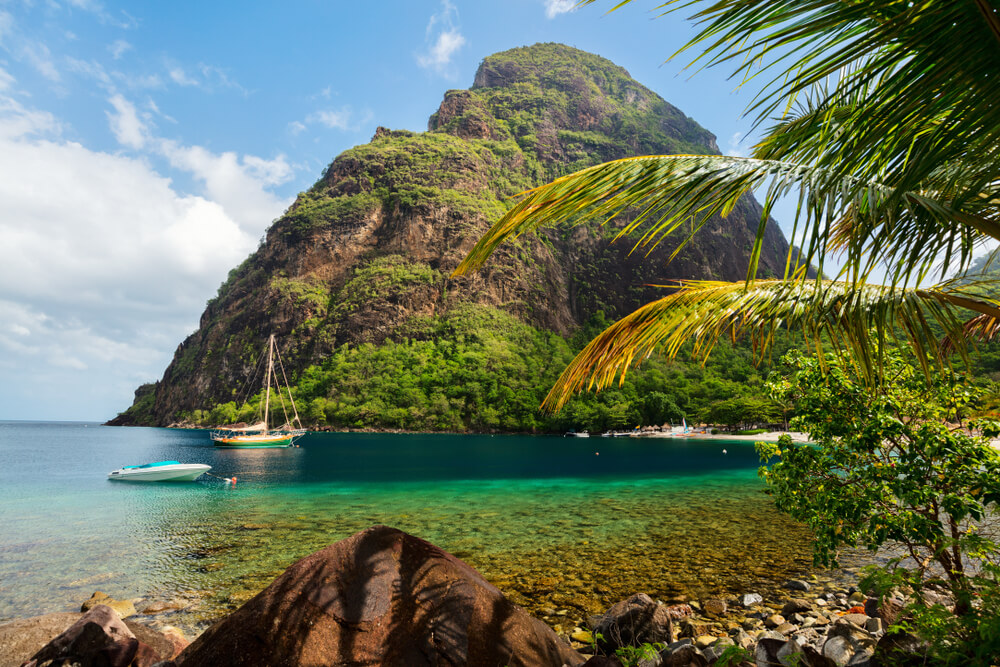
A trip to St Lucia would not be complete without a stop at the iconic Pitons, some of the most beautiful mountains you will ever see. These mountains stand 700 meters above the sea, giving you an amazing view of the waters and the environs. You can even see St Vincent and Martinique from here if the sky is clear. Soufrière is just as outstanding. This old capital is near the Pitons and boasts incredible French colonial architecture. So, once you are done working up a sweat in the mountains, you can head to this volcanic territory and learn more about what makes it such a hotspot for tourists and cultural festivals.

Let’s consider the best things to do in St. Lucia when you are in Soufrière :


     1) Hike the Pitons: Getting to the top of the Pitons is a great idea if you are up for a workout. You can do so without equipment, as the climb is generally easy to moderate. However, since the mountains don’t have a specific trail, hiring a professional guide who can show you the best way to get to the top is best. Ensure you choose the Gros Piton as it is the safer option, despite its big size. As you make your way up, you will have the lovely treat of the scenic views around you, which make for great picture backdrops. Once you reach the top, you can take in the unbelievable views, have a picnic, and gaze at the beauty all around you.

  • What will you need for a good hike?
  • Carry enough water and snacks as the hike is quite challenging.
  • Wear comfortable yet sturdy shoes to help you navigate the rough terrain.
  • Have a knowledgeable guide who has been on the trail often.

Of course, a good camera is a good idea as you will want to snap many photos to take in all the unique aspects of these mountains!


     2) Take a helicopter ride: While hiking is a great way to explore the mountains, flying around the Pitons may appeal more to you. Not only do you get to see the mountains in all their glory by exploring them from all angles, but you also enjoy the adrenaline rush of doing so while in the air. You can take in the contrast of the mountains against the sea, save yourself the hike up the mountains, and enjoy the ride. From this vantage point, the pictures look amazing, and you will go home with memories that will last a lifetime!


     3) Enjoy the view from The Beacon: There are many viewpoints in Soufrière. But few do it as much justice as this one. The Beacon is a bright pink restaurant that allows you to take in the sights around Soufrière. You can marvel at the sea’s contrast with the mountains, feast your eyes on the towering mountains, take in the beautiful marina, and take many photos while here. As a plus, it serves local cuisines, and you can stop here to calm your hunger pangs as you embark on the next leg of your trip.


     4) Visit the Morne Coubaril Estate: What would you say to a tour that allows you to sample local rum and have chocolate on the go? For many people, this is but a dream. But for anyone touring this plantation, this is the sweet reality. The tour starts with the estate tour, where you learn more about the plantation, which has been operating for over 200 years. You learn everything from how cocoa gets produced to how it becomes chocolate, all the while as you sample the rum. Once the tour ends, you can buy some souvenirs to take back home.


     5) Tour the island: The best way to get to know the town of Soufrière is to tour it in a day. You can do this alone or with a guide, based on your preferred pace and how much research you have done on the town. Renting a car or walking through the town is often the best option as it allows you to take the winding streets and see what each has to offer. At some points, you will be staring at lush vegetation; at others, you will be awwing at the mountains, and at others, you will delight in the fishing villages. There is a lot to see, and it is thus best that you consider the following stops in your itinerary:

  • The Anse La Raye Fishing Village: This village will wow you with its unique picturesque appearance. And you also get to learn a lot about the town’s history.
  • Soufrière Market: If you want authentic souvenirs, shopping here will allow you to see what local crafts are available. If you can, visit the market on a weekend as this is when most vendors showcase their goods.
  • The Cathedrals: Combine a historical tour with these lovely buildings and learn more about the people of St Lucia.

It’s also a good idea to try the eateries in the town as they will not leave you disappointed.


6-10: Relax on Stunning Beaches

Beach

Photo: shutterstock.com


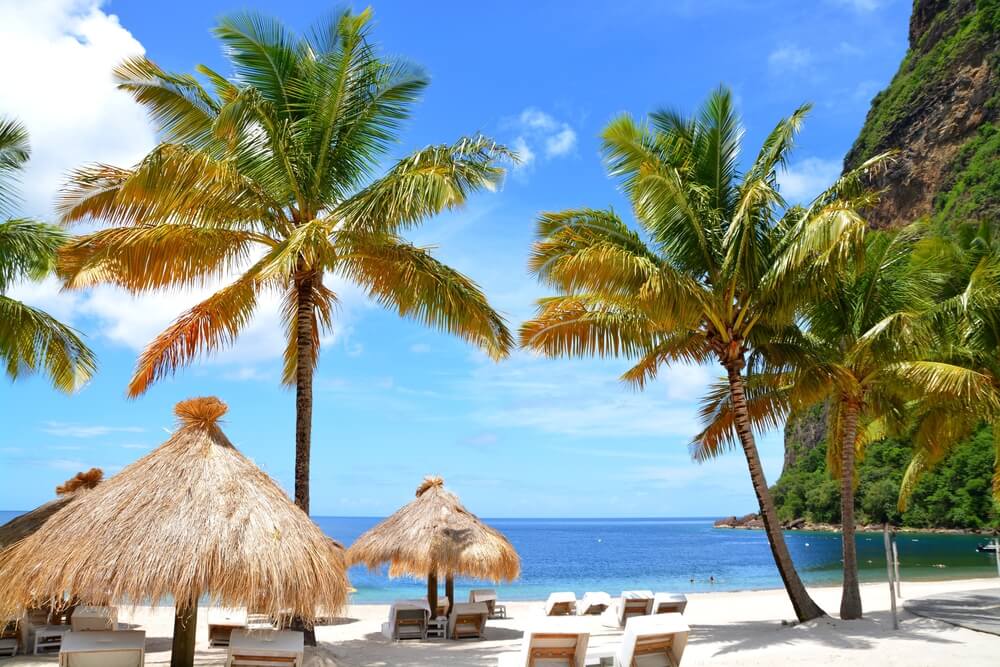
Most people vacation in the Caribbean for the amazing beaches. They want to spend their days lying on the white sandy beaches and looking at the clear blue waters as the sun warms their bodies. And in St Lucia, this combination is even better as its beaches are varied to allow you to do whatever you want – get good views, participate in water activities, read books, eat out – everything! Consider the following beaches and what makes them unique when looking for the perfect spots:


     6) Marigot Bay: If you take a guided tour in St Lucia, the chances are high that you will end up at this beach on the island’s western shores. And there are many reasons why tour guides count this as one of the incredible things to do in St. Lucia. First, it is a long stretch of soft sand against beautiful blue and calm waters. As such, you can wade in the water or lie by the beach without worrying about crashing waves interrupting your picnic or wetting your belongings. Secondly, it has a wide array of eateries, including beach bars and restaurants where you can enjoy a bite or two. And the icing on the cake is the water activities – you can swim, kayak, or take a boat on the water for the perfect finish.

Other amazing beaches for relaxing days are as follows:

  • Soufriere Beach,
  • Anse Mamin,
  • Anse Chastanet Beach,
  • Anse Cochon Beach,
  • Anse Galet, and
  • Gros Islet Beach.


     7) La Toc Beach: Like many beaches in St Lucia, this one boasts blue waters, beautiful golden sand, and an amazing view. But it has another quality that draws visitors – it has low traffic. You can spend an entire day here without running into crowds, making it the best spot for anyone who wants a slow and relaxed day. And thanks to the calm surf, you can watch the water levels rise gradually, giving you a sense of relaxation. On top of the serenity, it is near a historic fort where you can stop for a tour highlighting important aspects of the past.


     8) Jalousie/ Sugar Beach: This beach is quite striking as it is at the foot of the mountains. So, you get the incredible combination of mountains, sea, and sand, making it one of the most sought-after beaches in St Lucia. Below are things you can do at the beach:

  • Relax on the sand: The soft sand stretches for quite a distance, allowing you to find a spot to enjoy the warm sun on your skin.
  • Snorkeling: This part of the sea boasts a wide variety of marine species which you can explore without moving far from the shore.
  • Gaze at the mountains: How about spending the day appreciating the beauty of the lush forests and palm trees around the beach?
  • Scuba Diving: The waters are calm and perfect for divers who want to explore marine life at a deeper level.


     9) Grande Anse Beach: Are you in the mood for adventure? If yes, this is a fantastic choice. The fun starts on the journey to the beach as you must go through some lush scenery. Once you are past the trees, you gaze at a long sandy stretch against calm blue waters that blow your mind away. And the waters? They are just right!! While the waves and wind are quite strong for swimming, they are ideal for watersports. You can do boating, kayaking, jet skiing, kite surfing, or any other activity that takes your adrenaline to the next level. Reduit Beach is another top choice for water activities.


     10) Anse de Sables Beach: Kiteboarding is one of the most exhilarating things to do in St. Lucia. The feel of the wind against your hair as you steady yourself in the water is indescribable. But that is not the only thing to look forward to on this southeastern beach. It also boasts soft white sand, clear blue waters, and incredible views. And thanks to the strong winds and currents, you can enjoy windsurfing and other high-adrenaline watersports.

With many other beaches, you cannot lack a spot that will cater to all your preferences. To get the most out of your beach days, remember the following tips:

  • The sun is hot, and wearing protective clothing and sunscreen is important. Also, carry water if you are going to a secluded beach.
  • You will need private transport to access most beaches. But you can get around this by hiring a car or visiting beaches with easier access.
  • Insect repellent is a good idea if you will be at the beach early in the morning or late in the evening.

You should also note that all beaches are open to the public, allowing you to set up beach picnics as you please.


11-15: Sulphur Springs and Mud Baths

Soufriere

Photo: shutterstock.com


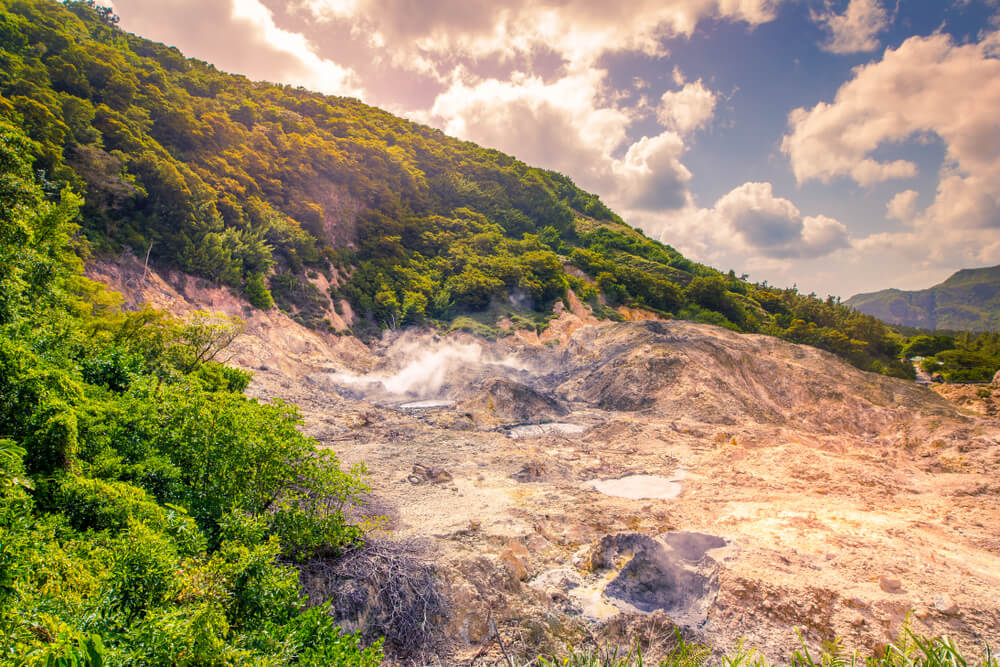
Does geology sound fun? Most people would say no. It is thus interesting that most St Lucia visitors make a point of stopping at the inactive sulfur springs in Soufrière. But they are not just after geological tidbits. Instead, they wish to soak in the hot springs and mud pits that exist following the volcano’s last eruption in the 1700s. By soaking in these pits and springs, you get to experience their healing benefits, physically and mentally, making this trip one of the most relaxing things to do in St. Lucia. Let’s cover what natural baths and hot springs you can include in your itinerary:


     11) The Soufrière Volcano (Sulphur Springs): Many people believe that soaking in mud baths not only erases years from their skin but also treats ailments like sore joints and sunburns. And in this spring, you will be in for quite the treat. Visitors get to soak in boiling mud where they can scrub themselves, enjoy the warmth of the steam, and learn more about the volcano’s last eruption. Sitting so close to the site of eruption is an added advantage.


     12) Diamond Falls Botanical Gardens & Mineral Baths: This six-acre plot of land is the perfect escape from the hustle and bustle of the city. Nestled among lush vegetation with tropical plants are mineral baths that have existed for several hundred years. The establishment offers private and public baths, allowing you to choose what best suits your preferences. The public baths are warm and allow you to soothe your muscles, while the private ones feature hot water from the spring as they are at the outlet.


     13) Sapphire Falls & Jungle Spa: If you want to soak in a mud bath away and enjoy a quiet session, this is a great option. It is in the middle of a jungle and offers a quiet ambiance that augurs well with the soothing bath. As you relax, you can enjoy the view and sounds of the waterfalls, enabling you to sink even further into your state of pure bliss.


     14) Piton Falls & Mineral Pools: Hiking Petit Piton is not necessary to get to these healing pools as they are right at the base of the mountain. The naturally hot water flows from the Piton Falls and enters the mineral baths, allowing you to enjoy its warm feel as it envelops you. While the pool is manmade, everything else is natural, creating the perfect environment for losing yourself in the moment.


     15) New Jerusalem Mineral Baths: Mud baths often attract many visitors. So, if you want some seclusion, you might want to opt for mineral baths as they have much less traffic. This one, in particular, features three hot pools and one cool one inside the hill, creating a beautiful infinity pool effect. You also get cool shade from the nearby plants as you soak in the water, allowing you not to get too hot.


As you emerge from the springs and baths feeling relaxed, you will likely want a shower. Why not do it in the natural waterfalls as the perfect finish for a truly healing experience?


16-20: Water Adventures and Snorkeling

Snorkeling

Photo: shutterstock.com


By lying on the beach, hiking the Pitons, and soaking in mud baths, you will have learned a lot about St Lucia’s history. But if you want to uncover what ebbs and flows beneath it, the trick lies in enjoying water adventures. You can explore marine life, look at St Lucia from another perspective, and make memories that will enhance your trip. The best-rated activities are as follows:


     16) Scuba Diving: Picture deep blue seas filled with different aquatic species. All you need to do is adorn a scuba suit, fill up your tank, and dive into a world of adventure. Scuba diving in St Lucia is quite easy, even for beginners, as there are many professional trainers, and the dive sites are usually minutes away from the surface. The best spots are as follows:

  • Turtle Reef,
  • Grande Caille,
  • Staircase,
  • Pinnacles,
  • Devil’s Hole,
  • Sugar Beach Reef, and
  • Jalousie.

Most of these sites are untouched, and the coral is thus full of beautiful aquatic life.


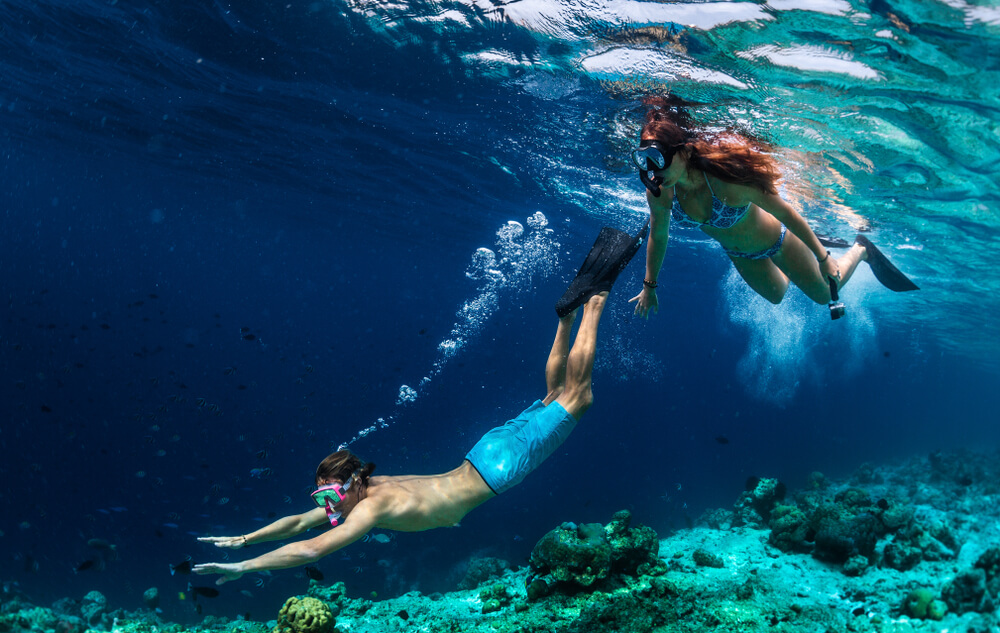
     17) Snorkeling: How would you like to interact with schools of fish while enjoying the sun’s warm glow? Snorkeling is a fun activity for all ages. And even if you do not have a snorkeling kit, you can easily get one from your tour operator or hotel. You can enjoy snorkeling in the scuba diving sites or try the spots at Anse Chastanet, Anse Mamin, and Piton Wall. If you want a cross between scuba diving and snorkeling that allows you to reach deeper levels, you can try SNUBA.


     18) Go on a catamaran excursion: Many tourists rank catamaran tours as some of the best things to do in St. Lucia as they encompass everything. Once on board, you can enjoy riding out the waves as you bask in the sun and take in the views around you. The catamarans usually stop at different places where you can take pictures, do some snorkeling, enjoy lunch and drinks at the beach, or go on a short hike. The full experience is quite fun! You can enjoy this excursion on almost all beaches as tour operators traverse a huge distance.


     19) Try sailing: Yacht tours combine the thrill of a catamaran tour with the luxury of an all-inclusive trip. Like catamarans, they are available for half and full-day tours, allowing you to travel as far as you wish. As you cruise the coast, you can enjoy refreshing drinks and gaze at the island’s beauty from a vantage point. It’s a great way to spend a day at the sea and you can do it all without getting your hair wet!


     20) Watch whales and dolphins: Would you like to interact with these majestic animals? Well, you can! Tour operators set off early in the morning for whale and dolphin sightings. If you are lucky, you might set your eyes on an orca whale, a spotted dolphin, or a spinning dolphin. You just need to be ready with your camera for that shot!

Other amazing water activities include deep-sea fishing, sunset cruises, and kitesurfing. You can book these with your hotel or find a trusted tour operator to take you.


21-25: Rainforest Adventures

Rainforest

Photo: shutterstock.com


The forests in St Lucia are so beautiful that even sedentary people feel moved to hike the forest trails when vacationing. They get to explore the unique flora and fauna, gaze at incredible views from the peaks of the mountains, embark on historical lessons, and breathe in fresh air between baths at natural waterfalls. If you’d like a similar experience, consider the following trails:


     21) Gros Piton: This hike is a bit challenging as it requires moderate effort and takes about five hours to complete. But its rewards are worth the sweat. You get to climb a UNESCO World Heritage Site brimming with beautiful trees and overlooking the ocean. It’s perfect for your fitness levels and your photo album.


     22) Petit Piton: Hiking the Gros Piton is a great idea, but some people cannot make it up this mountain. Luckily, you can still enjoy the beauty of the sea contrasting with the mountain under the clear skies by hiking this smaller trail. Once you come down, you can soak in the ocean to soothe your muscles.


     23) Volga Nature Trail: This trail leads you straight to the Sulfur Springs and is thus a great way to prepare for that hot soak. It is lush with beautiful vegetation that hugs you along the way. And after about one hour, you should be reaching the mud baths. Of course, the hike can take longer if you stop at the attractions along the way, including the old French architectural homes.


     24) Edmund Rainforest Trail: If you think the Pitons are outstanding, wait till you see Mount Gimie, the tallest mountain on the island! It stands tall, towering over the island, giving you an incredible view of the surroundings. Getting to the top takes a while as the trail is about seven miles long – but if you are up for adventure and want those views, you have no option but to keep going.


     25) En Bas Saut: Try this shorter option if the Edmund Rainforest Trail feels too challenging. With two waterfalls awaiting you in this magnificent rainforest, keeping pace should not be an issue. And once you get to the falls, you can bathe as you prepare for the way back.

With these beautiful trails, it’s easy to see why hiking ranks as one of the best outdoorsy things to do in St. Lucia. Try one option and see how you like it. And if you are into bird watching, the Millet Bird Sanctuary and the Des Cartier Rainforest trail are great choices.


26-30: Culinary Delights

Food

Photo: shutterstock.com


Travelers should always try to explore different cuisines. Doing this helps you uncover tastes you never would have thought were delicious, discover different textures, and thus expand your palate. And in St Lucia, these opportunities are countless as the island excels in offering top-tier foods. Here is how you can embark on a culinary adventure that will blow your taste buds away:


     26) Eat local foods: St Lucian dishes are spicy and flavorful and are thus a great way to step out of your comfort zone. Since most of these dishes are unavailable elsewhere, it would be a shame not to try them on the island. Make a point of having the following:

  • Bouyon: This meal features sweet potatoes, pork, pumpkins, yam, and ham in one delicious stew. Once you have tasted it, you will see why it is a mainstay in St Lucian celebrations and why enjoying it ranks as one of the top things to do in St. Lucia.
  • Lobster: There are many ways to prepare this meal, from steaming to raw. No matter how you have it, you will appreciate the effort that goes into making it – it’s just delicious!
  • Lambi: St Lucians take conch to the next level with their unique preparation style. They first spice it up before frying it – by the time you get it, you will hardly believe this is the same conch you would eat on another Caribbean island.
  • Accra: This food is so popular that you can get it on the streets. It comprises salted and spiced codfish that has been deep fried, making it the perfect snack for those long trips.

Consider eating Callaloo soup and fry bakes to complete this culinary journey.


     27) Try local drinks: What can you wash down the local foods with? Here are some great ideas:

  • Rum: The signature rum on this island is fruity and smooth, making it the perfect way to end a meal. To get a taste of the different rums, consider a rum-tasting tour that will have you appreciate the island a lot more.
  • Piton: A crisp and light pilsner lager might be all you need to refresh your taste buds and mind after a long day in the sun. It tastes even better with the view of the Pitons.

Cocoa tea, especially with some spice, is also common and a great way to start the day.


     28) Try the local snacks: Enjoying small bites on the go is a great way to keep your energy up and learn more about the local foods. Most visitors enjoy the following options: banana bread, avocado balls, cassava bread, and breadfruit. They taste great on their own, but you can always amp them with drinks.


     29) Learn how to cook local foods: Why not learn how the different ingredients combine to produce these tasty local treats? Many tour guides offer cooking tours where you can interact with the foods and borrow some tricks you can use back home.


     30) Eat at local restaurants: Tourist restaurants often have extensive international menus. Step outside your comfort zone by eating at a local restaurant where you can enjoy the authentic St Lucian tastes. Try the top options below that have made it to the list of things to do in St. Lucia:

  • Martha’s Tables,
  • Liz Roti,
  • Gros Islet Jump Up,
  • Castries Central Market,
  • Mama Tilly’s Bar,
  • Marie’s Local Cuisine, and
  • Jambe de Bois.

Once you are done with these local experiences, you will have a lot more appreciation for the island.


31-35: Adventure Activities

Adventure Activities

Photo: shutterstock.com


Adrenaline junkies look for fun everywhere. And if you fall into this category, you will love all St Lucia has to offer its visitors. From ziplining to ATV tours, the following adrenaline-pumping experiences will help you create the kind of memories that last a lifetime:


     31) Zipline through the forest: The beautiful tropical forests in the island allow you to unleash your inner Tarzan as you move at top speeds from one side to the other. One of the best options is the Treetop Adventure Park, which has 12 ziplines, each more thrilling than the next. Thanks to their high settings, you get the best forest views and can get amazing shots as you scream or smile through the treetops.


     32) Drive an ATV: This tour allows you to take the road less traveled and embark on a thrilling adventure where you dictate the speeds and destinations. You can enjoy riding on the beach, on remote roads in the forest, or wherever your tour operator permits. Some thrilling rides end with horse rides by the beach to perfect an already ideal itinerary.


     33) Cycle in the forest: How about you take hiking to the next level by adding two wheels to the equation? Cycling is a great way to push yourself and allows you to make it across the forest trails even faster. Besides, you get to encounter different flora and fauna, enjoy the cool shade, and make stops at different waterfalls.


     34) Drive a speed boat: Have you ever wanted to captain a boat? Now you can! Many tour operators offer this inclusion as part of their packages, allowing you to steer a fast-moving boat in the sea. The whole experience is just exhilarating.


     35) Try a power snorkel: You have likely snorkeled in water and enjoyed interacting with marine life. But have you ever wished you could do it faster? Power snorkeling allows you to hold on to a powered snorkel that pulls you through the water, enabling you to marvel at the aquatic life at high speeds.

If you want exciting things to do while on vacation, these activities will meet your standards.


Travel Documents

Before you can take in the beautiful scenery and fantastic culture in St Lucia, you need to get through customs. Immigration officials will expect you to present the following documents, failure to which you will be denied entry.

1. An Identification Document

Your choice of ID will depend on how you will enter and leave the island. Consider your options below per your travel mode:

  1. Flights: If you will fly in or out of St Lucia, you will need to have a valid passport per international air travel guidelines. This rule applies to all people, including minors.
  2. Standard cruises (those that start or stop at a non-US port): You must have a valid passport to board such a cruise as you will enter a foreign land at some point. Such cruise lines will not allow you to board if you don’t meet the documentation requirements.
  3. Closed-loop cruises (those that start and stop at US ports): Some cruise lines require passengers to have passports, while others may accept WHTI-compliant documents such as passport cards and trusted traveler cards. You will need to confirm with the operator to ensure you have the proper documentation.

Even where a passport is not necessary, having one helps you evacuate in emergencies and explore more travel options. Ensure your passport complies with the following St Lucia rules:

  • It must be valid throughout your stay on the island,
  • It must have at least one blank visa page, and
  • It must be in good condition, i.e., undamaged and unaltered.

Travel Visa Pro can help you get a passport that meets all these criteria in just a few days.

Get Your Passport Here


2. A Visa

Visa requirements depend on your travel purpose and the duration of your stay. Consider your options below:

  1. Tourism: If you are visiting for recreation, e.g., a vacation, you do not need a visa. However, immigration authorities may request the following documents before they allow you into the country:
  • A return or onward travel ticket,
  • Proof of enough funds to cover your stay, and
  • Evidence of accommodation.
  1. Other travel reasons: Suppose you want to visit St Lucia for work, research, or other non-tourism purposes. In such cases, you will need to get the relevant visa per your travel needs.

Travel Visa Pro handles St Lucia visas and can help you get the right one for your stay in just a few days.


3. Additional Documents

While the documents below are not mandatory, they can help you stay ahead of any surprises you might get on the island. Consider including them in your travel documentation:

  • An apostille: Did you know that St Lucia is a beautiful wedding destination? But before you can tie the knot legally, you will need to present apostilles for your official documents to verify their authenticity. The same applies to any official business, e.g., working on the island.
  • Travel insurance: Injuries, illnesses, theft, and losses can put a damper on an otherwise great trip. A good travel insurance policy allows you to meet such costs and avoid denting your trip finances. Besides, it also gives you peace of mind.

To help you stay prepared, Travel Visa Pro offers the services above in all states. Talk to us today about getting a good cover or authenticating your documents for international use.


Coming up with a list of things to do in St. Lucia is a walk in the park. After all, the island has everything you need, from rainforest adventures to local culinary delights to exciting water sports to beautiful beaches. By considering your interests, you can come up with an itinerary that will help you make the most of your vacation.

30 Irresistible Things to Do in Antigua and Barbuda

Tropical paradise does not even begin to describe Antigua and Barbuda. This popular destination has everything from excellent weather to beautiful beaches, delicious cuisines, warm people, and countless activities. It is ideal for everyone, whether you want to spend your days lying by the beach, interacting with locals, trying new watersports, or hiking the lush trails. But don’t just take our word for it! In this guide, we will break down things to do in Antigua and Barbuda and what makes them unique for travelers. Creating an itinerary that highlights your must-sees and must-dos with this list will be effortless. Let’s get started:


1-5: Beach Bliss in Antigua

Beach

Photo: shutterstock.com


If you ask most tourists about things to do in Antigua and Barbuda, the beach will be the first on their list. And who can blame them? 365 beaches – that is what you can look forward to once you arrive on the island! With so many options, it’s easy to see why many tourists enjoy whole beaches to themselves without having to fork out a lot of money. Below are some of the beach activities you can try and what makes them so special:


     1) Spend a day at the beach: This idea may feel simple, but that is what makes it so unique. Spending a day lying on the beach, getting a tan, and listening to the crashing waves may be what you need to have the best vacation. Schedule at least one beach day and enjoy any public beaches (hint: they are all open to the public) and see how calming the experience can be. Try beaches like Dickenson Bay, Darkwood Beach, Galley Bay, Half Moon Bay, and Valley Church Beach, or venture beyond the tourist-populated ones and try those with fewer guests. No matter what you choose, you can expect clear blue waters and clean white sand.


     2) Go snorkeling: What better way to end a beach day than exploring the marine life and cooling off from the sun? Snorkeling in Antigua and Barbuda is not your ordinary experience. The unspoiled corals are excellent habitats for marine life. So, even a few meters from the shore, you can snorkel and enjoy a wide variety of marine life. Don’t be surprised to see schools of fish circling you!


     3) Have a beach picnic: Food and a quiet beach day – a top combination! You have two choices when enjoying a beach picnic. The first is to carry food from your hotel or a restaurant if you are going to a secluded beach. The second is to buy food from a beach restaurant and enjoy it right at the beach – of course, this works if you visit a popular beach with shops. No matter your choice, this will be a picnic like no other.


    4) Walk the Devil’s Bridge: Are you an adrenaline junkie? This activity combines the beautiful sea view with a chance to get your heart pumping. You walk across a narrow natural bridge made of coral reef, and on the sides, the ocean waves come crashing at the rock. The experience can be overwhelming to some, and it is best to exercise caution as you enjoy this beautiful sight.


     5) Watch the sun set at the beach: One of the most striking things you will see in Antigua is the sunset. It’s almost like a different sun is setting on this side of the earth. At Galleon Beach, the view is unbelievable as it encompasses the cool sea, the hilly landscapes, and the lush green backdrops. It’s the perfect way to end a beach day.


Remember – you have more than three hundred beaches to explore. Don’t tie yourself to one beach if you don’t think it’s the right fit – there is a beach for everyone.


6-10: Historical Marvels in Antigua

Nelson's Dockyard

Photo: shutterstock.com


Part of the excitement of visiting a foreign country lies in uncovering its history. Where did its people come from? What challenges have they faced? Which people have been most influential in the shaping of the country? Getting answers to these questions helps you understand the locals better and gives you insights that you can use back home. That’s why historical tours are some of the best things to do in Antigua and Barbuda. Consider the following options and why they would be such a good fit for your Antigua stay:


     6) Nelson’s Dockyard: Step into the 18th century by visiting this marina that has existed for over 350 years. For a long time, the buildings on this compound served as a station for several naval ships. Here, officers would monitor the seas for enemy ships and relay this information to all their stations. Centuries later, this marina now serves as a museum and a national park, complete with a hotel. Walking around the buildings and taking in the remains of what is now a World Heritage Site allows you to walk in the steps of Admiral Nelson and his counterparts, imagining what life must have been back then. When done, be sure to stop by Fort Berkely, a 1704 fort with tens of cannons and a stone quarry. Walking down the rugged paths up the trail and taking in the sea view, you will admire what the officers did back then with such limited resources.


     7) Shirley Heights: Do you feel like taking a hike? When you learn what awaits you on top of Shirley Heights, you probably will. The name Shirley comes from Sir Thomas Shirley, who once served as a governor of the Leeward Islands. Four hundred ninety-two feet above sea level, you can get a good look at the island as you explore this old military post. From here, you can see Nelson’s Dockyard and the English Harbor. The views are spectacular, especially early in the morning or late in the evening. And the historical tidbits are a fantastic cherry on top!


     8) The Museum of Antigua and Barbuda: You probably wonder how a nation comprises two islands. Well, the answers behind the making of a two-island nation lie in this building. Here, you can learn more about the slave history, the evolution of sugar plantations, how people lived back in the day (complete with artifacts), and how the culture has changed with modern-day changes. Since there is a lot to uncover in this museum that was once a courthouse, it’s best to schedule a whole-day visit.


     9) The Fort James Cannons: When the French threatened to invade Antigua, the British were quick to act by erecting this fort, which is at the front of St Johns Harbor. To this day, most of the cannons sit pretty on a solid foundation, giving you an accurate depiction of what awaited the French. This fort has a lot of history – plus, you get to enjoy a spectacular view of the harbor.


     10) Betty’s Hope Ruins: The British controlled Antigua and Barbuda a few centuries ago. And with that came slavery on the sugarcane plantations. Betty’s Hope, named after the plantation daughter’s owner, houses some of the remaining mills on the island and is a great place to learn more about what the norm was a few centuries ago. Here, hundreds of enslaved Africans worked in the plantations, and you can learn more about what they went through by walking through what remains of the estate.


Antigua’s history is rich with international influences, and you can learn how all these aspects meshed, resulting in the perfect islands tourists enjoy.


11-15: Sailing and Water Adventures

Islands

Photo: shutterstock.com


With hundreds of clean beaches, calm blue waters, and the sun above your head, participating in water activities feels like the best way to spend the holiday in Antigua. After all, you can relax at the beach, grab some fresh seafood bites, get enough vitamin D to support a healthy system and push your adrenaline levels. Here are some of the best water adventures to try:


     11) Go island-hopping: Sure, Antigua has a lot to offer. But did you know there are 51 islands around it? If you are in for some fun and an amazing ride on the water, opting for an island-hopping adventure is a good idea. Tour operators usually use speed boats or catamarans to get you from one island to another. At each stop, you can get out, explore the island on foot, wade, or swim in the waters, and get a breakdown of what each region offers. As you enjoy this highly educational tour, you will also get to have lunch and drinks on the go, culminating in a day well spent.


     12) Charter a yacht: Why not enjoy Antigua on a whole new level? This option, which ranks among the top things to do in Antigua and Barbuda, allows you to enjoy the water without getting wet. You can walk onto the yacht, grab a cocktail, and look forward to a day of sightseeing. Possible activities on water include sailing, going on a sunset tour, visiting multiple islands, visiting the North Sound Marine Park, and delightful picnics. The latter option is quite popular with tourists who want to enjoy the sea breeze as they sip cocktails and enjoy fresh bites from the kitchen in the middle of the ocean.


     13) Go scuba diving: Snorkeling in Antigua and Barbuda is a wonderful experience due to the beautiful underwater scenes. But if you want a clearer picture of everything beneath the water’s surface, go scuba diving instead. It allows you to immerse yourself in the aquatic world, where you can encounter species like barracudas, sea turtles, and stingrays. Consider the following stops for scuba dives, and always ensure you have a trusted guide with you for safety:

  • Mary Kay Reef,
  • Snapper Hole,
  • Deep Bay, and
  • Paradise Reef.


     14) Go kayaking: What if you want to enjoy the expanse of the sea without being on a yacht, boat, or catamaran? A kayak is your best option. It allows you to feel as the waves gently bob you from one side to the other as you paddle your way to your destination. The experience is great for your physical and mental health, and you will feel fulfilled and relaxed as you return to the shore. You can try this activity in the following beaches:

  • Cades Reef,
  • Bird Island, and
  • Guiana Island.

In all these instances, you can rent a kayak with paddles at the beach at a reasonable price.


     15) Try kite surfing: We’ve covered being underwater and over the water. How about middle ground with more adrenaline than kayaking? Kite surfing is the best option for anyone who wants to take their adrenaline up a notch. You get to work your body out and chase the waves in an incredibly exhilarating session. As you learn how to balance despite the waves and wind and build your endurance, you will enjoy the sport even more. There are many kite surfing trainers and spots on the following beaches:

  • Shoal Bay,
  • Dutchman Bay, and
  • Nonsuch Bay.

Fishing has also become popular with tourists who want to catch species like the barracuda.


16-20: Barbuda’s Tranquil Escapes

Antigua

Photo: shutterstock.com


Many people head to Antigua and Barbuda looking for a serene escape. After months or years of leading busy lifestyles in loud environments, they want to slip away, connect with themselves, and just breathe. As such, tranquil activities are among the best things to do in Antigua and Barbuda, as they reward you with fulfillment. So, whether you are an introvert or a tourist looking to have quiet memories, here are some activities you can enjoy:


     16) Hike in the rainforest: Walking through a beautiful, natural trail is one of the most gratifying experiences. You feel right at home as you smell the leaves, take in the cool wafts from the trees, and peek at the sun’s rays sifting through the leaves. And in Antigua and Barbuda, you get to experience all of this in a rainforest. Once you enter the forest, you can almost forget you are on an island. The trees tower over you, creating cool shadows, while the plants delight your senses with their dark green hues and thick undergrowth. The cool air envelops you, enabling you to keep walking despite the high island temperatures. And, of course, the best part is getting to the meadows or peaks where you can view the beauty around you. For an amazing start, hike the Wallings Nature Reserve, which has great markers complete with plant names. You can also climb Mt Obama, which was formerly known as Boggy Peak, to get a great view of southern Antigua.


     17) Go to Barbuda: While people usually refer to Antigua and Barbuda as one nation, most tourists end their stay in Antigua not having been to Barbuda. But here is something to note – Barbuda is more serene and is thus the best option for someone hoping to lay low and enjoy a quiet vacation. The island is one and a half hours away from Antigua and is home to the Frigate Bird Sanctuary, which houses thousands of birds. And when you are not viewing the birds, you can relax on the unpopulated beaches, watch beautiful uninterrupted sunsets, and enjoy smaller crowds.


     18) Enjoy less populated beaches: Many people in Antigua love going to the beach, be it for swimming, water activities, or seafood. As a result, anyone who wants a quiet beach day may have trouble getting a spot with few people. But you have some great options if you want a beach to yourself:

  • Seaforth: This popular island is surprisingly unpopulated as it is a bit far from the main road. As such, if you want to enjoy a beach with white sand, calm waters, and mangroves, this can be your pick.
  • Bush Bay: This beach is not easy to access and thus remains secluded on most days, allowing you to enjoy its rare beauty without interruptions.

You can set up on these beaches, enjoy a picnic, read a book, take a dip in the ocean, and enjoy all sorts of water activities without bumping into other people.


     19) Go on a road trip: Nothing calms the mind more than being on the open road. And with warm weather, the feel of the wind rushing past you is welcome. If you’d like to enjoy the beauty of a road trip on the island, you can hire a car or a bike. Then map out an itinerary of all the spots you want to hit, e.g., historical sites, hiking trails, restaurants, and more. You will easily move around and can see the sights at your convenience.


     20) Head to the donkey sanctuary: Being around animals is known to have a gratifying effect on people. The Donkey Sanctuary houses hundreds of sick or injured animals in need of care. You can visit the animals, learn more about the sanctuary’s efforts and goals, and support the cause in any way possible. While here, you can pet and feed the animals which is quite a unique experience.

When you are not on these adventures, you can also enjoy spa services, beach sunsets, and eco tours to help you relax your body and mind for the ultimate vacation experience.


21-25: Culinary Delights

Food

Photo: shutterstock.com


There are many ways to get to know a country and its people. You can read about them, tour their attractions, or eat with them. Let’s be honest. While tours and historical facts are fun, culinary adventures are where it’s at. You get to actually taste what a country is made of, making this one of the best things to do in Antigua and Barbuda. But where do you get started?


     21) Try the local dishes: Antigua and Barbuda is home to some of the most delicious foods you will ever eat. But since you may not have the time to try each meal, make a point to indulge in the following:

  • Conch: This shellfish has a signature cooking method in Antigua that leaves it tasting sweet and feeling crunchy. You can enjoy it with fries, curries, or even soups.
  • Pepperpot: You may have enjoyed this dish in other Caribbean countries, but nothing comes close to the Antiguan version. This national dish boasts tons of flavors and textures and is the perfect way to fill your stomach on a long and hot day.
  • Ducana: Not only does this dish smell amazing, but it also hits all the right taste buds. It is sweet, spicy, and full of texture, simultaneously giving you emotional and physical satiety.

Other popular meals include saltfish and souse.


     22) Drink the local beverages: Most restaurants will have a wide selection of drinks, some of which you will have tasted and others that will sound new and exciting. Below are amazing drink suggestions:

  • Local rum: You can always opt for a rum-tasting tour where you can drink the rum straight from the distillery. Or you can enjoy a sip at the local restaurant or bar. Either way, you will enjoy the taste.
  • Wadadli: Do you love beer? You can indulge your thirst while enjoying some historical tidbits. This beer dates back to when the first people settled on the island and boasts a light yet captivating taste – you will keep asking for more!
  • Rum punch: Thanks to the readily available rum, you can always count on bartenders to create the perfect rum punch. It goes down smoothly and blends the unique flavors of rum, lime juice, and cane sugar.

Popular cocktails and beers are also available, but it’s always a good idea to try the local options first and taste the difference.


     23) Snack on the popular treats: Between meals, it’s normal to have hunger pangs, which you can beat with a snack. But instead of reaching for store-bought options, feast your eyes on the local alternatives below:

  • Bun and cheese: As the name implies, this is a simple recipe comprising a sliced bun with a slice of cheese.
  • Black pudding: If you order this, do not expect a pudding. Instead, expect a stuffed sausage with a rich, spicy taste – yum!
  • Johnny cakes: These soft and fluffy balls taste amazing, especially with tea. You can also accompany them with stews if you like.

Ducana is also a great option, especially when eaten cold on a hot day. You will love the combination of coconut and seasonings alongside other filling ingredients.


     24) Eat at local restaurants: If you want to experience the true taste of Antigua and Barbuda, the trick lies in eating at local restaurants. Good options include Roti King in St John’s, Roti Sue in Falmouth Harbour, Big Banana Pizzas in Redcliffe Quay, Jackee’s Kwik Shop in English Harbor, and Smiling Harry’s in Halfmoon Bay.


     25) Learn how to cook local dishes: Enjoying authentic Antiguan tastes is amazing. But do you know what would be better? – Learning how to make the dishes. Luckily, many tours include cooking classes, enabling you to figure out how to replicate these tastes back home!

By exploring all these options, you will have a much deeper understanding of the island and its people.


26-30: Cultural Immersion and Festivals

Festival

Photo: shutterstock.com


After seeing the sights, exploring the waters, eating the local dishes, and finding the hidden gems, what is next? – Enjoying the local festivals! These events allow you to learn much more about a culture than at the museum or in a book. After all, you get to taste the local foods, watch the local dances, talk to the locals, and immerse yourself in the culture in real life. That’s why we think one of the best things to do in Antigua and Barbuda is to attend at least one cultural event. Consider the following options when completing your itinerary:


     26) Wadadli Day: Every year in February, Wadadli Day brings together people from Antigua and Barbuda to celebrate their culture with dances, music, food, and games. During the event, you can expect the following activities:

  • Warri games: This strategic board game takes place in the St John’s Botanical Gardens, where players do their best to showcase their skills. Many leaders participate in the games – the prime minister has also played the game in previous events.
  • Product displays: You will get a full view of what the island produces, from cabbage to pumpkin to sweet potatoes.
  • Local cuisines: This celebration is a good place to indulge your taste buds by enjoying fresh local foods from the stands.

You should also expect a lively atmosphere, complete with dancing and music.


     27) Seafood Festival: Seafood goes hand in hand with Antigua and Barbuda. This connection is increasingly apparent in August during this event at Urlings Wharf. As the name suggests, it revolves around seafood, and you can expect the following attractions:

  • A wide seafood selection: Now is the best time to indulge your tastebuds by trying different seafood delicacies. The stalls feature everything from lobsters to crabs cooked in different ways.
  • Arts and crafts: Getting a good look at what artists create on the island is a great way of understanding the cultural elements in this country.
  • Great music: You will enjoy captivating soundtracks as you make your way through the stalls.

And once you have had your fill, you can always join the competitions in the event, e.g., the mango-eating competition!


     28) Antigua Carnival: This event takes place over two weeks each year at the Streets of St John’s towards the end of July. So, what can you expect of this highly-anticipated festival?

  • Beautiful costumes: Locals and tourists go all out with their costumes, trying to find designs that will stand out in the parade.
  • Steel bands: What is a procession without loud and lively music?
  • Cultural exhibitions: This event gives you a front-row seat to the country’s culture.
  • Minor festivals: Besides the main carnival, smaller events take place simultaneously, giving you a variety of options to focus on at the same time.

The festival takes place day and night.


     29) Independence Day: Locals celebrate their freedom from the British each year on November 1st. As you would expect, they do so with gusto, and you are in for the following experiences:

  • Bright yellow and red colors: Two weeks before the event, government institutions get covered in yellow and red, signaling the impending celebration.
  • Parades: Expect to see multiple parades along the street, with people proudly showing off their patriotism.
  • Music: If you have ever been curious about the cultural songs in Antigua and Barbuda, you will hear locals blaring them out in solidarity.
  • Food: What is a national event without good food? The stalls have everything from main meals to snacks and drinks.

Church bells and sirens also accompany the celebrations.


     30) Kite Festival: This event occurs during Easter weekend at the Devil’s Bridge National Park. Hundreds of people gather with their kites and fly them to display their colorful designs. Since many people make their kites at home in line with this Caribbean tradition, you will surely enjoy a wide array of culturally rooted kite designs.

Other festivals include the Mango Festival in July, the Sports Fishing Tournament in June, and the Cricket Festival in November.


Travel Documents

The thought of visiting over three hundred beaches in Antigua may excite you so much that you may start booking flights immediately. But before leaving the US, it is important to note the following essential travel documents:

1. A passport

US citizens arriving by air or standard cruises (those that start or end at non-US ports) must present a passport on entry and exit. The passport should meet the conditions below:

  • It should be valid: The validity period should be at least 180 days past your intended date of departure.
  • It should be in good condition: Normal wear and tear is acceptable, but immigration authorities will not accept damaged or altered passports.
  • It should have at least one blank visa page: If you have an onward ticket, your passport should also meet the page requirements in the next destination.

Travelers on closed-loop cruises (those that start and end at US ports) do not need passports. Instead, they can use WHTI-compliant documents like passport cards and trusted traveler cards. However, it is always good to have a passport as it helps you evacuate in an emergency and expands your travel options. Travel Visa Pro expedites passport processing and can get you a new passport in just a few days.

Get Your Passport Here


2. A Visa

Antigua and Barbuda allows US citizens traveling as tourists to enter without visas. However, this is contingent on you providing the documents below:

  • An onward or return travel ticket,
  • Evidence of sufficient funds, and
  • Proof of accommodation.

Other travel reasons, e.g., work or business, require the relevant visa. Travel Visa Pro handles Antigua and Barbuda visas – we can advise you on the right one for your stay and get you one in just a few days.


Additional Travel Documents

Besides what you need to get through immigration, consider including the following documents when packing:

  • Travel Insurance: The fun things to do in Antigua and Barbuda can carry some risk. For example, you can get hurt when hiking. Travel insurance helps you cover expenses relating to injuries, illnesses, theft, baggage delays, flight cancellations, and more.
  • An Apostille: Getting married is one of the fun things to do in Antigua and Barbuda. You will need an apostille if you’d like to tie the knot overlooking the blue seas. The same applies to anyone who wants to engage in any official business, e.g., opening a business.

Travel Visa Pro is here to help you process these and other travel documents so you can enjoy peace of mind as you work your way down your itinerary.

Are you ready to explore this amazing island? Our list of the best things to do in Antigua and Barbuda covers it all, from food to water activities, events, quiet escapades, and beach activities. With it, you can determine what suits your preferences best, enabling you to create an itinerary that will help you make the most out of your trip.

Is It Safe to Travel to Egypt?

Many tourists head to Egypt hoping to see the Great Pyramids, tour the royal tombs, and explore the country’s rich history. When they get to Egypt, they quickly learn that the country has much more to offer – its landscapes are breathtaking, its cuisines are delicious, its cities are modern and beautiful, the desert adventures are next level, the weather is excellent, and the cultural experiences are unique. And with all these attractions awaiting you, creating a fun and packed itinerary is relatively easy. The only question remains – is it safe to travel to Egypt?

We understand that safety concerns rank high among things to consider before booking an international flight. This guide covers everything you need to know about Egypt to help you plan a safe yet fun trip. Let’s get into it:


Current Safety Situation

Given the millions of tourists Egypt gets each year, it’s unsurprising that the country invests a lot in its security measures. But is it safe to travel to Egypt? In a 2023 study, the country was ranked the safest in Africa and 16th in the world. On a general level, the country is largely safe, but it helps to take note of the following issues that you may encounter:

  1. Civil unrest: Political protests are common in the country. Not only can you get physically harmed during these protests, but US citizens thought to be participating can get detained. Additionally, you should not criticize the government in public or social media.
  2. Terrorism: One of the biggest safety threats in Egypt is terrorism. These attacks usually target highly populated areas, including churches, and often result in fatalities.
  3. Petty crimes: Like most tourist destinations, Egypt has many cases of bag snatching, pickpocketing, and other small-time crimes targeted at tourists. National averages estimate that 5% to 7% of Egyptians fall victim to such crimes.
  4. Robbery: Some tourists have been robbed by armed thieves. Such instances usually happen at night, in remote areas, or unsafe neighborhoods. Luckily, the violent crime rate is low, accounting for about 1.4 incidents per 100,000 people.
  5. Kidnapping: There have been cases where tourists have been abducted by criminals who can demand a ransom from the abductee or their loved ones.

So, is Egypt safe to visit? Per these averages, the country is fairly safe. However, it’s important to note that national crime statistics have not been available since President Sisi assumed power. Thus, review every report you read with a grain of salt.


Safety in Different Regions

Crime rates in Egypt vary in intensity and prevalence based on the region. Consider the places you might want to avoid or be extra vigilant in when visiting the country:

  1. Petty crime: You are likely to get scammed, pickpocketed, or robbed in popular tourist destinations, crowded places, and public transport. Examples include the Cairo Metro, the markets in big cities, and around the pyramids.
  2. Terrorism: While terrorists can target any place, some regions are at more risk, e.g., North Sinai, the Western Desert, and the area around the Suez Canal.
  3. Political Conflict: Areas near the borders often get affected by conflict spillover. They include the Libyan and Israel borders.

Is Egypt safe for tourists who avoid high-risk areas? While the above crimes affect some places more than others, it helps to be cautious even in areas considered safe.


Travel Advisory Updates

Governments often review the security risks in other regions and advise their citizens regarding travel to those places. So, according to the US government, is Egypt safe? Currently, the US Department of State urges its citizens to reconsider traveling to Egypt because of the terrorist threats. The risks are particularly high in the following areas:

  • The Sinai Peninsula,
  • The Western Desert, and
  • The areas near Egyptian borders.

Terrorists have often planned and executed attacks, such as the 2019 attack on tourist buses, despite heavy security presence. Thus, anyone planning to visit the country should be extra cautious, especially when there is an imminent threat, as the US government portrays currently.

To get advice on the safety rating in Egypt and other countries, you can follow updates issued by the Bureau of Consular Affairs in the US Department of State.


Local Safety Precautions

How dangerous is Egypt for tourists? The good news is that despite the safety risks addressed in this guide, many tourists have a fantastic time and go home with beautiful memories. You can also do this by employing the safety measures below:

  • Stick to tourist zones as they have more security measures.
  • Keep your valuables safe to avoid getting pickpocketed.
  • Avoid the high-risk areas, e.g., the Libyan border.
  • Keep a low profile to avoid attracting attention from criminals.
  • Be watchful of marine life when out of sea – shark attacks can happen.
  • Observe the cultural norms and avoid being disrespectful.
  • Only work with guides recommended by people you can trust.
  • Do not go out at night or to remote places alone.

Also, follow the news updates to understand the evolving safety situation.


Health and Medical Considerations

Vaccination

Photo: shutterstock.com

Per Egyptian immigration rules, visitors do not need any vaccinations to get through customs. While this is a good thing, it’s important to note that traveling to this country exposes you to some diseases, which you can protect yourself from by getting vaccinated. Which are these ailments?

  • Global polio: You should be up to date with your polio vaccines before traveling to Egypt, as the risk of contracting the virus is high. It is especially higher for people in remote areas or those who will assist in healthcare settings.
  • COVID-19,
  • Hepatitis A,
  • Hepatitis B,
  • Measles,
  • Rabies,
  • Typhoid, and
  • Yellow fever.

Getting vaccinated against these diseases is advisable. Talk to your doctor about what would work for you, given your age, vaccination history, and health status.

Note that the diseases below do not have vaccines, and you should thus employ extra precautions to avoid contracting them:

  • Leptospirosis,
  • Schistosomiasis,
  • African Tick-Bite Fever,
  • Crimean-Congo Hemorrhagic fever,
  • Dengue,
  • Leishmaniasis,
  • Zika,
  • Rift Valley Fever,
  • Avian/Bird Flu,
  • Hantavirus, and
  • Tuberculosis (TB).

You can prevent most of these diseases by using insect repellants, wearing protective clothing outdoors, staying away from animals, avoiding contaminated food and water, and avoiding crowds.


Travel Insurance and Health Concerns

Contracting a disease abroad can be quite scary, especially when the resources available are not sufficient to cater to the risk at hand, e.g., getting bit by a rabid dog. Travel insurance helps you access medical services and can help you fly back to the US in an emergency, thus giving you peace of mind.


Travel Documents

Visa

Photo: shutterstock.com


Getting in and out of Egypt is only possible if you have the correct documents. So, what should you include in your documentation?

1. A passport: Egyptian immigration officials will only allow you through if you have a passport that meets the criteria below:

  • It should have at least six months of validity,
  • It must have at least one blank visa page if you have a return ticket or enough to meet your destination’s requirements if you have an onward ticket, and
  • It must be in good condition.

Travel Visa Pro expedites passports and can get you one in just a few days to help you meet all these requirements.

2. A visa: Unlike some countries that allow US citizens to enter visa-free, you must have a relevant visa per your travel purpose to enter Egypt. While tourist visas are available on arrival, immigration authorities can deny you entry without explanation. It is thus best to process a visa before leaving the US – TVP can help you determine the best visa for your stay and get you one in just a few days.

Ensure you safeguard your passport when traveling, as losing it can have you stuck in Egypt until you get a new one, which could be weeks or months.

Get Your Passport Here


Optional Travel Documents

While immigration officials will focus on your visa and passport, the following documents may be important for your stay:

  • Travel Insurance: A good cover can help you mitigate losses from safety risks, thefts, and losses.
  • Legalizations: If you want to engage in official business in Egypt, e.g., work, you may need to legalize your US documents to prove their validity.
  • Translations: Egypt uses Arabic as its official language. It is thus a good idea to translate your documents to this language if you will engage in official business, e.g., marriage.

TVP offers all the services above and can help you meet all your travel needs under one roof.


Crisis Preparedness

Since Egypt has a level 3 safety ranking by the US government, it is best to reconsider traveling to it until the situation improves. But if you would like to proceed with your travel plans, below are some measures to help you stay safe in a crisis, e.g., political unrest.

  • Avoid protests: Even if you are not actively protesting, being in such environments puts you at risk of physical harm.
  • Be on alert: If there is an ongoing protest or terrorist attack, paying more attention to your surroundings is important.
  • Get a good cover: Your travel insurance should include a medical cover with evacuation benefits to help you in a crisis.
  • Follow news updates: You should not only follow Egyptian news but also enrol in the STEP option offered by the US government to help with emergencies.
  • Have an emergency plan: Research your options in case of an emergency and determine how best you can proceed, e.g., where to stay if you can’t leave, who to contact, etc.

Most importantly, stay away from regions that have been highlighted as high-risk areas.


Tourist-Friendly Areas

Egypt is fascinating. But as we have covered, not all regions are safe. Below are the regions with the best rankings regarding attractions, safety, and friendliness.

  1. Sharm El Sheikh: A beach vacation in a country with hot weather feels like the perfect fit. And in Sharm El Sheikh, you will be in for quite a treat. This coastal city boasts some of the bluest and coolest waters you will ever see, complete with undisturbed coral reefs and fabulous resorts. You can stop by the markets for unique souvenirs when you are not enjoying watersports or getting a tan.
  2. Cairo: Visiting Egypt without stopping at Cairo feels incomplete—the country’s capital brims with ancient and modern wonders. So, you are in for a great time, whether shopping in the markets or visiting the museum. You will love how vibrant it feels and how great the souvenir collections are.
  3. Kharga Oasis: You have likely read about oases. But have you ever been to a city centered around one? Now is your chance to enjoy this magical moment and enjoy some adventure. You can enjoy historical tours, delightful culinary experiences, and soothing dips in the natural hot springs.

Dahab, Marsa Alam, Alexandria, Aswan, and Edfu are other amazing cities to include in your itinerary.


Solo Travel Considerations

Traveling alone is one of the best ways to learn more about yourself, enjoy convenience in your schedule, and follow the itinerary you want. So, how can you achieve all these and more while remaining safe in Egypt?

  • Choose safe accommodation options: Look for hotels, hostels, or short-term rentals listed on trusted sites, in good neighborhoods, and with good reviews. If you can get a recommendation from someone you know, even better.
  • Be selective about transport options: Determine how you can move from one part of Egypt to the other and how much it will cost, and review your options based on safety and trust ratings. For example, you should only use licensed taxis.
  • Communicate with your loved ones: Your friends and family (or at least two) should know your itinerary so they can follow you as you move. It’s also good to share your live location as much as possible.
  • Do not post in real-time: It’s easy for people to track you when you post updates on where you are and what you are doing. These live updates expose you to people who may want to take advantage of you.
  • Avoid isolated areas alone: You should not walk alone at night or in remote areas as these situations carry more risk than populated areas.

Besides these considerations, you should also follow the safety precautions that apply to other people, e.g., not flashing luxury items or money.


Emergency Contacts and Resources

A big part of taking precautions requires you to know who you can call in an emergency. Note the following numbers down in your phone and your travel itinerary so you can reach them as needed:

  1. Police: 122
  2. Ambulance service: 123
  3. Civil defense and fire fighting: 125
  4. Tourist police: 126
  5. Gas emergency service: 129
  6. Telephone information service: 140
  7. Fire brigade: 180
  8. Road emergencies: 012.2111.0000
  9. US Embassy: +20 2 27973300 (you can always dial this number for emergencies).

Besides emergency numbers for Egyptian authorities, having personal emergency contacts you can reach as needed is a good idea.

So, should you travel to Egypt? The country has low to moderate crime rates and is mostly safe, making it a good tourist destination. But with the imminent terrorist threats, all travellers should consider having an emergency evacuation plan and stay updated with Egyptian news and US travel advisories.

Is It Safe to Travel to Brazil?

Traveling to Brazil is an exhilarating experience. You get to enjoy some of the most sumptuous dishes on earth, visit tons of beautiful beaches, hike breathtaking landscapes, be part of unique cultural festivals, meet some of the happiest people you will ever come across, and take pictures whose memories will follow you for decades. The excitement of adding these things to your travel memoirs can be so much that you might want to book a round ticket immediately. But is it safe to travel to Brazil?

While Brazil boasts iconic experiences you would not find elsewhere, it is not immune from the common issues that plague tourist areas, such as pickpocketing and scams. It’s thus important to know what safety issues you might face and how you can best address them to ensure you have a wonderful trip. We cover these aspects and more in this insightful guide, enabling you to plan a realistic yet fun itinerary:


Current Safety Situation

People plan trips hoping to have a great time and barely ever need to think about their safety. However, as most travelers will tell you, not all travel destinations are as safe as they seem on the postcards. So, how dangerous is Brazil? Statistically, Brazil has the 9th highest crime rate in the world. Traveling to this country carries the risks below:

1. Common Crimes: The crime rate in Brazil is relatively high. Most of the crimes revolve around the following:

  • Pickpocketing – this is especially common in tourist areas, like the Copacabana beach. Thieves usually target belongings like cash, phones, and accessories.
  • Carjacking – thieves often target people driving in remote areas or those on the road at night.
  • Kidnapping – it is not uncommon for thieves to hold people at ransom, especially when they think their loved ones will pay a big amount for their return.
  • Armed robbery – this can occur at night in tourist areas and during the day in all other areas.
  • Homicide – while this issue does not usually affect tourists, it’s good to note that the rate is relatively high compared to that in other countries.

Most crimes are usually targeted or gang-related, which means that most tourists don’t usually get affected. As such, if you can stay clear of the local neighborhoods and stick to tourist zones, you should be okay. It’s also important to note that crime rates are higher in some areas than others, as we will break down in a later section.

2. Civil Unrest: The political situation in Brazil is ever-evolving and often results in political riots, which pave the way for common crimes. For example, former president Bolsonaro’s supporters stormed government buildings in January 2023, citing the need to remove President Lula from office.

3.Natural disasters: Some parts of Brazil are prone to flash floods and landslides during the rainy season. In 2023, an extratropical cyclone hit Brazil, resulting in the death of dozens of people.

Being aware of these likely safety concerns helps you choose accommodation and activities more selectively so you can avoid most criminals and reduce your chances of becoming a statistic.


Safety in Different Regions

Sao Paulo

Photo: shutterstock.com


Is Brazil safe? This country has a lot of inequality, which contributes to its high crime rate, as many people end up turning to crime. As a result of this national imbalance, some places are safe to visit while others are best avoided. Moreover, while a city may be safe, its outskirts may be prone to high crime rates. It is thus best to review both the city and the location where you wish to stay or visit to understand if safety will be a concern. To help you out, we have listed some of the safest regions and highlighted those known for their high crime rates.


The Safest Regions

Some places are so safe that you will hardly feel exposed. These include the following:

  • Florianópolis: This southern capital has a small population and boasts a lower crime rate than the rest of the country.
  • Belo Horizonte: This capital is also in the south and gets a lot of traffic due to its bars. So safe is this city that you can walk around it.
  • Curitiba: Besides its beautiful green spaces and unique museums, this capital boasts a low crime rate.
  • Brasilia: As a UNESCO World Heritage Site, this capital gets a lot of tourist traffic and is one of the safest cities in the country.
  • São Paulo: This city has it all, from parks to museums. Guess what it doesn’t have – a high crime rate!

Other safe cities include Joinville, Natal, Palmas, and Porto Alegre. Note that while these regions are safe, you should still follow safety precautions.


The Unsafest Areas

The inequality in Brazil continues to feed the high crime rates, with some areas bearing the brunt of this imbalance. Below are the cities you should avoid or visit with a lot of caution:

  • Feira de Santana: Drug and homicide problems plague this city, which ranks as one of the top 10 most dangerous cities in the world.
  • Mossoró: Having the highest murder rates in the country is definitely not a good sign.
  • Fortaleza: Not only does this region have high vandalism rates, but it also ranks high in carjacking cases in the country.
  • Salvador: Assault rates are very high in this region. It is also known for its drug problems and vandalism.
  • Rio Branco: This city ranks high in all crimes, from carjacking to armed robbery to pickpocketing and homicide.

Other notably dangerous places include Vitória da Conquista, Manaus, and Belem. Some of these regions even have militias, which makes them even more dangerous for travel or even residence.


Travel Advisory Updates

All governments have mandates to protect their citizens traveling to foreign countries. They do this through travel advisories that highlight the safety of different countries and thus enable tourists to make informed decisions.

The US Department of State (Bureau of Consular Affairs) ranks Brazil as a level 2 destination, citing the need for travelers to exercise increased caution. Per this advisory, you can travel to Brazil but should avoid the following areas due to their high-security risks:

  • International borders: Tourists should not travel to areas within 100 miles of Brazil’s borders with Colombia, Venezuela, Bolivia, Guyana, Peru, Suriname, French Guiana, and Paraguay unless they have security clearance. Traveling to national parks within that area is okay, provided you have followed all security protocols.
  • Favelas (informal housing regions): These areas have much higher crime rates than other neighborhoods, including gang fights. You should not visit these areas, even with guides, as your safety is not guaranteed.
  • Satellite Cities: Administrative regions in Brasilia, e.g., Santa Maria, have high crime rates, especially at night.

Is Brazil safe for tourists who are not visiting these areas? Even if you are not traveling to high-risk areas, following security measures is always advisable to protect yourself further. For more information regarding Brazil travel safety, you can refer to the Bureau of Consular Affairs in the US Department of State.


Local Safety Precautions

Is Brazil safe to visit? It all comes down to the safety measures you follow when traveling. Consider the following:

  • Stick to tourist zones as these have the most security,
  • Always watch your belongings in public as thieves target unguarded items,
  • Avoid crowds as the close contact leaves room for pickpocketing,
  • Book accommodation in a safe neighborhood,
  • If targeted by thieves, do not resist the robbery, as you could end up injured or worse,
  • Do not accept food and drinks from people you do not know,
  • Avoid showing off flashy items when out in public,
  • Do not go sightseeing after dark,
  • Use ATMs in safe spaces, e.g., malls, and avoid those on the streets, and
  • Book private transport means as public transport exposes you to more theft.

You should also only use guides you can trust, such as those recommended by your hotel.


Health and Medical Considerations

Brazil does not impose any vaccinations on travelers. However, the country has a high prevalence of diseases, some of which you can get vaccinated against before travel. Please review the following vaccination recommendations:

  • COVID-19,
  • Hepatitis A,
  • Hepatitis-B,
  • Malaria,
  • Measles,
  • Rabies,
  • Typhoid, and
  • Yellow Fever.

You can discuss preventive measures with your doctor, who can decide the best course of action based on your age, previous vaccinations, and health status.


Preventable Diseases

Some common diseases in Brazil do not have vaccinations, but you can take several measures to protect yourself. Please take note of the following safety risks:

  • Leptospirosis,
  • Schistosomiasis,
  • American Trypanosomiasis,
  • Dengue,
  • Leishmaniasis, and
  • Zika.

Wearing protective clothes outdoors (e.g., when hiking), avoiding sick people, and staying away from crowded places are some precautions you can take.


The Importance of Travel Insurance

There are many health and crime concerns for any tourist going to Brazil. It is thus advisable to get travel insurance as it covers you against unforeseen costs, e.g., baggage loss, illnesses, injuries, etc. You will enjoy more peace of mind and can embark on your trip feeling prepared for whatever comes your way.


Travel Documents

Passport

Photo: shutterstock.com


As part of Brazil’s security measures, visitors must present the following documents on entry and arrival:

  • A valid passport: Your passport must be valid on the date of entry, have at least one blank visa page, and be in good condition.
  • A visa: Non-tourist stays necessitate relevant visas, e.g., a work visa. 
  • Apostilles and translations: If you will engage in official business when in Brazil, these documents can help you enjoy smooth transactions.

Travel Visa Pro handles expedited passports, visas, apostilles, and translations and can get you a new passport or Brazilian visa in just a few days. Talk to our team about your travel needs, and we will get you the right documents.

Get Your Passport Here


Tourist-Friendly Areas

Besides unique attractions, tourists look forward to visiting places that have friendly environments. It makes it easier for them to engage with the locals, partake in cultural activities, tour the spaces on foot, go on historical tours, and even just explore the areas without any help. Where can you enjoy this in Brazil? You should have an easy time in the following places:

  • Belo Horizonte,
  • Natal,
  • Brasilia,
  • Florianopolis,
  • Salvador, and
  • Sao Paulo.

Not only are the cities big, but they are also bustling with numerous amenities and attractions. It should be easy to find a trusted guide or just walk the areas with an itinerary.


Solo Travel Considerations

Traveling alone can be daunting, and this can be even worse when traveling to a region with high crime rates. So, what can you do in addition to the safety measures we highlighted before?

  • Do not share that you are traveling alone,
  • Avoid walking or going to bars alone at night,
  • Do not accept guided tours with guides whom your hotel has not recommended, and
  • Be extra vigilant when in public, as being alone often marks you as a potential target.

All other safety considerations will apply.


Emergency Contacts and Resources

Information is power. Should you get into any trouble, you can use the following numbers to ask for help:

  • Human Rights: 100
  • Women’s Services: 180
  • Anonymous Reports: 181
  • Military Police: 190
  • Public Hospital Ambulance: 192
  • Fire Department: 193
  • Civil Defense (for natural disasters): 199

Just dial the numbers as they are without entering any code, and you will get connected. If you need to reach the police station for tourist support, call any of the following numbers with the indicated codes:

  • (21) 2332-2924
  • (21) 2332-2885
  • (21) 2232-2889

To reach the US embassy 24/7, you should call (61) 3312-7000 during working hours or (61) 3312-7400 after hours.

Is it safe to travel to Brazil? While Brazil has a high crime rate, it has many regions that are safe to visit. Your best bet lies in knowing the safe areas, following safe travel measures, and staying updated on government travel advisories. With this tri-factor, you are bound to have a great time!

Best Time to Visit Cozumel: Detailed Guide

The marine adventures in Cozumel are on another level, and the pictures show it all. Tourists get to go snorkeling or scuba diving with all sorts of species, from giant turtles to eagle rays. And since the coral reef is undisturbed for the most part, visitors get to explore the glorious undersea and delight in its colorful nature. Even if you are not one to go underwater, there is a lot to do in this tropical paradise. You can bask on the beach, explore the jungles, go on hikes, try different island cuisines, spend a day sailing, go birdwatching, visit some ruins, enjoy lunch at a beach club, or just fill your phone with pictures. It has something for everyone!

Of course, timing plays a big role in how much you get to enjoy this island. We break down the climate conditions at different times of the year, the crowds you can expect, and the festivals you can attend to help you choose the best time to visit Cozumel. Let’s get started:


Climate Overview

When people think of traveling to an island, they envision warm weather, a bit of humidity, lush vegetation, and enough sunshine to get a tan. But this is not always the case. So, what is the best month to visit Cozumel? This island boasts a tropical climate with two main seasons: dry and wet. As you would expect, the rainy season (from May to October) features more precipitation than the dry season, which starts in November and lasts through April. While the dry season is known for its low precipitation, you may still encounter windy and rainy conditions during this period. Let’s break down what you can expect from the different months to help you determine the best time of year to go to Cozumel.

Cozumel climate

Photo: shutterstock.com

Temperature and Weather Conditions

When is the best time to go to Cozumel for someone with weather concerns? We can best answer this question by breaking down all the temperature and weather conditions you will encounter per period.

  1. Temperature on land: Cozumel is an island and thus experiences higher than usual temperatures, ranging from 23.7°C to 30.1°C. But some months are hotter than others. For example, January averages 23.7°C to 25.7°C and is the coolest month. Other cooler months are December, November, February, and March. The temperatures start increasing steadily from May, which averages 26.8°C to 28.7°C and continue rising till they hit their peak in August with a range of 28.1°C to 30.1°C. They then drop steadily to hit their lows in January.
  2. Temperatures at sea: Watersports rank high among things to do in Cozumel. If you are one for such activities, you may wonder which month has the most favorable weather. Like temperatures on land, November, December, January, February, and March have the lowest temperatures. They range from 24.4°C to 28.5°C. The temperatures start rising from April to hit their peak in August with a range of 28.3°C to 30.4°C, after which they start dipping.
  3. Rainfall: While November to April has cool temperatures, this does not come accompanied by rain. Instead, the rainiest months are May, June, July, August, September, and October. The latter two months have the most precipitation, accounting for anything from 280 to 380 mm of rainfall. The rainfall starts reducing in November and continues doing so till it hits its low in March before picking up again.
  4. Sunshine: The daily sunshine hours on this island are relatively constant regardless of the season. For example, January has an average of 9.7 hours of sunshine, and August has about 11 hours. So, while you can expect a change in daylight hours, it won’t be so much as to halt your daily dose of vitamin D.
  5. Humidity: How humid does Cozumel get? The average humidity in the island is about 80%. Even cooler months like January and December hit 79%, with warmer months like June hitting 82%. So, no matter when you visit the island, you should be ready for some humidity.

Since the weather in Cozumel is relatively constant, many visitors argue that the best time to visit Cozumel thus depends on one’s preferences. Let’s consider both seasons.


Dry Season (November to April)

This period has cool weather with some windy and cloudy days. Consider its characteristics below:

  • Temperature on land: The temperature ranges from 23.7°C to 27.8°C, with April and November boasting the highest ranges as they mark the gap between dry and wet seasons.
  • Temperature at sea: The sea witnesses a higher temperature range from 24.4°C to 28.5°C. Once again, April and November have the highest ranges.
  • Rainfall: This season has scattered precipitation from November to January, with an average 30% chance of precipitation and monthly averages of <160 mm of rainfall. From February, the rainfall drops even further, averaging a 15% chance of precipitation with <100 mm rainfall averages.
  • Sunshine: While the weather is pretty cool, sunshine hours average at least 10 hours each month, save for January, which has about 9.7 hours.
  • Humidity: The range in this season is slightly lower than that in the wet season, averaging 78% to 79%.

Due to the high temperatures, low chance of precipitation, and ideal sea weather, this is the best time to visit Cozumel to enjoy a vacation at the beach or in the water. This season is also great for attending cultural festivals, delighting in local cuisines, and hiking.


Wet Season (May to October)

Cozumel receives most of its rainfall during this season. And while you would think the weather would be the same for all months, this is not the case. For example, June, August, September, and October receive the highest rainfall. Moreover, there is a chance of hurricanes from August to October. But in July, the weather is almost always favorable for watersports. Let’s consider the ranges you can expect during this season:

  • Temperature on land: The range starts from 26.8°C to 30.1°C, which is much higher than that in the dry season.
  • Temperature at sea: This range starts at 26.6°C and goes up to 30.4°C.
  • Rainfall: Most rain falls in June, August, September, and October, averaging at least a 43% chance of precipitation and at least 400 mm of monthly rainfall. May and July have a 31% chance of rainfall with about 150 to 200 mm.
  • Sunshine: This season averages at least 10 hours of sunshine each month, with August boasting 11 hours.
  • Humidity: The high temperatures and heavy rainfall account for the 80% average humidity across all the months.

Since this season carries the risk of tropical storms, watersports are often limited. However, this is the best time to visit Cozumel to enjoy lush green landscapes, long spa days, some beach days, great food, and market tours. While there is a chance of heavy rain, that does not go on for long, and you can still have a fun-packed itinerary.


Crowd Levels

Tropical islands receive variable traffic based on their weather and crowds. Based on this, when is the best time to go to Cozumel? If you want to be in a vibrant environment, the best time to visit is between November and January. These months record the highest tourist numbers because of the holidays and the favorable weather. If you prefer a quieter stay, you can visit between February and October. The numbers are even lower between September and October.


Special Events and Festivals

Cozumel festival

Photo: shutterstock.com


Celebrations are the best way to get to know any culture, meet new people, and enjoy a vibrant vacation. So, what events can you use to determine the best time to visit Cozumel?

1. Carnaval de Cozumel (February or March)

This event follows the liturgical calendar and offers great insights into Cozumel. You get a front view of the local culture as you watch the costume processions and parades in the island’s capital. The costumes are something else, and so are the songs, and it is easy to find yourself swaying to the beats of the local performers. Expect good music, delicious food, a lively atmosphere, firecrackers, and dance moves that will have you questioning your prowess.

2. El Cedral Fiesta (April to May)

For four days each year, the locals in Cozumel look back at the Mayan times. It’s a great way to learn about the Civil War and how people eventually settled in Cozumel. You will be in for a treat as you gather these historical insights! Scores of people head to El Cedral, where they enjoy tantalizing meals (think authentic tacos), an array of drinks, contests for all ages, bullfights, horse races, and cock fights. The atmosphere is so captivating that you will feel like you are smack in the middle of a fair that doubles as a Cozumel culture class.

3. The Sacred Maya Crossing (May or June)

This event takes place over two days and attracts many locals and visitors due to its sacred nature. Hundreds of canoes set out to reach Cozumel Island, with each canoe boasting about six paddlers. They make it past the strong currents in the Yucatan Canal and arrive at the shore, where locals greet them with gifts and food. The event then continues with local festivals where you can enjoy good music, indulge in authentic island dishes, and learn more about how this crossing eventually became a celebration that lasts two days.

Being part of these events gives you a perspective you might not get if you travel to Cozumel without attending local celebrations. You can also check out the Cozumel annual calendar to find upcoming activities to spice up your stay.


Travel Documents

Cozumel is a Mexican island, and visitors are thus bound by Mexican immigration rules. So, besides knowing the best time to visit Cozumel, what documents do you need?

  1. Identification: You must identify yourself to immigration authorities in one of the following ways:
  1. A valid passport: Passports are mandatory for visitors entering or leaving Mexico by air or standard cruises. Your passport must be valid at the time of entry, have at least one blank visa page, and be in good condition.
  2. WHTI-compliant documents: You can enter Mexico with these documents if you are on a closed-loop cruise (one that starts and stops at a US port). Acceptable documents include passport cards and trusted traveler cards for adults, and birth or citizenship certificates for minors.

While some cruises will accept WHTI-compliant documents, you should consult your cruise operator regarding the need for a valid passport.

  1. Visa: Your need for a permit will depend on the purpose of your travel and its duration. Tourists can stay for up to 180 days without a visa if they have a return/ onward travel ticket, evidence of sufficient funds, and proof of accommodation. Non-tourists or tourists staying for more than 180 days must have a relevant visa, e.g., a work visa.

Travel Visa Pro processes visas and passports using expedited timelines and can get you the right travel document in just days.

Get Your Passport Here


Additional Travel Documents

Besides what you will need to get through customs, you may need the following documentation:

  • Apostilles: If you are engaging in official business, e.g., getting married, you must authenticate your documents to use them in Cozumel.
  • Translations: The official language in Cozumel is Spanish. As such, if you are on official business, you will need to get professional and certified translations for your English documents.
  • Travel insurance: Baggage losses, injuries, and illnesses are some of the risks you face when traveling. Getting insured helps you travel with the peace of mind that these costs will not fall on you or dull your trip.

Talk to the Travel Visa Pro team for help with any of these services, and we will get you the right fit.

Figuring out the best time to visit Cozumel comes down to understanding its climate, crowd patterns, and festivals. By reviewing these factors individually, you can understand what will work for your preferences!

Best Time to Visit Morocco: Detailed Guide

The weather in Morocco is so warm and pleasant that many tourists describe it as a hug. This lovely weather not only warms their hearts but also makes it easy to make the most out of their trips. They can visit the beaches, go on sunset sails, explore the old streets, visit museums for historical lessons, shop in the diverse markets, and enjoy authentic cuisines that delight their taste buds. Visiting this country is like walking into a fantasy land, which is why so many tourists are now choosing it as a wedding destination.

But before you finalize your Moroccan itinerary, it is best to understand its weather patterns. While the climate is ideal throughout the year, the best time to visit Morocco will depend on what temperatures you enjoy, the activities you want, and your comfort with crowds. We explore these factors to help you plan the perfect trip:


Climate Overview

When is the best time to go to Morocco? The common perception about Morocco is that it has pleasantly warm weather throughout the year. Based on this, you might think the best time to visit is whenever you wish. However, the weather in Morocco depends on two things: the season and the region. Let’s consider the climate changes you can use to determine the best time of year to go to Morocco.


Seasonal Differences

Did you know Morocco also has seasons like you would find in the US? While the variations may not be as extreme, it’s important to note what they entail. Summer is the hottest period, which lasts between June and August, with averages of 30 to 35°C. Fall and spring are a bit cooler, with averages of 30°C, while winter is the coolest period, with an average high of 20°C.


Locational Differences

Besides seasons, Moroccan climate changes based on where you are. What you experience in the Atlas Mountains differs from what you would get in Casablanca. For example, fall temperatures in the mountains average highs of 28°C while the coast averages 23°C.

As such, you must consider the season and location when reviewing the best time to visit Morocco.


Temperature and Weather Conditions

Morocco climate

Photo: shutterstock.com

Since weather conditions affect the activities you can enjoy and packing patterns, it is best to understand what awaits you in each season and location. Consider the breakdown below:


Seasonal Weather Changes

Summers average 10 hours of sunshine a day and have the most sunshine. During this period, inland areas may experience some precipitation, but not so much that it would affect your itinerary. Let’s look at each season:

  • Summer: This season lasts between June and August and witnesses the highest temperatures. The average temperature is between 30 and 35°C. However, in some places like Marakesh, the temperature can be as high as 50°C.
  • Fall: Between September and November, the average temperatures start falling throughout the country as winter approaches. During this time, the average temperature drops to about 30°C, which is ideal for most tourists. It is thus not surprising that many people plan their trips during this window.
  • Winter: While you may not think winter would exist in Morocco, it does! This period lasts between December and February and features temperatures as low as 20°C. In some regions, the temperatures may fall to as low as 4°C. An example would be the mountainous regions that also witness snow.
  • Spring: This season is quite similar to Fall as the temperatures are pleasant, with long and warm days. You can expect averages of 30°C in most places, save for the arid regions with higher temperatures.

Rain is rare in all these seasons, so we have barely mentioned precipitation in Morocco. As such, you can enjoy a rain-free vacation no matter when you visit.


Regional Weather Differences

As we pointed out earlier, the climate in Morocco changes as you move from one region to another. Let us expound on this to give you some more perspective:

  • Northern areas: The closer you move to the north, the hotter it becomes. As a result, the summers have high temperatures, and the winters tend to be mild. Take the example of Tangier, which boasts average highs of 27°C in the summer and 17°C in the winter.
  • Coastal areas: As you move towards the coast, the temperatures are a bit more moderate, resulting in fewer variations through the seasons. Consider Casablanca in this case—the summers average highs of 25°C while the winters drop to highs of about 17°C.
  • Mountainous regions: Towards the Atlas mountains, the weather varies depending on altitude. The higher areas, which also have snow, are much cooler than those towards the south, where the Sahara greatly influences the climate. You can expect summer highs of up to 36°C on average and winter highs averaging 20°C.
  • Inland regions: It’s hard to visit Morocco and not take a trip to Marrakech. But what kind of weather can you expect? Summers average highs up to 37°C while winters average highs of 20°C.

So, when is the best time to go to Morocco? From these statistics, the answer depends on your temperature and location preferences. For example, if you want to enjoy hiking the Atlas mountains, the best time to visit would be in the winter, when the temperatures fall to highs of about 20°C and lows of 7°C.


Spring (March to May)

The spring season is like the fall, as it boasts pleasant weather. You can expect the following temperature ranges:

  • Northern areas: 11°C to 20°C,
  • Coastal areas: 12°C to 20°C,
  • Mountains: 13°C to 26°C, and
  • Inland areas: 13°C to 27°C.

The temperatures are moderate in spring, and people enjoy being outdoors. It is the best time to visit Morocco for these activities:

  • Exploring unique landmarks,
  • Enjoying the blooming landscapes,
  • Going shopping in the markets,
  • Trying different Moroccan cuisines in cafes,
  • Hiking up the mountains, and
  • Visiting the Sahara before the temperatures soar.

Events like the Sufi and International Nomad Festivals also fall within this window.


Summer (June to August)

The summers in Morocco can get so hot that some areas can reach temperatures of up to 50°C. Of course, this depends on the region you visit. Consider the following temperature ranges:

  • Northern areas: 18°C to 27°C,
  • Coastal areas: 19°C to 25°C,
  • Mountains: 20°C to 36°C, and
  • Inland areas: 20°C to 37°C.

What can you do when temperatures are this high? Summer is the best time to visit Morocco for the following activities:

  • To enjoy the coast – now is the best time to be in the water and bask in the sun,
  • Attend cultural festivals – examples include Fes’s Festival of World Sacred Music, Jazzablanca Festival, and the Cherry Festival,
  • Dine in Moroccan restaurants for authentic dishes, and
  • Exploring limestone river canyons.

Eating out in cafes or visiting museums is a great way to spend your days.


Autumn (September to November)

You can expect warm to mild temperatures during this window. Below are the averages you can expect in the different regions:

  • Northern areas: 15°C to 24°C,
  • Coastal areas: 15°C to 23°C,
  • Mountains: 14°C to 28°C, and
  • Inland areas: 15°C to 28°C.

Since summer is the peak travel season, autumn has fewer visitors. You can enjoy the following activities:

  • Exploring historical sites – tourist numbers will have dwindled a bit by now,
  • Attend the Imilchil Marriage Festival in the Middle Atlas,
  • Enjoy swimming at the coast – the temperatures are still favorable during this window,
  • Go trekking in the mountains, and
  • Delight in Moroccan dishes, including pastries and date-filled recipes.

If you enjoy unique experiences with fewer crowds, this is the best time to visit Morocco.


Winter (December to February)

This season witnesses the lowest temperatures in all regions, and you can expect the following averages:

  • Northern areas: 13°C to 17°C,
  • Coastal areas: 9°C to 17°C,
  • Mountains: 7°C to 20°C, and
  • Inland areas: 7°C to 20°C.

Typical winters are not very cold, and the weather is thus bearable. While swimming might not be a top option, you can enjoy the activities below:

  • Hiking up snowy mountains – think High Atlas and Toubkal,
  • Camel rides in the desert,
  • Exploring historical sites without having to beat the crowds, and
  • Enjoying communal feasts, e.g., the Yennayer.

Due to the low temperatures and precipitation (in some areas), the crowds are few, making it the best time to visit Morocco if you want unique and solo experiences.


Crowd Levels

Since Morocco is a top tourist destination, you will likely want to consider the number of visitors per season. So, what is the best time to visit Morocco? It all depends on what you want from your trip, as follows:

  • Summer: This season has the highest temperatures and thus witnesses a lot of tourist traffic. People want to take advantage of the warm weather to enjoy the beach, go shopping, eat out, and visit historical sites. Due to this high demand, you can expect a lot of queues at tourist attractions. Hotel, activity, flights, and transport rates also increase to keep up with the peak season.
  • Fall and autumn: The moderate temperatures also attract many tourists. However, there are fewer than those in the summer. As such, you can expect fewer people at the beach and other tourist attractions. Rates for hotels and attractions also take a dip to account for the falling numbers. However, traveling just after summer might not have this perk as many tourists linger in Morocco for a while.
  • Winter: As the temperatures drop, fewer people visit Morocco. Take December as an example. Save for the holiday weeks, this month has reduced tourist traffic. It makes it easier to enjoy most tourist attractions as there are fewer queues. Better yet, you get reduced rates for hotels, activities, food, transport, and flights and can spend less money.

So, what is the best time to visit? If you enjoy crowds and don’t mind paying extra, visiting in the summer would be a great idea. Spring and autumn balance costs and weather and are thus perfect for someone who wants a bit more seclusion but still wants good weather. And if you are after fewer crowds and reasonable rates, winter is your best bet.


Travel Documents

Morocco requires that all US visitors have the necessary documents to secure smooth entry and exit. Which are these?

A Passport

Your passport is your international identification document and the only ID you can use to get past customs. You should ensure it meets the following conditions:

  1. Validity: Your passport must be valid for at least six months at the time of entry. Note that the validity requirement will depend on your travel purpose and whether you will visit other countries with longer validity requirements. To be safe, it is best to renew any expired passport or any passport with limited validity.
  2. Pages: Your passport must have at least one blank visa page for the entry and exit stamps. Immigration officials will also consider your next destination if you have an onward ticket. For example, if your next destination needs two pages and you only have one page, you cannot enter Morocco as you will be stuck there. You can get extra pages by renewing your current passport.
  3. Physical Condition: Normal wear and tear is common in passports. However, damage and alteration are unacceptable, and you must replace any passport that exceeds normal wear and tear.
  4. Possession: You cannot use a passport copy and must instead use your actual passport. If you have reported your passport lost or stolen, you should apply for a new one.

Do you need a passport to visit Morocco? Travel Visa Pro offers expedited passport processing, enabling you to get a new one in just a few days. Talk to our team today.

Get Your Passport Here


A Visa

Before entering any foreign country, you should have an entry permit. The immigration rules in Morocco regarding visas are as follows:

1. Tourists: Anyone traveling as a tourist for 90 or fewer days does not need a visa. However, you will need to support your visit with the following documents:

  • An onward or return travel ticket,
  • Evidence of enough funds to support your stay, and
  • Proof of accommodation.

2. Long-term stays and non-tourist travel purposes: If you are not a tourist or wish to stay longer than 90 days, you will need a visa. Examples include study and work visas. Requirements for these visa types differ based on the purpose and period.

Travel Visa Pro handles Moroccan visas and can advise you on the best option for your stay. What’s more, with our expedited processing, you can get a visa in under a week!


Other Important Documents

While customs will only ask for your visa (depending on your travel purpose), passport, and flight ticket, it’s important to carry the following documentation:

  • Apostilles: If you will engage in official business in Morocco, e.g., studies or marriage, you will need an apostille to verify the integrity of your documents.
  • Translations: Morocco mainly uses Standard Arabic and Standard Moroccan Berber, so you may need to translate your official English documents.
  • Travel insurance: Getting covered against unforeseen expenses, e.g., baggage loss, can help you enjoy a smooth trip and reduce your overall budget.
  • Identification: Besides your passport, carrying additional identification is advisable to help you use your passport less. It can also help you prove your identity if you lose your passport.

Talk to the TVP team for help with additional travel documents, like apostilles and translations.

Determining the best month to visit Morocco takes some work. After all, you have to consider what temperatures work best for the itinerary you want to follow. For example, a summer visit will do if you want to enjoy lazy days at the beach. But if you want to go trekking, visiting in the summer might not be the best idea. Apply these determinants to your itinerary to uncover the perfect travel window.

Best Time to Visit Fiji: Detailed Guide

Exotic is the word that best describes Fiji, an island that encompasses all you need for a relaxing yet adventure-filled holiday. This South Pacific getaway boasts hundreds of islands, each with secluded beautiful beaches, pristine waters, warm weather, lovely landscapes, incredible jungles and waterfalls, and remote lifestyles. You can slip away from the hustle and bustle of big cities and embrace a life of strolling barefoot, drinking kava, watching cultural dances, kayaking in the sea, enjoying sunset cruises, and taking picturesque photos. This tropical paradise might be what you need for a complete reset. But here is one thing that affects your overall Fiji experience – timing.

Visitors who travel to this island during the wet seasons have a different story to that shared by people who visit it when the sun is high up in the sky. We take you through this country’s climate and how you can use seasons and tourist crowds to determine the best time to visit Fiji:


Climate Overview

One of the main reasons people love Fiji is its warm sub-tropical climate, which is ideal for outdoor activities. Moreover, while some countries have extreme variations in their climate, Fiji boasts a relatively constant climate. The temperatures in the dry and wet seasons have a few degrees Celsius differences. However, the precipitation is quite different, as the wet seasons receive more rainfall – this is especially true in the main island, which sees a lot of rainfall in the wet months. In some cases, tropical cyclones occur, making the wet season unsuitable for some outdoor activities owing to comfort and safety reasons.

When is the best time to go to Fiji? Due to the relatively constant climate, the country boasts two main seasons: dry and wet. The dry months start towards May and last until October, give or take a few weeks. The wet ones begin in November and last till April and witness more downpours, which may be accompanied by cyclones. As a result, most people describe the dry season as the best time to visit Fiji as it allows you to engage in more adventures.

Fiji climate

Photo: shutterstock.com

Temperature and Weather Conditions

Precipitation and temperatures affect outdoor activities and are thus important to consider when planning a trip to Fiji. Let’s consider what you can expect in the two seasons:

  1. The Dry Season: This period is also known as the winter and is known for its cooler temperatures with averages of 23-24°C. July and August witness the lowest temperatures, which can range between 19-24°C. Besides the fall in temperatures, dry months also experience a reduction in rainfall. For example, August averages 58 mm of rainfall and only five rainy days a month. The days in this season are short and sunny with cool evenings.
  2. The wet season: As the name suggests, this period has the highest rainfall and accounts for most of the downpours in the country. While you would think the high rainfall would lower the temperatures, wet months have the highest temperatures and average 25-26°C, with most days reaching 30°C. Take January as an example. It boasts 299 mm rainfall with an average of 18 rainy days coupled with an average maximum temperature of 31.6°C. The days in this season are long and warm, followed by rainy evenings.

Based on this, when is the best time to go to Fiji? This question is highly relative as the country has a relatively constant climate. For one person, the best month to visit Fiji might be January because of the high temperatures. But for someone who wants to enjoy water activities, the best time to visit Fiji would be the dry season when afternoon downpours are few and far between.


Dry Season (May to October)

This season features short, sunny days and low precipitation, with most months averaging only five rainy days. As a result, it boasts pleasant weather and is the best time to visit Fiji if you want to enjoy the following:

  • Watersports: Due to the low precipitation and reduced chance of cyclones, this is the best time to get into the water.
  • Hiking: The dry trails and predictable weather make hiking easier.
  • Picnics and day tours: The pleasant weather makes it possible to organize outdoor activities such as these.

In addition to these things, most cultural experiences fall within this window.

Practical Advice for the Dry Season Traveler

The low humidity in this season also means you will deal with some pretty cool evenings. Here are some traveling tips:

  • Pack enough warm clothes for evenings as the temperatures tend to drop,
  • Carry some water-resistant clothes, as rain still pours on some days,
  • Pack enough sunscreen as the temperatures average 23-24°C on most days, and
  • Stay hydrated – while this is Fiji’s winter, the temperatures are high enough to dehydrate you.

Carrying outdoor gear like boots and jackets is also advisable to help you enjoy your hikes more.


Wet Season (November to April)

Once the rain starts pouring, the temperatures soar in Fiji, resulting in higher humidity. With heavy downpours and long, warm days, this is the best time to visit Fiji if you want to enjoy the following:

  • Beautiful landscapes: Now is a great time to explore the flora on the islands as it will be in full swing.
  • Bird watching: What better time to track those birds?
  • Visit the markets, cathedrals, and galleries,
  • Enjoy the hot springs for a spa day.

You can also enjoy watersports in the mornings as rain falls in the evenings most days.

Practical Advice for Wet Season Travelers

Since the wet season has a high chance of tropical storms, it’s best to play it safe by embracing the following tips:

  • Follow weather updates for any alerts,
  • Embark on hikes or water activities with trusted guides,
  • Pack enough sunscreen for the warm weather,
  • Hydrate a lot to keep up with the humidity, and
  • Carry wet weather clothes.

On the plus side, this might be the best time to visit Fiji, as you will have most places to yourself as most tourists visit during the dry season.


Crowd Levels

The dry season witnesses the highest number of tourists due to its low precipitation and humidity levels. Visiting during this time is best for anyone looking for a vibrant atmosphere and pleasant weather. On the other hand, the wet season sees fewer tourists due to the high humidity and precipitation levels. As a result, you can enjoy more secluded experiences and pay less for flights, accommodation, activities, food, and transport. Thus, the best time to visit Fiji will depend on your preferences.


Special Events and Festivals

Fiji festival

Photo: shutterstock.com

Fiji is known for its unique cultural festivals that pull crowds from far and wide. As such, besides weather and crowds, you should also plan your trip around such events, enabling you to get an authentic Fiji experience. Below are some of the most notable celebrations and when they take place:

  • The Bula Festival – July to August

As the year enters its second phase, things heat up in Viti Levu, the main island. This festival introduces Fiji culture to foreigners and is a great way to learn about the islanders. Here, you can enjoy authentic cuisines, unique cultural dances, floats that will wow you, and historical tidbits. Of course, the crowning of “Miss Bula” epitomizes this event.

  • The Fire Walking Festival – July to August

If you think you enjoy adrenaline, wait till you see what this festival has in store for you! As the name suggests, participants walk on hot coals. But while this may seem dangerous, only devotees go through the process after meditating and praying about what is to come.

  • The Hibiscus Festival – August

For the last five decades, communities have come together to showcase their music, food, sports, dances, and more at this festival. It takes place over nine days on the main island of Viti Levu, allowing you to engage with the local festivities as much as you would like. And the best part? – It also includes a beauty pageant.

Besides these festivals, you may also want to plan your trip around the following events:

  • Holi: This festival of colors takes place in March and is one of the most vibrant events on the island. If you have ever wanted to dance in clouds of colored powders, this is your chance.
  • Fiji Day: In October, Fijians celebrate their independence day with parades, street parties, dances, and, of course, fantastic food. The event lasts about a week.
  • Diwali: Towards November, Fijians come together to celebrate their Indian heritage with this festival of lights. Not only is the setting beautiful, but you also get to be part of the sweet and gift-giving culture.

Attending any of these events will give you a truly immersive Fiji experience you would not have had if you had visited any other time. So, as you think about the best time of year to go to Fiji, think about what unique opportunity it presents.


Travel Documents

As you plan the perfect trip to Fiji, ensuring you have all the documents necessary to enter and leave the country is important. So, what will you need?

A Passport

Fiji’s immigration rules dictate that all US citizens arriving in the country must present a passport that meets the following criteria:

  1. Validity: Your passport must be valid for at least six months past your intended departure date. So, while your passport may not be expired, it may not be valid for travel to Fiji, thus necessitating passport renewal.
  2. Pages: You will need at least one blank visa page on your passport if you have a return ticket. However, if you have an onward ticket, you must present a passport with enough pages for Fiji and the next destination. Where your passport is short on pages, you should renew it.
  • Physical Condition: Immigration officials understand that passports suffer wear and tear after years of use. But they will not accept damaged or altered passports. You will thus have to replace any passport whose condition exceeds the normal wear and tear threshold.

You must also have the actual passport, as copies are not acceptable. If you need a passport for Fiji, the TVP team will be happy to get you a new one in just days with our expedited passport processing.

Get Your Passport Here


A Visa

If you are traveling as a tourist, you will not need a visa for a stay that does not exceed four months. Immigration officials will allow you to enter the country provided you have the following documents:

  • A valid passport,
  • A return or onward ticket,
  • Proof of accommodation, and
  • Evidence of enough funds to support your stay.

The officials will determine how long you can stay based on this documentation. If you are not a tourist or want to stay longer than four months, you will need a visa, e.g., traveling for work. Travel Visa Pro handles Fiji visas and can guide you on the best visa for your stay.


Other Travel Documents

The documents below may or may not apply to you, depending on your travel purpose:

  • Travel Insurance: Good coverage enables you to cover expenses arising from flight issues, baggage loss or theft, injuries, and illnesses.
  • Apostilles: If you will engage in any official business, e.g., getting married, you will need an apostille to verify the integrity of your official documents. This certification is also necessary for most visa types.
  • Notarized parental consent: Anyone traveling with a minor and is not their legal parent or guardian should have this document to establish their relationship with the minor to avoid issues at customs.

It’s also advisable to carry secondary identification documents, e.g., driver’s licenses, to help you identify yourself to the nearest US embassy if you lose your passport.


The best time to visit Fiji depends on your activity preferences, how comfortable you are with wet weather, what events you want to attend, and whether you enjoy crowds. Factoring in all these aspects helps you determine what will work best for you, thus enabling you to have a successful trip!