

Colombia offers travelers diverse attractions, ranging from the multiethnic cultures to the varied cuisines and experiences. Everybody gets to experience this beautiful country in a unique way, which makes it the perfect destination. After all, when you’re not exploring its hundreds of beaches, you can take coffee tours, attend vibrant festivals, go clubbing, marvel at street art, hike the mountains, get lost in the jungles, enjoy the contrasting desert, visit sanctuaries, and much more. It truly is a haven!
But like most destinations, safety concerns often arise, as Colombia often made the news in previous decades due to security issues. While the situation has changed in favor of tourism, is it safe to travel to Colombia? In this guide, we explore the safety status in this country, enabling you to understand what to expect when you travel to this diverse tourist destination.
Current Safety Situation
The beautiful cities, rich history, unique music, and tantalizing cuisines often attract tourists from all corners of the world. But is Colombia safe? Let’s consider its safety statistics:
- Homicide: Per a recent report, Colombia recorded 13,442 homicides in 2022 alone, averaging 36 deaths a day and 26.1/100,000. Often, these deaths affect gang members who often fight for control over cities and large towns. While the homicide rate has been reducing over the last decade, it is still much higher than that in most other countries. If you compare it to the US, which has a 6/100,000 homicide rate, you can see that this rate is quite on the concerning side.
- Robberies: Besides homicides, robbery cases are usually quite high, including pickpocketing and armed robbery. Take the case of Chapinero in 2022. The region experienced 12,023 robberies in a population of 173,000, resulting in a 6,950/100,000 rate. Other places like La Candelaria recorded much higher crime rates.
- Personal injury: People often get hurt, even when they are not part of criminal gangs. In La Candelaria, there were 232 such cases, resulting in a 1,289/100,000 statistic, which is quite high.
- Extortion: While these cases are not often widely reported, they are still on the higher side. Some regions, like Teusaquillo, record much lower figures than more crime-stricken areas like Barrios Unidos. Extortion can result from abduction, forced payments, etc.
- Residence thefts: In 2022 alone, Teusaquillo recorded 383 robberies, resulting in a 228/100,000 rate, the average for most cities. Such small cities feature small residential buildings with minimal security, creating loopholes for thieves. Areas like Usaquén record lower robbery rates as many wealthy residents have armed their residences with guards and security software.
Most of these crimes are seen in the bigger cities and towns, as rural areas usually have fewer criminals.
Safety in Different Regions
While Colombia is generally considered unsafe, various factors influence the safety rankings as follows:
- The region: Cites often attract more visitors and thus have more crime rates. The crime networks in these regions are usually extensive and encompass even beggars and street pockets. For example, Santiago de Cali is one of the most violent cities in the country.
- The part of the city: One city can have safe and dangerous parts. Take the example of Medellin. The city is generally safe for tourists, yet the central region often records higher crime rates.
- The tourist traffic: The more tourists that visit a region, the higher the chances of security issues. Bogota is a good example. It has one of the highest crime rates in the country and often welcomes many tourists.
Based on these factors, some places will have higher crime rates than others, while others will be safe despite the overall national safety rankings.
Travel Advisory Updates
How dangerous is Colombia right now? In 2024, many governments have cautioned their citizens about traveling to Colombia, citing security reasons. The US Department of State has Colombia at a Level 3: Reconsider Travel status due to the following reasons:
- High crime rates: Colombia has high rates of personal injury, robbery, drugging, and extortion. While most of these crimes affect residents, tourists can also get caught up, e.g., during mugging.
- Terrorism: Recent terrorist threats have made Colombia unsuitable for travel as tourists can get injured or worse if an attack were to happen. Based on current assessments, these threats could result in attacks in populated areas like malls and restaurants.
- Civil unrest: Colombia’s economic and political climates often push many people to take to the streets. While many of the demonstrations are peaceful, some can turn violent, resulting in injuries and fatalities. Moreover, criminals often take advantage of these situations to steal or injure people.
If tourists still wish to head to Colombia, the US Department of State advises them not to travel to the following regions:
- Arauca, Cauca (excluding Popayán), and Norte de Santander: The terrorism threats and violent crime rates in these regions are higher than in other places, necessitating avoidance.
- The Colombia-Venezuela border: Not only does this region have high crime rates, but tourists also face the risk of getting detained if they try to cross into Venezuela. To make matters worse, the border is not well marked, and you could accidentally wander into the next country, resulting in terrorism or other criminal charges.
Currently, it’s best to stall your travel plans and wait for favorable updates from the US Department of State. However, if you wish to continue with your itinerary, stay in safe regions and follow current security updates to avoid getting caught up in terrorist attacks or civil unrest.
Local Safety Precautions
Despite the high crime rates, traveling to Colombia can be a wonderful experience for travelers. Here are the safety precautions you can implement to avert danger:
- Use ATMs in malls or other safe places to avoid becoming a target for criminals,
- Avoid carrying a lot of cash or displaying money when out in public,
- Use taxis from trusted companies or get one from the hotel – criminals often operate as taxi drivers,
- Be vigilant at the airport to ensure nobody follows you – inform the police if you are being tailed,
- Choose safe accommodation – it should have good ratings and be in a good neighborhood,
- Do not accept food or drinks from strangers or leave your food or drinks unattended in bars or restaurants,
- Stay away from large crowds and demonstrations,
- Do not attract attention and instead keep a low profile,
- Always be aware of your surroundings,
- Do not walk alone at night,
- Share your location with your loved ones,
- Avoid using public transportation as it is prone to robbery attacks,
- Keep all your documents in a safe in the hotel,
- Be wary of strangers trying to befriend you in public spaces,
- Only use guides recommended by the hotel,
- If getting robbed, do not try to fight the criminal – most of them are armed, and
- Avoid dangerous cities.
It’s also important to monitor safety updates and have a complete list of emergency contacts.
Health and Medical Considerations
With the recent dengue outbreak in the Americas, you might wonder, is Colombia safe to visit? For the most part, yes! The risk of dengue is relatively low. However, it helps to take measures to protect yourself from mosquito bites to avoid contracting this disease. Moreover, it’s advisable to get vaccinations or prescription medicines against the following illnesses:
- COVID-19,
- Hepatitis A,
- Hepatitis B,
- Malaria,
- Measles,
- Rabies,
- Typhoid, and
- Yellow fever.
You should also note that traveling to Colombia carries the risk of contracting the following non-vaccine-preventable illnesses: Leptospirosis, Chagas disease, Zika, Leishmaniasis, Tuberculosis, and Hantavirus. You can avoid getting these diseases by using insect repellents, covering up when outdoors, staying away from animals, avoiding large crowds, eating and drinking safe foods, and practicing good hygiene.
Travel Insurance
While exercising general health precautions is a great way to avoid getting sick, some illnesses and injuries are not preventable. Travel insurance helps you meet your medical expenses and can even pay for medical evacuation, where necessary. Moreover, it covers other unexpected costs, e.g., baggage loss and flight cancellations, enabling you to travel with peace of mind. Talk to TVP about getting the right cover for your travel plans.
Travel Documents
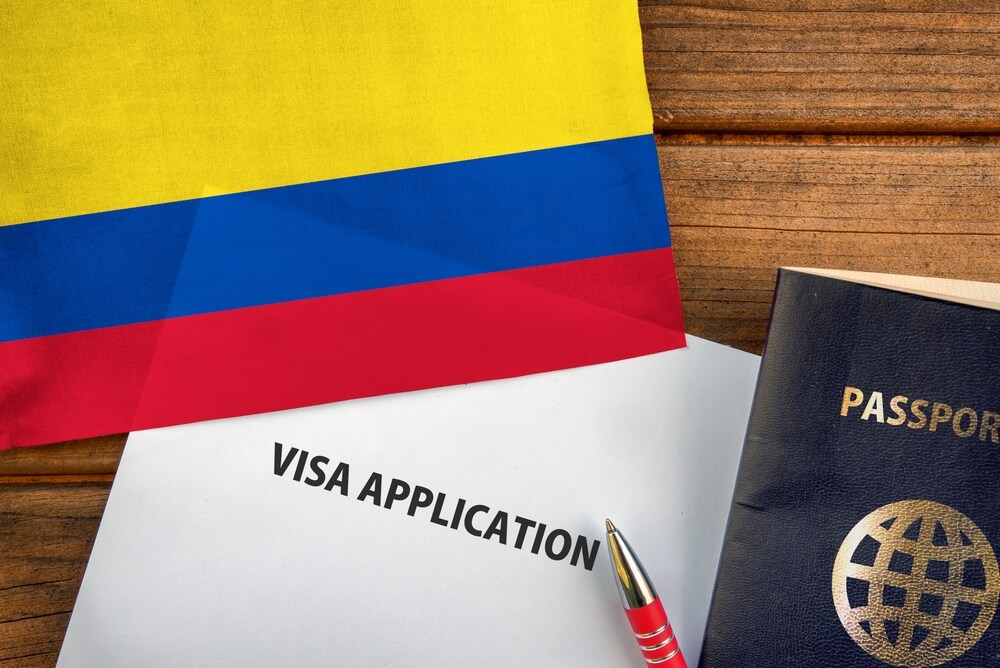
Photo: shutterstock.com
Part of staying safe in Colombia is having the required documents to enter and exit the country. But what do you need?
A passport: All US citizens must present passport books that meet the conditions below:
- They must be valid for the duration of your stay,
- They must have at least one blank visa page – people enrolled in Migración Automática don’t need to tick this box, and
- They must be in good condition and should not show signs of physical damage or alteration.
2. A visa: Tourists traveling for 90 or fewer days do not need a visa. However, they should show proof of accommodation, evidence of enough funds, and an onward or return ticket upon request by immigration officers. People traveling for other reasons must have relevant supporting visas, e.g., a work visa.
3. A yellow fever vaccination certificate: Anyone who wants to visit specific national parks in Colombia or has traveled to yellow-fever-endemic countries might need a valid vaccination certificate. You should research these requirements to avoid delays during clearance.
Other documents may also be necessary, e.g., apostilles for people getting married in Colombia.
Tourist-Friendly Areas
Despite Colombia’s high crime rates, tourists still have several safe options on where they can stay. Consider the cities below:
- Palomino: This coastal city has a low population, making it easy to weed out criminals. You can have fun at the beach, eat at its many restaurants, go to bars, and enjoy the warm weather without encountering thugs.
- Minca: With only hundreds of people, this location is not a hotspot for thieves. Thus, all travelers, including families, can enjoy its peaceful setting. It’s also an excellent spot for anyone who wants outdoor adventures.
- Bucamaranga: This city has high employment rates, which lowers its overall crime rate. On top of this, it has beautiful views, amazing parks, and a lot of activities for tourists to enjoy, making it a good travel option.
- Medellin: Many tourists head here as part of their Pablo Escobar tours. And while the film may have you thinking it has a high crime rate, its cases are much lower than those in cities like Bogota. Plus, there is a lot to do here.
- Valledupar: This lovely city lies between mountains and rivers and is thus an excellent choice for anyone who wants to unwind and soak in nature. It has a low crime rating and population, creating the perfect tourist environment.
While these options might have low crime rates, exercising general safety precautions is still important.
Solo Travel Considerations
Traveling alone is a great way to have control over your travel itinerary and do the things you love. But is Colombia safe for tourists who choose to go to it alone? Of course! It comes down to the following safety measures:
- Join tours with trusted companies to avoid touring remote places alone,
- Avoid walking alone at night,
- Do not bring attention to yourself,
- Use trusted taxi companies instead of hailing taxis on the street,
- Do not let people know you are alone,
- Choose secure accommodation, e.g., in hotels with good ratings,
- Be aware of your surroundings,
- Do not be predictable, e.g., your arrival times and best hangout spots, and
- Rely on a trusted guide when visiting far-flung areas.
You should also follow the safety measures that apply to everyone else, e.g., only touring safe parts of the country.
Emergency Contacts and Resources
When traveling to any country, knowing who you can call to report an emergency is essential. Here are the numbers to note down:
- Metropolitan police: 112,
- Information: 113,
- Fire: 119,
- National emergency line: 123,
- Medical emergencies: 125,
- Traffic police: 127,
- Red Cross: 132,
- Toxicology center: 136,
- Civil Defense: 144,
- DAS: 153,
- Director of Judicial Police: 157,
- Kidnapping and Extortion Squad: 165, and
- Tourist police: (1) 3374413.
Additionally, you can reach the US embassy via (1) 275-2000. If facing an emergency after hours, you can contact the embassy via (1) 275-4021.
Is it safe to travel to Colombia? Most governments, including the US, will caution you against traveling to this country due to its high rates of violent crimes. However, you can still enjoy a wonderful travel experience by understanding the safety statistics, sticking to the safe cities, employing standard safety measures, and having emergency numbers in tow. Getting travel insurance is also a good idea as it can cover you against unforeseen costs, e.g., medical emergencies and baggage theft.

